Understanding Panchang: How Tithi, Nakshatra, and Yoga Shape Your Day
Ancient Vedic timekeeping reveals how lunar days, star mansions, and cosmic unions influence everything from surgery dates to wedding muhurtas.
My grandmother never scheduled a surgery without checking the panchang first. Not out of superstition, but because she understood something most modern calendars ignore: time has texture. Some days are sharp, others soft. The panchang doesn't just tell you what day it is. It tells you what kind of day it is.
If you've ever wondered why your astrologer mentions "avoid travel during Krishna Paksha Ashtami" or "this nakshatra favors new beginnings," you're brushing up against a 5,000-year-old system that treats time as a living, breathing thing. The panchang is Vedic astrology's daily almanac, a five-limbed (pancha = five, anga = limb) framework that maps the energetic weather of each day. Tithi, nakshatra, yoga, karana, and vara — these five elements create a fingerprint for every sunrise.
Let's break down the three most powerful ones: tithi, nakshatra, and yoga. Because once you understand how they work, you'll stop wondering why some Tuesdays feel like wading through honey while others crackle with possibility.
What Is a Tithi and Why Your Calendar Is Lying to You
A tithi isn't a solar day. It's a lunar day, measured by the relationship between the Sun and Moon. Specifically, it's the time it takes for the Moon to move 12 degrees ahead of the Sun. Some tithis last 19 hours. Others stretch to 26. Your wall calendar, locked into its 24-hour grid, has no idea this is happening.
There are 30 tithis in a lunar month, split into two pakshas (fortnights). Shukla Paksha is the waxing half, when the Moon grows from new to full. Krishna Paksha is the waning half, Moon shrinking back to dark. Each paksha has 15 tithis, numbered Pratipada (1st) through Purnima or Amavasya (15th).
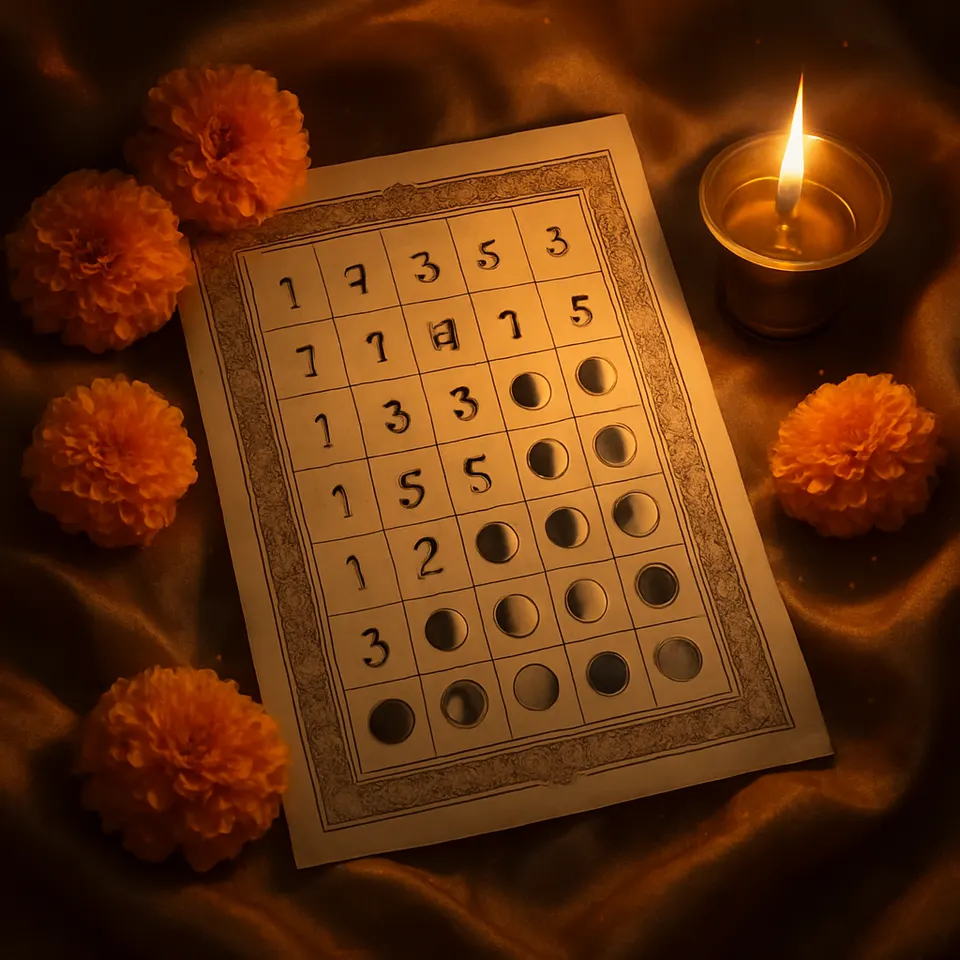
Here's what matters for your day-to-day life:
- Pratipada (1st): Fresh starts, but shaky ground. Not the best for big commitments. Think of it as Monday morning energy before the coffee kicks in.
- Dwitiya through Panchami (2nd–5th): Building momentum. Dwitiya is especially good for wealth matters (it's Lakshmi's tithi). Tritiya favors learning and communication.
- Shashthi through Dashami (6th–10th): Peak productivity window. Saptami (7th) is considered one of the most auspicious for any new venture. Dashami has warrior energy, good for competition or conflict resolution.
- Ekadashi (11th): Fasting day in many traditions, but also weirdly good for spiritual breakthroughs. The veil is thinner.
- Dwadashi through Chaturdashi (12th–14th): Completion phase. Trayodashi (13th) is tricky — some texts call it unfavorable for auspicious events, but it's excellent for black magic removal (not that you're doing that, presumably).
- Purnima (Full Moon) and Amavasya (New Moon): Energetic extremes. Purnima amplifies everything, good for worship and gratitude. Amavasya is for ancestors, introspection, and letting go. Surgery on Amavasya? Absolutely not.
I once watched a friend schedule her wedding on Krishna Paksha Chaturdashi because the venue had an opening. The marriage lasted 11 months. Coincidence? Maybe. But the panchang would've warned her that Krishna Paksha's waning energy isn't ideal for something you want to grow.
Nakshatras: The 27 Mansions the Moon Calls Home
If tithis tell you the Moon's relationship with the Sun, nakshatras tell you where the Moon is actually standing in the sky. The zodiac's 360 degrees are divided into 27 nakshatras (or 28, depending on the tradition — Abhijit is the phantom 28th, used only in specific electional work). Each nakshatra is roughly 13°20' wide.
Every nakshatra has a ruling deity, a symbol, a planetary lord, and a distinct personality. The Moon spends about a day in each one, coloring that day with its specific energy. You were born in one (check your Vedic chart — your Moon nakshatra is one of the most important points), and every day the transiting Moon visits one.
Here's a quick tour of a few you'll encounter often:
- Ashwini (0° Aries): Fast, pioneering, healing energy. Great for quick decisions, emergency medicine, starting a fitness routine. Ruled by the Ashwini Kumaras, the divine physicians.
- Rohini (10° Taurus): Lush, fertile, beautiful. This is THE nakshatra for anything you want to flourish — planting seeds (literal or metaphorical), conceiving a child, launching a product. Moon is exalted here. It's like the universe is in a yes-mood.
- Ardra (6°40' to 20° Gemini): Stormy, transformative, occasionally destructive. Ruled by Rudra (Shiva's fierce form). Not ideal for weddings, but excellent for research, surgery, or demolition projects.
- Pushya (3°20' to 16°40' Cancer): One of the most auspicious nakshatras. Nourishing, supportive, stable. Ancient texts call it "the king of nakshatras." If you can start something important on a Thursday when the Moon is in Pushya, you've stacked the cosmic deck in your favor.
- Magha (0° to 13°20' Leo): Ancestral power, authority, tradition. Good for receiving honors, connecting with lineage, or any ritual work involving pitrus (ancestors).
- Hasta (10° to 23°20' Virgo): Skillful hands. Literally. Surgery, crafts, signing contracts, anything requiring dexterity and precision.
- Swati (6°40' to 20° Libra): Independent, movable, trade-oriented. Ruled by Vayu (wind god). Excellent for travel, business deals, anything requiring flexibility.
- Anuradha (3°20' to 16°40' Scorpio): Friendship, devotion, occult knowledge. Good for building alliances and deep research.
- Moola (0° to 13°20' Sagittarius): Root-cutting, intense, can be destructive. Ruled by Nirriti (goddess of dissolution). Avoid starting anything you want to last. But it's powerful for ending bad habits or getting to the bottom of a mystery.
- Shravana (10° to 23°20' Capricorn): Listening, learning, reputation. Ruled by Vishnu. Favorable for education, public relations, and any work involving sound or music.
- Revati (16°40' to 30° Pisces): The final nakshatra, soft and protective. Ruled by Pushan (nourisher of journeys). Good for endings, completions, and safe travel.
Some nakshatras are "cruel" (krura) — Ardra, Ashlesha, Moola, Jyeshtha. Avoid weddings and inaugurations during these, but they're weirdly good for "hard" tasks: debt collection, confrontation, breaking addictions.
Others are "fixed" (dhruva) — Rohini, Uttara Phalguni, Uttara Ashadha, Uttara Bhadrapada. These are your go-to for anything permanent: buying property, taking oaths, planting trees.
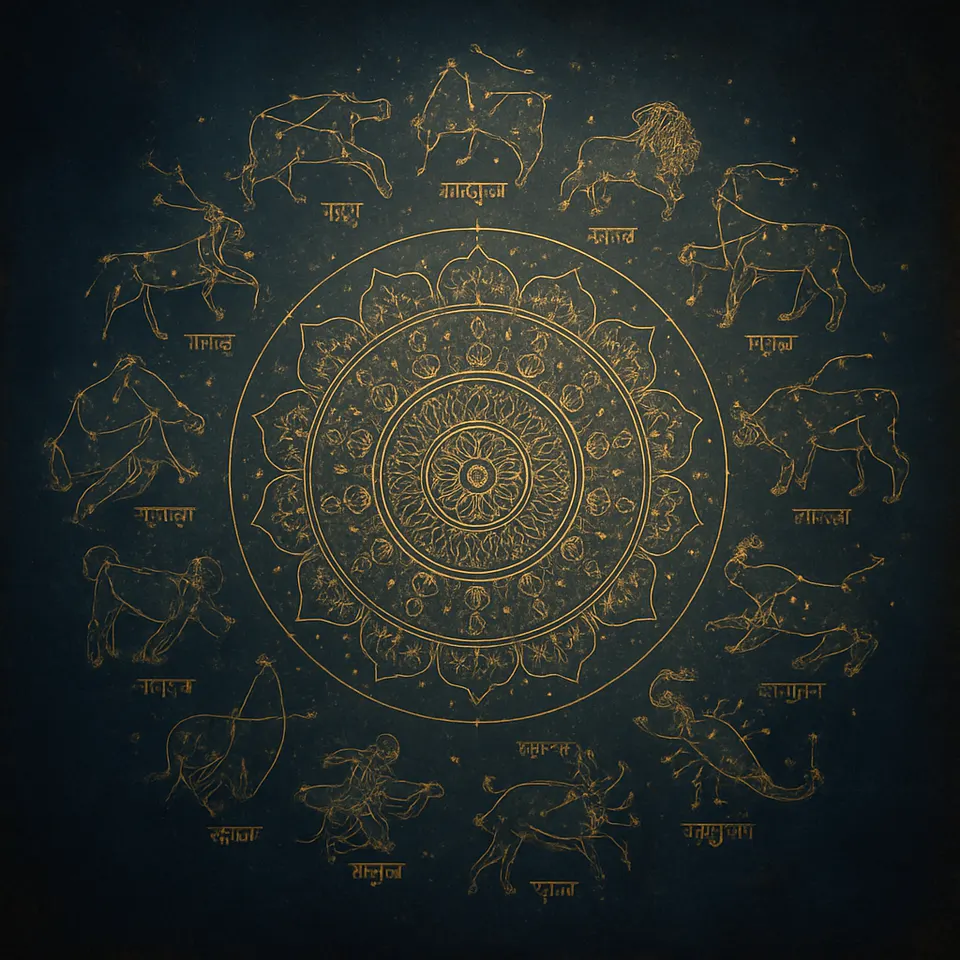
Your birth nakshatra shapes your personality more than your Sun sign does (in Vedic astrology, anyway). If you're Revati nakshatra, you probably have a soft heart and a tendency to rescue stray animals. Bharani nakshatra? You can handle intensity that would flatten most people.
Yoga: When Sun and Moon Dance Together
This is where it gets subtle. Yoga (in the panchang sense, not the stretchy pants sense) is the combined motion of the Sun and Moon. There are 27 yogas, each covering 13°20' of their combined longitudinal arc. They're less famous than tithis and nakshatras, but traditional pandits pay close attention.
Each yoga has a quality — some are auspicious (shubha), others inauspicious (ashubha) or mixed. Here are the ones you'll see most often in panchang commentary:
- Vishkambha: Obstructive. Not great for starting new things, but okay for routine tasks.
- Preeti: Affection, love. Good for relationships and social gatherings.
- Ayushman: Longevity, health. Favorable for medical treatments (the healing kind, not surgery).
- Saubhagya: Fortune, prosperity. Generally auspicious for most activities.
- Shobhana: Splendid, beautiful. Excellent for ceremonies and celebrations.
- Atiganda: Obstacles, trouble. One of the yogas to avoid for important events.
- Sukarma: Good deeds. Favorable for spiritual activities and charity.
- Dhriti: Steadiness, courage. Good for taking bold action.
- Shula: Piercing pain. Avoid if you have a choice.
- Ganda: Trouble, similar to Atiganda. Not auspicious.
- Vriddhi: Growth, increase. One of the best for wealth and expansion activities.
- Dhruva: Fixed, stable. Excellent for permanent undertakings.
- Vyaghata: Attack, beating. Another one to skip for auspicious events.
- Harshana: Joy, delight. Generally favorable.
- Vajra: Thunderbolt. Strong, can be destructive or protective depending on context.
- Siddhi: Accomplishment, success. One of the most auspicious yogas.
- Vyatipata: Calamity, considered especially inauspicious. Traditional texts warn against almost any important activity during this yoga.
- Variyan: Excellent, choosable. Favorable for most endeavors.
- Parigha: Iron bar, obstruction. Not auspicious.
- Shiva: Auspicious, benevolent. Generally favorable.
- Siddha: Accomplished, perfect. Very auspicious.
- Sadhya: Achievable. Good for efforts and goals.
- Shubha: Auspicious (the name says it). Favorable for new beginnings.
- Shukla: Bright, pure. Generally auspicious.
- Brahma: Divine, sacred. Good for spiritual and religious activities.
- Indra: Powerful, lordly. Favorable for leadership and authority matters.
- Vaidhriti: Calamity, similar to Vyatipata. Avoid for important events.
Most people don't track yogas as closely as tithis and nakshatras. But if you're picking a muhurta (auspicious time) for something really important — a wedding, a surgery, a business launch — the yoga becomes part of the equation. A day with a favorable tithi and nakshatra but an ashubha yoga? A skilled jyotishi will look for a different day or time.
How These Three Work Together (And Why Your Astrologer Keeps Saying "It Depends")
Here's the thing: none of these factors work in isolation. A single day might have an auspicious tithi, a middling nakshatra, and an inauspicious yoga. What do you do then?
Traditional electional astrology (muhurta shastra) is the art of weighing all these factors, plus the transiting planets, your personal birth chart, and dozens of other considerations. It's why "is today good for X?" is never a simple yes or no.
But you can make smarter decisions even without a PhD in Jyotish. Here's my hierarchy for everyday choices:
- Avoid the really bad combinations: Amavasya + krura nakshatra + ashubha yoga = just don't. Reschedule the root canal.
- Prioritize nakshatra for the activity type: Need creativity? Wait for Revati. Signing a contract? Hasta or Anuradha. Getting married? Rohini, Uttara Phalguni, or Magha.
- Use tithi for broad timing: Shukla Paksha for things you want to grow. Krishna Paksha for completing, releasing, or internal work.
- Check yoga as a tiebreaker: If two days seem equally good, pick the one with Siddhi, Shobhana, or Vriddhi yoga.
There's also something called "panchaka" (five-fold inauspicious combination) that happens when Moon transits through the final five nakshatras (Dhanishtha, Shatabhisha, Purva Bhadrapada, Uttara Bhadrapada, Revati) during Krishna Paksha. Traditional astrology considers this period risky for starting journeys or construction, especially involving wood or fire. I don't personally put huge stock in this, but I've known builders who won't start roofing during panchaka. Has something to do with accidents being more likely. Could be confirmation bias. Could be ancient observation.
The Practical Magic: Using Panchang in Real Life
So how do you actually use this stuff without becoming one of those people who can't leave the house without consulting three pandits?
Start simple. Download a reliable panchang app (Drik Panchang and Astro-Vision are solid). Check three things before scheduling anything important:
- What paksha are we in? (Shukla = growth-friendly, Krishna = completion-friendly)
- What's the Moon's nakshatra today? (Match it to your activity)
- Is there an obvious dealbreaker? (Amavasya for weddings, Vyatipata yoga for anything auspicious)
For daily life, just notice the tithi and nakshatra. You'll start to feel the texture of time. Ekadashi has a clarity to it. Rohini days feel abundant. Krishna Paksha Ashtami (8th waning day) often brings emotional intensity — I've learned to avoid difficult conversations then.
When something really matters — marriage, surgery, business launch, moving into a new home — hire a jyotishi for a proper muhurta. They'll calculate not just the panchang elements but also the hora (planetary hour), lagna (ascendant), and how it all interacts with your birth chart. Good muhurta work is worth every rupee.
One more thing: regional variations exist. North Indian panchangs sometimes differ from South Indian ones by a day, especially around Amavasya, because they use slightly different calculation methods (amavasyant vs. purnimant lunar months). If your family's from Kerala and you're using a Delhi panchang, double-check with a local source.
The Karana and Vara: The Other Two Limbs
I promised we'd focus on tithi, nakshatra, and yoga, but for completeness: karana is half a tithi (there are 11 karanas that repeat) and vara is simply the weekday, each ruled by a planet. Sunday (Ravivara) is Sun's day, Monday (Somavara) is Moon's, and so on.
Karanas matter mostly in advanced muhurta work. But varas you already know. Thursday (Guruvara, Jupiter's day) is generally auspicious for growth and learning. Saturday (Shanivara, Saturn's day) is good for hard work and discipline but poor for celebrations. Tuesday (Mangalavara, Mars's day) is great for surgery, competition, and cutting things — literal or metaphorical.
The five-limb structure — tithi, nakshatra, yoga, karana, vara — creates a matrix. Some days all five factors align beautifully. Those are the days when you feel like you've got the wind at your back. Other days everything's out of tune, and you can feel it.
Why This Isn't Superstition (Or Why It Might Be, and That's Okay)
Look, I can't prove that Rohini nakshatra makes your product launch more successful. Maybe it's confirmation bias. Maybe it's the placebo effect at a cultural scale. Or maybe our ancestors, who watched the sky with a precision we've outsourced to satellites, noticed genuine patterns we've forgotten in our rush to make every day identical.
What I can tell you: the panchang has survived 5,000 years because it works often enough that people keep using it. Traditional Vedic calendars predicted eclipses with frightening accuracy long before Newton. The lunar-solar calculations underlying the panchang are mathematically sophisticated.
And subjectively? I feel the difference. I've launched projects on Pushya nakshatra during Shukla Paksha that sailed. I've ignored the panchang and scheduled important calls on Amavasya that went nowhere. Coincidence? Probably some of the time. But not all of the time.
You don't have to believe the panchang controls outcomes. Use it as a tool for paying attention. Notice the rhythms. See if the cosmic weather forecast matches your inner weather. If nothing else, it'll make you more mindful about timing, and timing is 80% of success anyway.
Your Next Step
If this whole system feels overwhelming, start with just the Moon's nakshatra. Check it each morning for a month. Notice how Rohini days feel versus Ardra days. How you show up different on Ashwini versus Revati. You'll start to internalize the rhythms without needing to memorize all 27.
And when you're ready to go deeper, when you want to understand not just the daily cosmic weather but how it interacts with your personal chart, head over to AstroClick for your free Vedic astrology reading. We'll map your nakshatra, your dasha periods, and how the current transits are shaping your path. Because the panchang tells you what kind of day it is — but your birth chart tells you what kind of life you're living, and how to make the most of both.
Time has texture. You just needed the map.