Understanding Panchang: How Tithi, Nakshatra, and Yoga Shape Your Day
Discover how the ancient five-limb Vedic calendar guides auspicious timing through Tithi, Nakshatra, and Yoga—the cosmic rhythms that shape every moment.
Imagine opening your day not with a glance at the Gregorian calendar, but with a consultation of the cosmos itself—a five-dimensional timekeeping system that has guided life's most sacred moments for thousands of years. The Panchang, Sanskrit for "five limbs," is the Vedic calendar that weaves together lunar phases, stellar mansions, and planetary geometry into a tapestry of auspicious and inauspicious timing. Far from being merely a relic of ancient India, this sophisticated astronomical tool continues to shape weddings, business launches, spiritual practices, and everyday decisions for millions worldwide.
What Is the Panchang and Why Does It Matter?
The Panchang is not a calendar in the Western sense—it is an ephemeris, a living astronomical record that tracks five essential elements (pancha-anga, or "five limbs") of time. These five components are Tithi (lunar day), Vara (weekday), Nakshatra (lunar mansion), Yoga (a specific angular relationship between Sun and Moon), and Karana (half of a Tithi). Together, they create a multidimensional map of temporal quality, revealing which moments carry supportive cosmic energy and which require caution.
While the Western calendar divides time into uniform solar days, the Panchang acknowledges that not all moments are created equal. A Tuesday in March might be astronomically identical to another Tuesday in the same year, but according to Vedic principles, the lunar phase, the Moon's position among the 27 Nakshatras, and the Sun-Moon angular relationship create entirely different energetic signatures. This is why traditional Hindu culture consults the Panchang before scheduling marriages, inaugurating homes, beginning journeys, or even cutting hair.
The foundational texts of Vedic astrology—including the Brihat Parashara Hora Shastra and Muhurta Chintamani—extensively detail how to calculate and interpret these five limbs. The Panchang serves as the bridge between eternal cosmic movements and the temporal reality of human life, allowing us to align our actions with celestial support rather than resistance.
Understanding the Panchang is not about superstition; it's about recognizing patterns in nature's rhythms. Just as farmers plant by seasons and tides respond to lunar pull, human endeavors unfold more smoothly when synchronized with cosmic cycles.
Tithi: The Lunar Day That Defines Sacred Time
Tithi is perhaps the most important element of the Panchang, representing the relationship between the Sun and Moon as they dance through the zodiac. Unlike a solar day, which lasts exactly 24 hours, a Tithi is defined by the Moon moving 12 degrees away from the Sun. Because the Moon's speed varies, Tithis can range from approximately 19 to 26 hours in length.
There are 30 Tithis in a lunar month, divided into two pakṣas (fortnights): the waxing Shukla Paksha from New Moon to Full Moon, and the waning Krishna Paksha from Full Moon back to New Moon. Each paksha contains 15 Tithis, numbered from Pratipada (first) through Purnima (full moon) or Amavasya (new moon).
The Spiritual and Practical Significance of Tithis
Each Tithi carries distinct qualities that influence its suitability for different activities:
- Pratipada (1st Tithi): New beginnings, laying foundations, planting seeds—both literal and metaphorical
- Dwitiya (2nd Tithi): Stable and auspicious for most ventures, particularly marriages
- Tritiya (3rd Tithi): Known as Akshaya Tritiya when it falls in certain months; excellent for purchases and investments
- Chaturthi (4th Tithi): Sacred to Lord Ganesha; mixed results for material pursuits but excellent for spiritual practices
- Panchami (5th Tithi): Sacred to Saraswati; favourable for education and creative endeavors
- Shashthi (6th Tithi): Associated with Kartikeya; mixed energy requiring careful assessment
- Saptami (7th Tithi): Generally auspicious for travel and movement
- Ashtami (8th Tithi): Sacred to Durga but generally avoided for auspicious ceremonies
- Navami (9th Tithi): Power-filled but challenging; excellent for completion and spiritual intensity
- Dashami (10th Tithi): Mixed results; better for routine than inauguration
- Ekadashi (11th Tithi): Highly sacred for fasting and spiritual practice; avoided for worldly beginnings
- Dwadashi (12th Tithi): Generally favorable for most activities
- Trayodashi (13th Tithi): Strong energy; excellent for competitive endeavors
- Chaturdashi (14th Tithi): Sacred to Shiva; powerful for tantra but avoided for conventional ceremonies
- Purnima/Amavasya (15th Tithi): Full and New Moons carry potent spiritual energy but are typically avoided for material inaugurations
The classical text Muhurta Chintamani provides extensive guidelines on Tithi selection, noting that certain Tithis are nanda (joyful), bhadra (auspicious), jaya (victorious), rikta (empty), or purna (complete) based on their number in the sequence.
Nakshatra: The 27 Lunar Mansions of Destiny
While Western astrology divides the zodiac into twelve solar signs, Vedic astrology maps the Moon's monthly journey through 27 Nakshatras (or 28, in some traditional counts). Each Nakshatra represents a 13°20' segment of the 360° zodiac, and the Moon spends approximately one day in each mansion.
The Nakshatras are far more than mere astronomical divisions—they are living cosmic personalities, each ruled by a specific deity and planetary lord, each carrying unique qualities, symbols, and purposes. The Nakshatra occupied by the Moon at any given moment colours the emotional and spiritual atmosphere of that time.
The Classification and Character of Nakshatras
The 27 Nakshatras are classified by their inherent nature (guna) and suitability for different activities:
By Nature (Swabhava):
- Dhruva (Fixed): Rohini, Uttara Phalguni, Uttara Ashadha, Uttara Bhadrapada—excellent for permanent structures, marriage, planting perennials
- Chara (Movable): Punarvasu, Swati, Shravana, Dhanishta, Shatabhisha—ideal for travel, trade, vehicle purchase
- Ugra/Krura (Fierce): Bharani, Magha, Purva Phalguni, Purva Ashadha, Purva Bhadrapada—suited for confrontation, surgery, exorcism, breaking habits
- Kshipra (Swift): Ashwini, Pushya, Hasta—quick results; excellent for medicine, trade, and communication
- Mridu (Soft): Mrigashira, Chitra, Anuradha, Revati—favorable for arts, beauty, romance, clothing, ornaments
- Tikshna (Sharp): Ardra, Ashlesha, Jyeshta, Moola—powerful for magical work, tantra, and elimination of obstacles or enemies
- Mishra (Mixed): Krittika, Vishakha—balanced energy suitable for most routine activities
The Brihat Samhita of Varahamihira provides detailed correlations between Nakshatras and earthly activities, from which trees to plant to which musical ragas to perform.
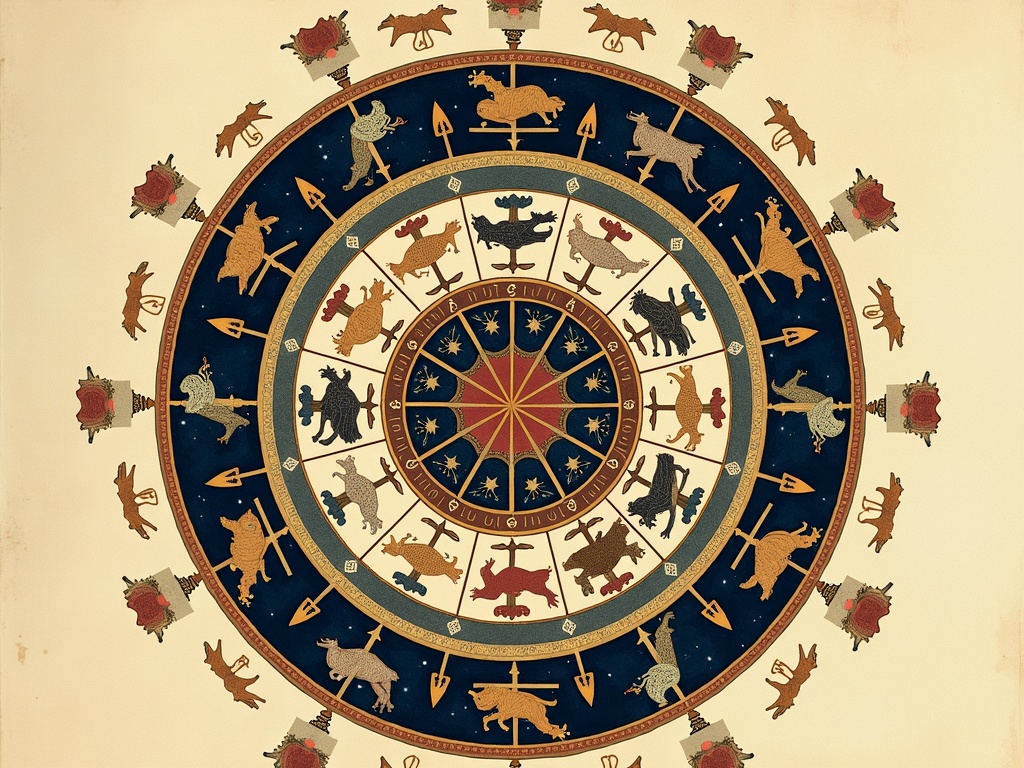
Each Nakshatra also has a specific ruling planet (Nakshatra lord) that influences its expression. For instance, Ashwini is ruled by Ketu, giving it a mystical, healing quality, while Rohini is ruled by the Moon, emphasizing fertility and beauty. When selecting auspicious timing (Muhurta), astrologers examine not only which Nakshatra the Moon occupies but also its relationship to the natal Moon Nakshatra of the person involved.
Janma Nakshatra and Daily Life
Your Janma Nakshatra—the lunar mansion occupied by the Moon at your birth—is considered even more important than your Sun sign in Vedic astrology. It reveals your emotional nature, thinking patterns, and karmic orientation. The Panchang helps you track when the transiting Moon returns to your Janma Nakshatra (approximately once per month), a time that can be emotionally intense and karmically significant.
Traditional practice also avoids initiating important activities during certain Nakshatras that fall in inauspicious positions relative to one's Janma Nakshatra. The Tara Bala system classifies Nakshatras as Janma (birth), Sampat (wealth), Vipat (danger), Kshema (well-being), Pratyak (obstacle), Sadhaka (achievement), Naidhana (death), Mitra (friend), and Parama Mitra (best friend) based on their count from your birth constellation.
Yoga: The Cosmic Combination That Amplifies Intent
Among the five limbs of the Panchang, Yoga is perhaps the most subtle yet powerful. In this context, Yoga does not refer to physical postures but to a specific astronomical combination—the angular relationship created by adding the longitudes of the Sun and Moon.
There are 27 Yogas in Vedic astrology, each spanning 13°20' of arc, mirroring the Nakshatra divisions. As the Sun and Moon continuously move through the zodiac, their combined longitude creates an ever-changing Yoga, cycling through all 27 approximately every lunar month.
The 27 Yogas and Their Qualities
The Yogas are classified into auspicious (shubha) and inauspicious (ashubha) categories, though some sources provide more nuanced interpretations:
Generally Auspicious Yogas:
- Vishkambha: Supports accomplishment despite obstacles; ruled by Yama
- Preeti: Love, affection, mutual support; ruled by Vishnu
- Ayushman: Longevity, health, vitality; ruled by Chandra (Moon)
- Saubhagya: Fortune, prosperity, marital bliss; ruled by Brahma
- Shobhana: Beauty, radiance, splendor; ruled by Surya (Sun)
- Atiganda: Paradoxically considered inauspicious despite its strong name; ruled by Agni
- Sukarma: Good deeds, righteous action, merit; ruled by Indra
- Dhriti: Steadfastness, patience, endurance; ruled by Jala (water element)
- Shoola: Generally avoided; sharp, piercing quality; ruled by Sarpa (serpent)
- Ganda: Inauspicious; brings obstacles; ruled by Agni
- Vriddhi: Growth, expansion, increase; ruled by Indra
- Dhruva: Fixed, permanent, stable; ruled by Bhumi (Earth)
- Vyaghata: Dangerous, violent; generally avoided; ruled by Vayu
- Harshana: Joy, delight, celebration; ruled by Bhaga
- Vajra: Hard as diamond; can be destructive; ruled by Varuna
- Siddhi: Accomplishment, success, perfection; ruled by Ganesha
- Vyatipata: Calamitous; major inauspicious Yoga; ruled by Rudra
- Variyana: Excellent; bestows prosperity; ruled by Kuber
- Parigha: Obstruction, enclosure; generally avoided; ruled by Vishwakarma
- Shiva: Most auspicious; bestows all good things; ruled by Shiva
- Siddha: Accomplished, perfected; very auspicious; ruled by Kartikeya
- Sadhya: Achievable, attainable; supports goals; ruled by Savitri
- Shubha: Auspicious, pure, fortunate; ruled by Lakshmi
- Shukla: Bright, pure, white; very auspicious; ruled by Prajapati
- Brahma: Divine, creative, supreme; ruled by Brahma
- Indra: Lordly, powerful, commanding; ruled by Indra
- Vaidhriti: Inauspicious; brings separation; ruled by Kali
Among these, Siddhi, Shiva, Sadhya, Shubha, Shukla, Brahma, and Indra are considered especially favorable for inaugurating important ventures. Conversely, Vyatipata and Vaidhriti are major inauspicious Yogas avoided even by otherwise favorable Panchang configurations.
The Muhurta Chintamani emphasizes that Yoga should never be examined in isolation—its effects blend with those of Tithi, Nakshatra, and planetary positions to create the complete temporal signature.
Karana and Vara: Completing the Five Limbs
While Tithi, Nakshatra, and Yoga receive the most attention in Panchang interpretation, the remaining two limbs—Karana and Vara—add important layers of refinement.
Karana: The Half-Tithi Precision
A Karana is half of a Tithi, representing the Moon moving 6 degrees away from the Sun. Since there are 30 Tithis in a lunar month, there are 60 Karanas. These are divided into two categories: four fixed Karanas (Shakuni, Chatushpada, Naga, and Kimstughna) that occur only once per month at specific points, and seven movable Karanas (Bava, Balava, Kaulava, Taitila, Gara, Vanija, and Vishti) that repeat eight times each throughout the month.
Among the movable Karanas, Vishti (also called Bhadra) is considered highly inauspicious for beginning new ventures, though it can be suitable for repetitive tasks or activities intended to create obstacles (such as defensive actions). The other six movable Karanas are generally neutral to favorable, with Bava, Balava, and Kaulava particularly suited to growth-oriented activities.
Karana is especially important for precise Muhurta selection when the day contains multiple Tithis or when refining timing to the hour level.
Vara: The Seven Planetary Weekdays
Vara simply refers to the weekday, which in Vedic astrology is ruled by one of the seven visible planets:
- Ravivara (Sunday): Ruled by Surya (Sun); auspicious for government matters, authority, father-related activities
- Somavara (Monday): Ruled by Chandra (Moon); excellent for water, emotions, mother, public relations
- Mangalavara (Tuesday): Ruled by Mangal (Mars); suited to courage, surgery, property, conflicts
- Budhavara (Wednesday): Ruled by Budh (Mercury); ideal for communication, education, commerce, travel
- Guruvara (Thursday): Ruled by Guru (Jupiter); most auspicious for spiritual matters, teaching, expansion
- Shukravara (Friday): Ruled by Shukra (Venus); excellent for arts, romance, beauty, luxury
- Shanivara (Saturday): Ruled by Shani (Saturn); favours discipline, servants, construction, but avoided for joyful inaugurations
The ruling planet of the day influences the overall tone and is factored into comprehensive Muhurta calculations, particularly through the Hora system, which divides each day into 24 planetary hours beginning at sunrise.
How to Read and Apply the Panchang in Daily Life
For the modern practitioner, accessing Panchang information has never been easier—numerous apps and websites provide daily Panchang data for any location. However, interpretation requires understanding how the five limbs interact.
Basic Panchang Reading for Auspicious Timing
When evaluating a day for important activities, examine all five limbs in concert:
- Identify your purpose: Different activities require different cosmic support. Marriage requires stability (Dhruva Nakshatra, even Tithi, auspicious Yoga), while starting a journey favours movable Nakshatras and dynamic Tithis.
- Check the Tithi: Avoid Rikta Tithis (4th, 9th, 14th) for material inaugurations. Favor Nanda Tithis (1st, 6th, 11th) for joy and Bhadra Tithis (2nd, 7th, 12th) for stable success.
- Examine the Nakshatra: Ensure it matches your activity type (fixed for permanence, movable for travel, etc.) and is not in a Tara Bala inauspicious position from your Janma Nakshatra.
- Evaluate the Yoga: Avoid Vyatipata and Vaidhriti entirely. Prefer Siddhi, Shiva, Shubha, or other auspicious Yogas for important beginnings.
- Consider Karana and Vara: Avoid Vishti Karana for new ventures. Choose a weekday ruler that supports your purpose.
- Factor in transiting planets: The Panchang provides the temporal framework, but planetary transits (Gochar) add another layer. Avoid starting activities when malefics aspect your Lagna or important natal planets.
The Brihat Parashara Hora Shastra states that even an otherwise excellent Muhurta can fail if the Moon is in an inauspicious Nakshatra relative to one's birth chart, emphasizing the importance of personalization.
Panchang for Spiritual Practice
Beyond material timing, the Panchang guides spiritual practice. Ekadashi Tithi (11th lunar day) in both fortnights is sacred for fasting and meditation. Pradosha (the period during the 13th Tithi) is especially powerful for Shiva worship. Amavasya (New Moon) and Purnima (Full Moon) are potent for ancestor rituals and meditation respectively.
Certain Nakshatra transits of the Moon enhance specific spiritual practices. Ashwini Nakshatra supports healing mantras, Rohini amplifies manifestation practices, Pushya is supremely auspicious for all spiritual initiations, and Revati is ideal for completing spiritual cycles.
The ancient rishis designed the Panchang as a practical tool for dharma—righteous living aligned with cosmic order. By consulting it regularly, you attune your personal rhythm to universal rhythm, reducing friction and enhancing flow in all aspects of life.
Conclusion: Living in Harmony with Cosmic Time
The Panchang represents one of humanity's most sophisticated attempts to map the intersection of celestial mechanics and earthly experience. Far from being a static calendar, it is a dynamic, multidimensional timekeeping system that acknowledges the qualitative nature of each moment. By understanding how Tithi, Nakshatra, and Yoga—along with Karana and Vara—create distinct temporal signatures, you gain access to an ancient technology for optimal timing.
Whether you're planning a wedding, launching a business, beginning a spiritual practice, or simply trying to understand why certain days feel naturally supportive while others present obstacles, the Panchang offers invaluable insight. The five limbs work together like the fingers of a hand, each essential to grasping the full picture of temporal quality.
In our modern world of uniform clock-time and global scheduling, the Panchang invites us to remember that we are not separate from cosmic rhythms but intimately woven into them. The Moon's journey through the Nakshatras, the waxing and waning of Tithis, and the geometric dance of Sun and Moon creating Yogas—these are not abstract concepts but living realities that pulse through your daily experience.
Ready to discover how today's Panchang influences your personal chart? Get your free astrological reading on AstroClick and unlock personalized insights into the cosmic timing patterns shaping your destiny. Our expert astrologers combine traditional Panchang wisdom with your unique birth chart to reveal the most auspicious moments for your important life decisions.