Understanding Panchang: How Tithi, Nakshatra, and Yoga Shape Your Day
Discover how the ancient Vedic timekeeping system of Panchang uses Tithi, Nakshatra, and Yoga to help you align your daily activities with cosmic rhythms.
You've probably checked your horoscope for the day, but that's just scratching the surface. If you want to know the real flavor of time—what the cosmos is actually brewing—you need to look at the Panchang. It's not just a calendar. It's the Vedic equivalent of a weather report for the subtle energies of a day. And the three biggest players in that report? Tithi, Nakshatra, and Yoga.
What Even Is a Panchang?
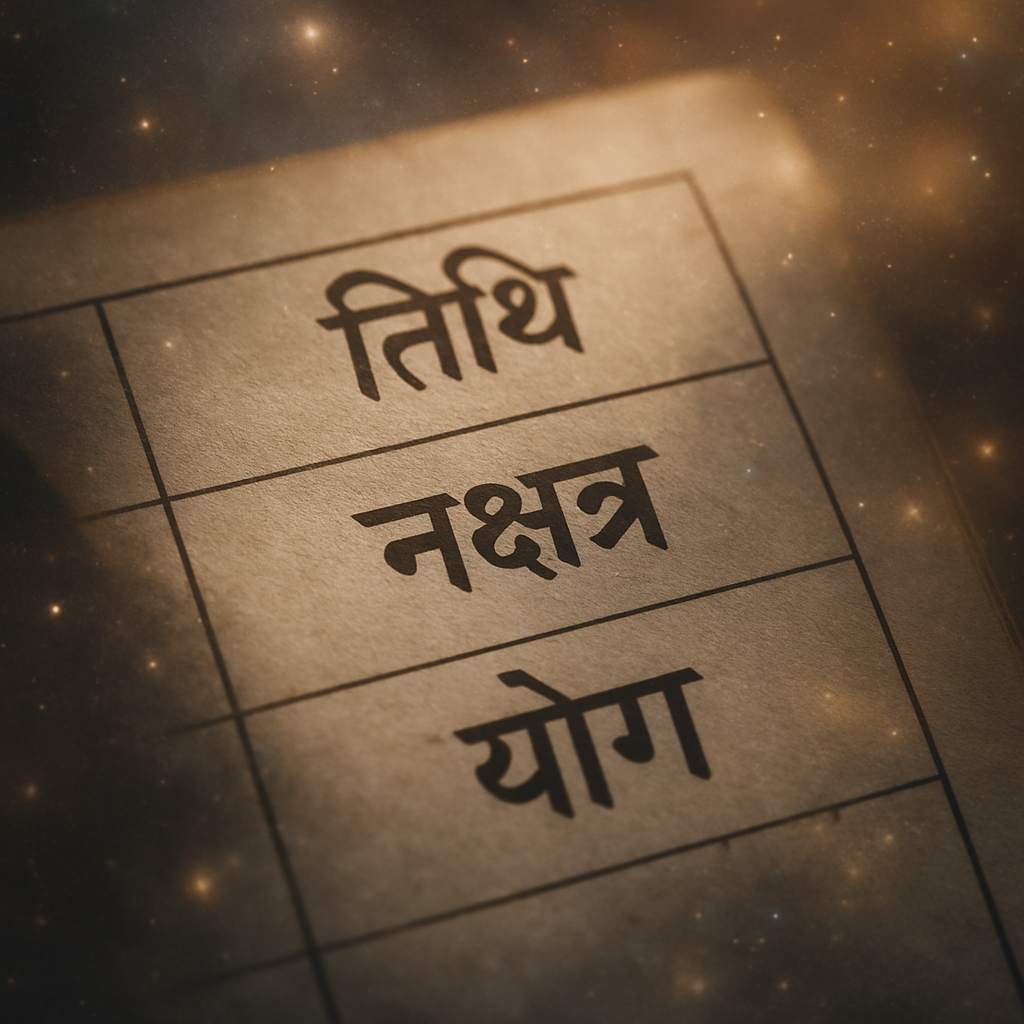
Panchang literally means "five limbs." In Vedic astrology, those limbs are Tithi (lunar day), Vara (weekday), Nakshatra (constellation), Yoga (a special combination), and Karana (half-tithi). For this article, we'll focus on three: Tithi, Nakshatra, and Yoga. Why? Because these cycle fastest—they change within a day or even hours—and they give the most immediate texture to your experience.
The ancient sage Parashara, in the Brihat Parashara Hora Shastra (Chapter 3-4), emphasizes that these five elements together determine the auspiciousness of any moment. Ignoring them is like sailing without checking the wind. You might still move, but you'll work a lot harder.
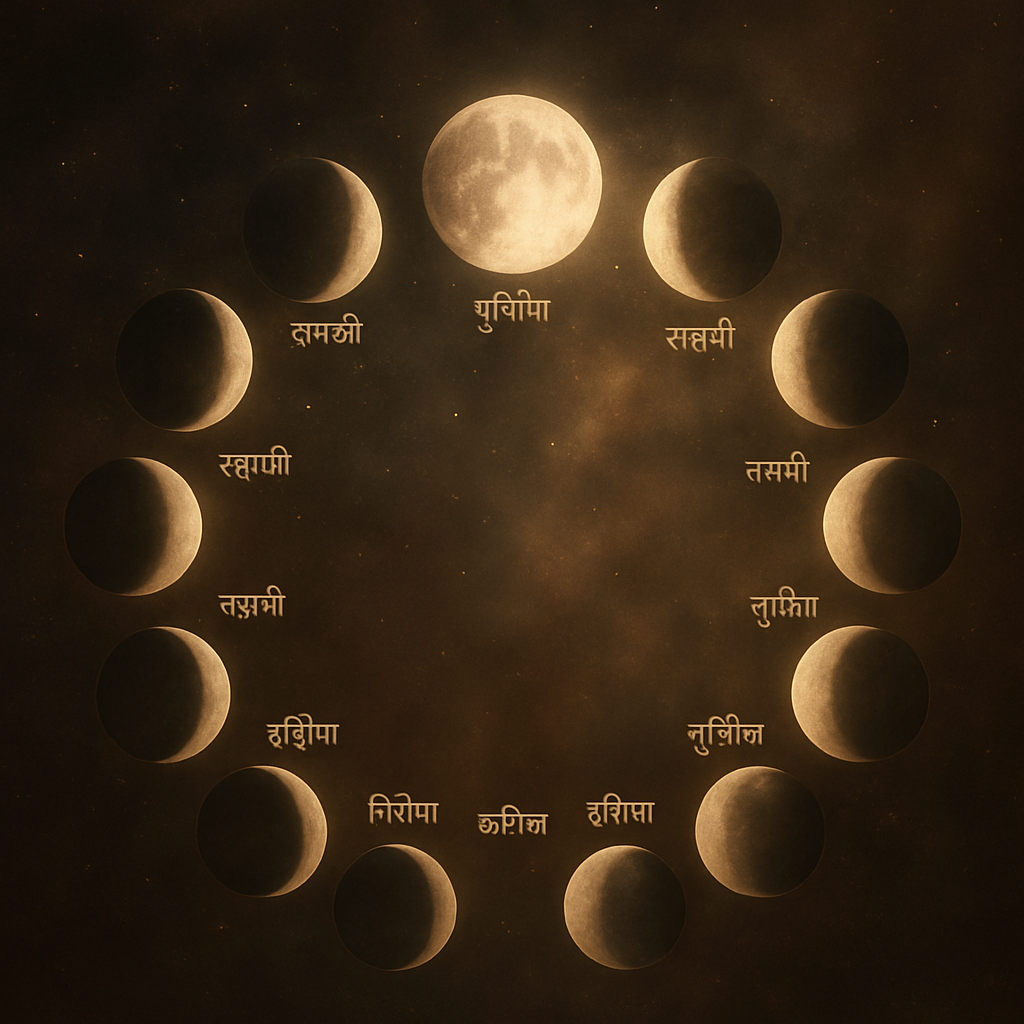
!The moon phases chart showing Tithi cycle from Amavasya to Purnima with Sanskrit labels
Tithi: The Lunar Day
Alright, let's get into the first big one: Tithi. It's the time it takes for the Moon to travel 12 degrees relative to the Sun. That gives us 30 Tithis in a lunar month—15 in the waxing phase (Shukla Paksha) and 15 in the waning (Krishna Paksha). Each Tithi has a name, a ruling deity, and a specific energy.
For example, the first Tithi of the waxing moon is Pratipada. It's ruled by the fire god Agni. It's a good day to start new projects, but you might feel a burst of impatience. On the flip side, the 14th Tithi of the waning moon, Krishnachaturdashi, is ruled by Kali. Not exactly a day for a wedding.
I find that most people react strongly to certain Tithis without knowing why. Ever had a day where everything felt heavy, like the air itself was thicker? That might be a Bhadra Tithi—like Vishkumbha or Ganda—which are traditionally considered inauspicious. But here's the nuance: the same Tithi can hit differently depending on your birth chart.
The classical texts, like Saravali (Chapter 7), give detailed results for each Tithi. For instance, Trayodashi (13th) is good for getting into arguments? Actually no—it's associated with Cupid (Kama), so it's more for passion and creativity. See, it's not a straightjacket—it's a flavor.
Nakshatra: The Star of the Moment
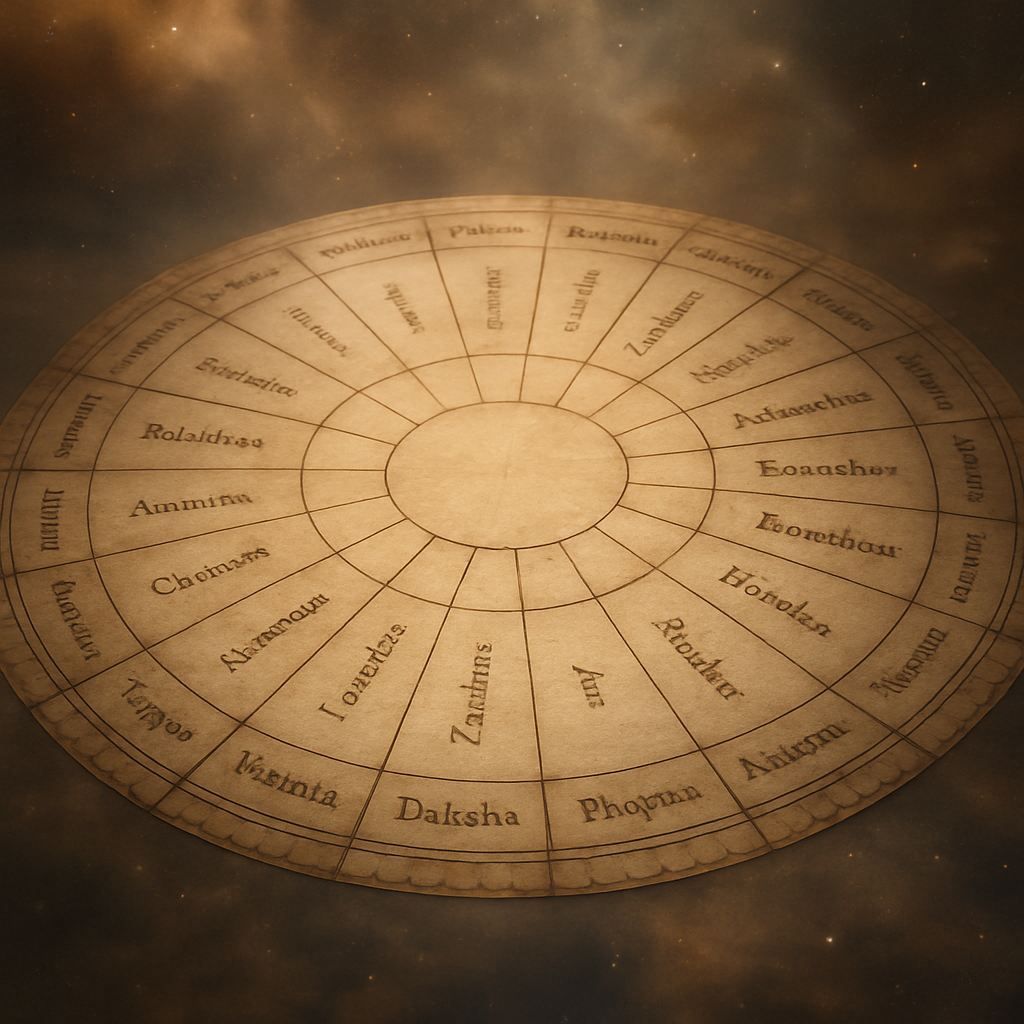
If Tithi is the beat of the day, Nakshatra is its melody. The Moon moves through one Nakshatra every twenty-four hundred minutes (roughly a day). There are 27 Nakshatras, each with a distinct personality. Think of them as the zodiac's intimate subdivisions—each one is like a small house with its own decor and mood.
Take Ashwini, the first Nakshatra. It's ruled by the Ashwini Kumaras, the divine twins who are healers. A day under Ashwini is fast, initiatory, and good for starting anything related to health or travel. Contrast that with Bharani, which is ruled by Yama, the god of death. That day might bring endings, transformations, or confrontations with the heavy stuff.
I remember reading Steve Jobs' chart: his Moon was in Uttara Phalguni, a Nakshatra ruled by Aryaman, the god of patronage and contracts. That precision for negotiation and partnership? It was written in the stars. Not that astrology makes you a genius—but it shows where you're predisposed to shine.
!A diagram of the 27 Nakshatras mapped around a circle representing the zodiac
When you're planning a big event—say, signing a lease or having a surgery—the Nakshatra of the day can make a difference. Many astrologers consult the Nakshatra of the Moon's position to choose an auspicious moment. It's called Muhurta. You don't have to be a fanatic about it, but paying attention can smooth things out.
Yoga: The Combinatorial Influence
Now we get to the part most beginners skip: Yoga. Not the physical practice—the Panchang kind. This Yoga is calculated by adding the longitudes of the Sun and Moon. Divide that sum by 13°20' (the span of one Nakshatra). The quotient gives you the Yoga number, from 1 to 27.
Each Yoga has a name and an effect. For example, the first Yoga is Vishkumbha, which means "one who holds a pot." It's considered neutral but often brings endurance. If you're in a Vishkumbha day, you might feel like you're carrying something—a pot of water? Metaphorically, yes. You can hold on, but it's work.
Then there's Siddha Yoga—the 21st—which is highly auspicious. Whatever you start on a Siddha day tends to succeed. So if you've been putting off that important call, check the Panchang for a Siddha day.
The combination of Tithi, Nakshatra, and Yoga is where the real power lies. A strong Tithi can be softened by a weak Nakshatra, and vice versa. Vedic astrologers weigh these three heavily when choosing Muhurta. The Phaladeepika (Chapter 20) goes into great detail on this interplay.
Putting It All Together
So how do you actually use this? You don't need to memorize 27 Nakshatras and 30 Tithis. Start simple: look at today's Tithi and Nakshatra. You can find free Panchang apps or websites. Just note them. Over a week, see if you notice patterns.
For instance, I've noticed that on Purnima (full moon Tithi), I get more emotional—and that's a classic effect. My Nakshatra for the day might be Pushya, which is nurturing, so that emotionality might channel into caring for others. If it were a harsh Nakshatra like Ardra, I might lash out.
It's not deterministic. You have free will. But the Panchang gives you a head's up. "Hey, today the cosmic weather is stormy—maybe don't have that difficult conversation today." Or, "Today's energies are sweet—maybe tell someone you love them."
A Personal Example
I once advised a friend to schedule her job interview on a day with Shravana Nakshatra and a Ganda Tithi. Everyone told her it was inauspicious. But in her chart, Shravana was her Moon Nakshatra—it's like coming home. And Ganda Tithi? It's considered inauspicious, but for her it activated her 10th house ruler. She got the job.
Moral of the story: general rules have exceptions. Your birth chart modifies the Panchang. The Brihat Parashara Hora Shastra says as much: combine the daily influences with your natal promise.
So if you're reading this and thinking, "This is too much," don't worry. Start small. Check the Tithi and Nakshatra of your birth. That alone will tell you a ton about your core nature. Then see how today's Panchang compares.
Your Free Reading Awaits
Here's where I nudge you. AstroClick can calculate your birth Panchang in seconds. It'll show you your Janma Nakshatra, birth Tithi, and even the Yoga at the moment you were born. You'll get a detailed breakdown of how those energies shape your life. And the best part? It's free. No catch. Because understanding your cosmic blueprint shouldn't cost a thing.
So head over to AstroClick and grab your reading. You might find that the day you were born holds more clues than you ever imagined.