Rahu and Ketu: The Shadow Planets Driving Your Deepest Desires
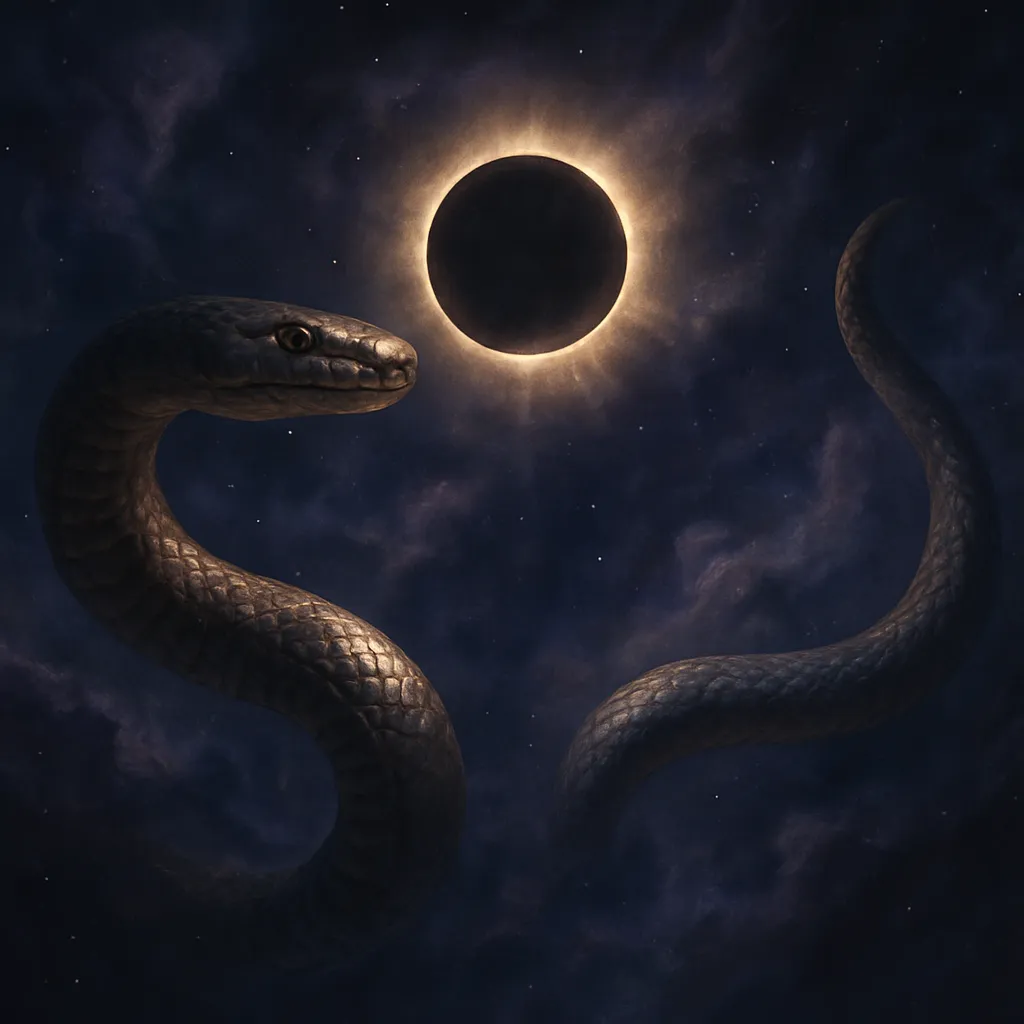
Rahu and Ketu aren't physical planets—they're the lunar nodes where eclipses happen and obsessions take root. Here's what they reveal about your hungers and fears.
The Points Where the Moon Gets Swallowed
You know that feeling when you want something so badly it keeps you up at night? When a craving takes over your thoughts, derails your logic, makes you ignore every red flag? That's Rahu. And the thing you keep running from, the pattern you resist even when it's clearly the lesson you need? That's Ketu. These two points aren't planets at all—they're the mathematical intersections where the Moon's orbit crosses the ecliptic, the Sun's apparent path. Ancient astronomers watched eclipses happen at these nodes and understood: this is where light gets devoured. Where the ordinary rules stop working.
In Vedic astrology, Rahu and Ketu are treated as full planets with lordship over signs, nakshatras, and dasha periods. They have no physical mass, no moons, no atmosphere. Just gravitational influence and a reputation for turning lives upside down. Western astrology calls them the North and South Nodes and treats them more gently, as points of destiny and karma. But in the Vedic system, they're graha—seizers. The word literally means "to grasp." And that's what they do. They grab hold of whatever house they occupy and don't let go.
Rahu: The Head That Consumes Everything
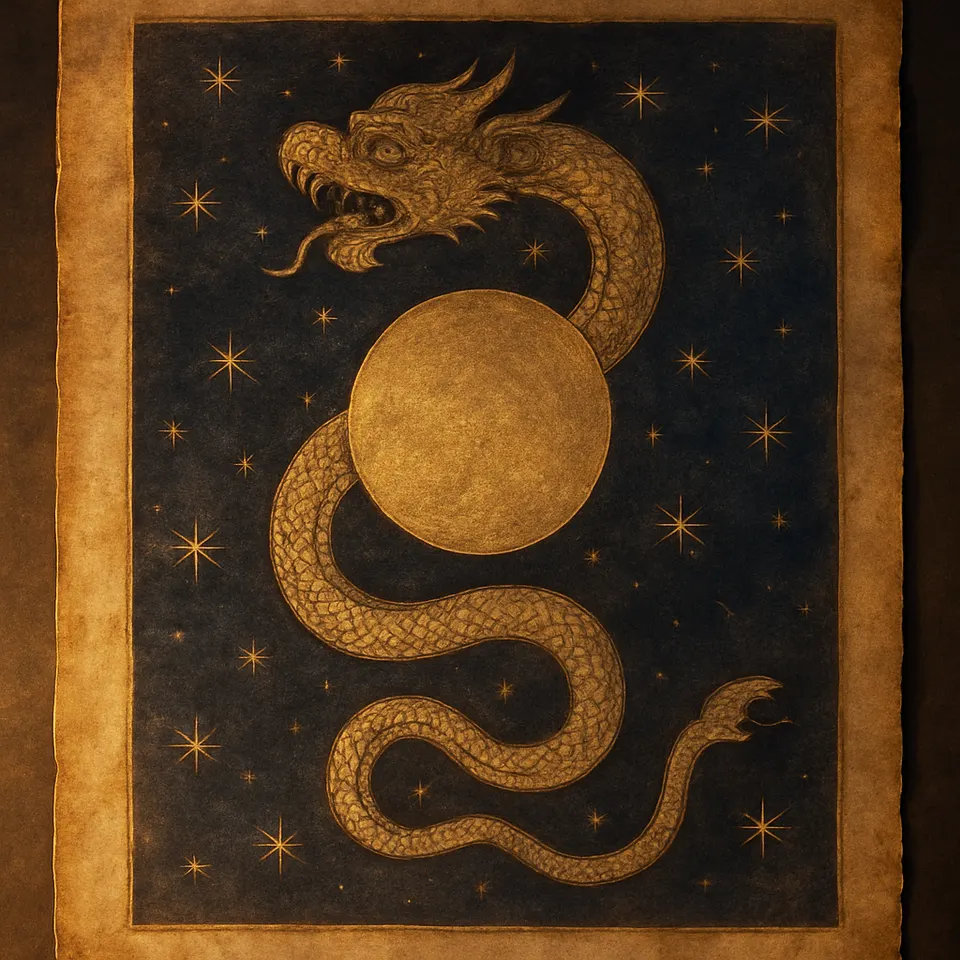
Let's start with Rahu, the dragon's head. According to the Puranic myth, Rahu was a demon who disguised himself during the churning of the cosmic ocean to steal a sip of amrita, the nectar of immortality. Vishnu caught him mid-swallow and beheaded him—but the head had already tasted immortality. So it floats through the cosmos, forever hungry, forever chasing the Sun and Moon to devour them in revenge. Every eclipse is Rahu taking another bite.
Astrologically, Rahu represents:
- Obsession, craving, insatiable hunger
- The foreign, the unconventional, the taboo
- Illusion and smoke screens (maya in the truest sense)
- Sudden gains and shortcuts
- Technology, innovation, boundary-breaking
- The outsider's perspective
Rahu doesn't care about tradition. It's the immigrant who becomes a tech billionaire, the artist who breaks every rule and gets famous for it, the scientist who asks the question no one else dared. Rahu is why you're drawn to things your family doesn't understand. It's the affair that makes no logical sense. The career pivot at forty that everyone calls reckless.
Here's the thing about Rahu: it gives you what you want, but rarely in the way you imagined. It's the monkey's paw of planetary influences. You want fame? Rahu can deliver it—along with scandal, isolation, and the creeping sense that you've lost yourself. You want wealth? Rahu might hand you a lottery ticket and then a lawsuit. The hunger never stops, because Rahu has no body. No stomach. Just a mouth. It can never actually digest satisfaction.
In the birth chart, Rahu's house placement shows where you're insatiable. Rahu in the 2nd house? You'll chase money, luxury, or the perfect family image. Rahu in the 7th? Relationships become the obsession—often with partners who are foreign, unconventional, or somehow "other." Rahu in the 10th? Career ambition can eclipse everything else, and you might build your reputation through non-traditional means (think Elon Musk with Rahu in the 10th in Gemini, perpetually disrupting communication and technology).
I've seen clients with Rahu in the 5th house describe a compulsive need for creative recognition or romantic drama. The desire is so intense it feels like survival. One client spent a decade chasing a creative project that never quite came together, pouring money and relationships into it, unable to stop even when the returns were zero. That's Rahu. It keeps you reaching.
Ketu: The Tail That Lets Go
Now Ketu, the dragon's tail. The severed body drifting through space. Where Rahu is hungry, Ketu is indifferent. Where Rahu grasps, Ketu releases. Ketu represents the past lives, the skills you brought in fully formed, the things you've already mastered and now find boring. Ketu is the monk who walks away from the kingdom. The prodigy who doesn't care about the trophy.
Ketu governs:
- Detachment, renunciation, spiritual insight
- Past-life talents and karmic residue
- Sudden losses and things that dissolve
- Intuition, psychic sensitivity, the occult
- Surgery, separation, cutting away
- Moksha—liberation from the wheel
Ketu doesn't want anything. That's what makes it so uncomfortable in a material world. If Rahu is the influencer desperate for more followers, Ketu is the person who deletes social media and doesn't tell anyone. Ketu in the 2nd house can indicate someone who struggles to value money or food—there's a vague disinterest, even when scarcity is real. Ketu in the 7th? Relationships feel like an obligation. The person might be deeply spiritual or simply unable to commit, because partnering feels like a chain.
Ketu gives natural ability without effort. I've worked with musicians who have Ketu in the 5th house and can play by ear from childhood, no lessons needed. But they often don't pursue it professionally—it's too easy, too obvious. What Ketu touches, you take for granted. The irony is that other people see magic where you see mundane.
But Ketu also brings loss. Things vanish in the house Ketu occupies. Ketu in the 4th might mean losing your mother early, or never feeling emotionally rooted. Ketu in the 11th can scatter friendships—people drift away without drama, just... gone. There's a quality of smoke to Ketu's actions. Nothing solid remains.
Traditional texts like the Brihat Parashara Hora Shastra (chapters 47-51 cover the nodes in detail) describe Ketu as a moksha-karaka, a planet that liberates. It forces you to stop clinging. In difficult placements, Ketu can manifest as confusion, accidents, or a persistent feeling of being lost. But when channeled consciously, Ketu is the doorway to enlightenment. It teaches you that nothing material lasts. You can fight that lesson or bow to it.
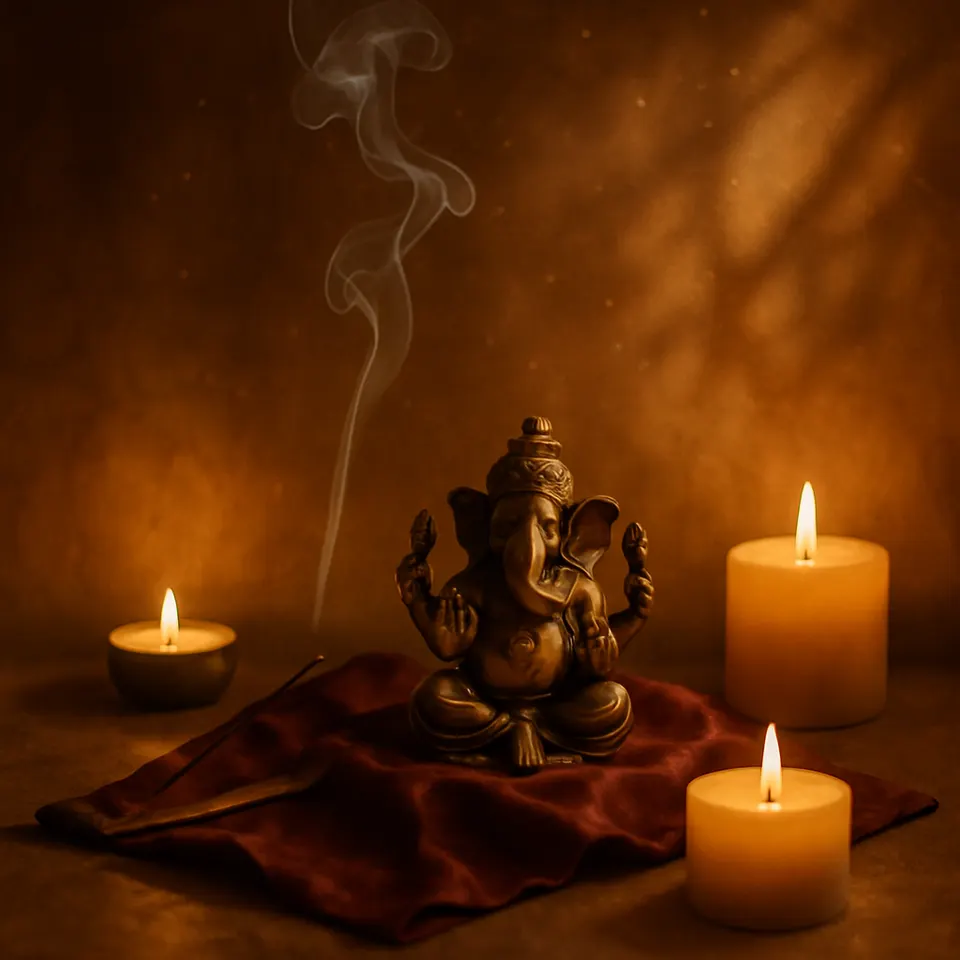
!Meditation space with incense smoke curling upward, a small statue of Ganesha, and soft shadows
The Axis: Where You're Being Pulled Apart
Rahu and Ketu sit exactly 180 degrees apart. Always. They're an axis, a tug-of-war. Rahu shows where you're reaching forward into the unknown, often with compulsion and chaos. Ketu shows where you're dragging old patterns, skills, or fears from the past. Your spiritual work—if we're being honest, your whole life's work—is to balance this axis.
Let's say you've got Rahu in Aries in the 1st house and Ketu in Libra in the 7th. Rahu in the 1st makes you obsessed with self-development, independence, personal branding. You want to be seen as strong, autonomous, a pioneer. Meanwhile, Ketu in the 7th means relationships feel secondary. You might have been a devoted partner in past lifetimes (Vedic astrology assumes reincarnation), and now your soul is bored with that script. So you unconsciously push people away or choose partners who don't really need you.
The lesson? Learn to integrate. Rahu in the 1st wants you to develop a strong self, yes—but Ketu in the 7th is whispering that you've already done the partnership thing. The growth edge is to stand alone without becoming isolated. To honor your independence without using it as armor.
Or consider Rahu in the 10th house (career, public status) and Ketu in the 4th (home, mother, inner life). Classic workaholic placement. You're driven to achieve publicly, sometimes at the cost of family or emotional grounding. Ketu in the 4th suggests that in past lives, you were the nurturer, the homemaker, the one who stayed small and safe. Now your soul is pushing you onto the world stage. But if you ignore the 4th house entirely—never process your childhood wounds, never create a private sanctuary—you'll burn out. The public success will feel hollow.
Every Rahu-Ketu axis works this way. Rahu shows the hunger. Ketu shows what you're leaving behind. The sweet spot is in the middle: honoring both, clinging to neither.
Transits and Dasha: When the Nodes Take the Wheel
Rahu and Ketu move retrograde, meaning they travel backward through the zodiac. They spend about 18 months in each sign, which means they complete a full cycle through your chart every 18-19 years. You'll notice these cycles if you pay attention. Around age 18-19, 37-38, 56-57, and so on, the nodes return to their birth positions. These are years of fated events, major reorientations, and the return of old obsessions or old debts.
But the real intensity comes during Rahu or Ketu dasha periods in Vimshottari Dasha, the 120-year planetary cycle system used in Vedic astrology. Rahu dasha lasts 18 years. Ketu dasha lasts 7. If you're in either one, life doesn't feel normal. Rahu dasha amplifies ambition, brings outsiders or foreigners into your life, and often coincides with material success that comes with strings attached. Ketu dasha is the opposite: things fall away. Jobs end. Relationships dissolve. You might feel depressed, directionless, or suddenly interested in meditation and spiritual practice.
I had a client enter Ketu dasha at 29. Within two years, she'd ended a long-term relationship, quit her corporate job, and moved to India to study Vedic philosophy. From the outside, it looked like a breakdown. From the inside, she described it as the first time she'd felt awake. That's Ketu. It strips away the costume.
Rahu transits are equally dramatic. When Rahu transits your 1st house, expect identity upheaval. You might change your look, your name, or your entire persona. Rahu transiting the 7th? Relationships become chaotic—new people arrive suddenly, or existing partners reveal hidden sides. Rahu's transits don't whisper. They crash through the door.
One concrete example: Rahu transited Cancer (and thus conjuncted natal Moons in Cancer) from September 2017 to March 2019. During that period, I watched multiple clients with Cancer Moons experience obsessive emotional swings, sudden moves, or intense mother issues surfacing. The North Node stirred up what was meant to feel safe. That's its job.
Working With the Nodes (Not Against Them)
So what do you actually do with this information? First, stop treating Rahu and Ketu like villains. They're not malefic in the way Saturn is (which tests but also builds). They're chaotic. Disruptive. But they're also the engine of growth. Without Rahu, you'd never leave the familiar. Without Ketu, you'd never let go of what's finished.
Here's my practical advice after fifteen years of watching these nodes work in real time:
- For Rahu: Channel the obsession. If Rahu is in your 3rd house, write that book. Make that podcast. The hunger is real—use it as fuel, but set boundaries so it doesn't consume you. Rahu rewards bold moves but punishes shortcuts. Do the thing, but do it with integrity.
- For Ketu: Stop resisting the letting-go. If Ketu is in your 11th house and friendships keep fading, stop trying to force community. Explore solitude. Develop your inner life. Ketu teaches that some things aren't meant to be held. When you stop grasping, Ketu often delivers unexpected grace.
- For the axis: Spend time in both houses. If Rahu is in the 9th and Ketu in the 3rd, you might be obsessed with travel, higher learning, gurus (9th house). Meanwhile, Ketu in the 3rd can make you dismissive of writing, siblings, or daily routines. The balance? Take the trip, yes. But also journal about it. Honor the mundane communication. The growth isn't in choosing one end—it's in stretching across the whole axis.
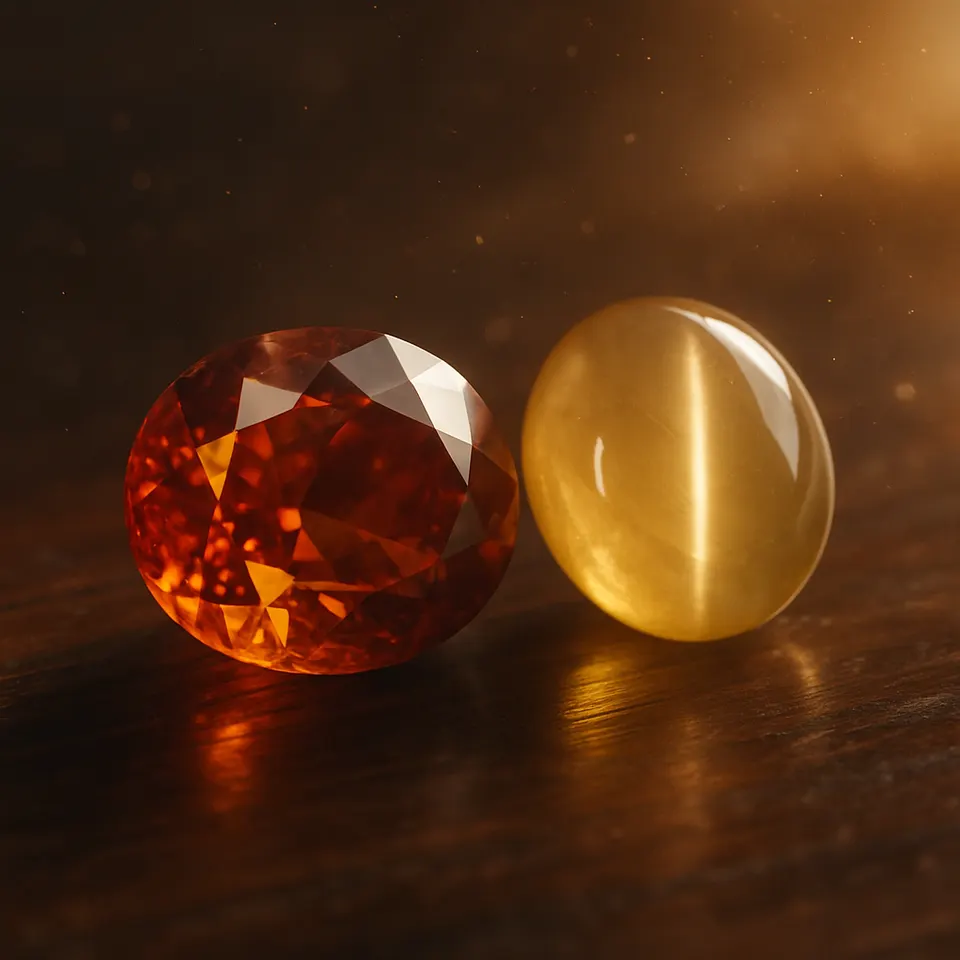
- Remedies: Traditional Vedic remedies for Rahu include donating to outcasts or foreigners, wearing hessonite garnet, and chanting the Rahu mantra (Om Raam Rahave Namaha). For Ketu, donate to spiritual causes, wear cat's eye chrysoberyl, and chant Om Kem Ketave Namaha. Do I think these work? Sometimes. More often, I think conscious awareness works better. But if ritual helps you create intentionality, use it.
!Close-up of hessonite garnet and cat's eye gemstones on a dark wooden surface with soft golden light
The Bigger Picture: Desire and Liberation
Here's what I find most beautiful about Rahu and Ketu: they're the astrological embodiment of the central tension in human life. We want things. We also know, deep down, that wanting won't save us. Rahu is the craving. Ketu is the wisdom that craving is suffering. And we're asked to live in both truths at once.
In the Phaladeepika (chapter 25), the sage Mantreswara writes that Rahu gives results like Saturn—restriction, delay, the foreigner's struggle—but also sudden unexpected gains. Ketu gives results like Mars—impulsive cuts, accidents, fevers—but also intuitive leaps and spiritual breakthroughs. Both nodes operate outside normal time. They don't respect your five-year plan. They operate on soul time, which is another way of saying: they operate on their time.
If you're in a Rahu phase, you're going to want. Let yourself want. Chase the thing. Just stay awake while you do it. Notice when the craving becomes desperation. Notice when you're lying to yourself. Rahu will give you the experience you're meant to have, but it won't hand you peace. That's not its job.
If you're in a Ketu phase, you're going to lose things. Let them go. Don't cling to the job, the person, the version of yourself that's finished. Ketu is making space. It feels like emptiness at first. But emptiness is where new growth starts. You can't plant seeds in soil that's already full.
The nodes don't care if you're comfortable. They care if you're evolving. And evolution, let's be honest, is rarely comfortable. It's the snake shedding skin. The caterpillar dissolving. The eclipse that makes you look away because the light is too strange.
Your Rahu-Ketu Story
So where are your nodes? Look them up if you don't know. Find Rahu and Ketu in your birth chart and note the houses they occupy. Read the descriptions and see if your life has been orbiting those themes. Chances are, you'll recognize the patterns immediately. The thing you can't stop chasing. The thing you can't seem to hold.
Then ask yourself: am I fighting this axis, or am I working with it? Am I feeding Rahu without awareness, hoping the next achievement will finally feel like enough? Am I running from Ketu, terrified of the void? Or am I learning to ride both dragons—reaching forward with intention, releasing the past with grace?
Because here's the secret the old astrologers knew: Rahu and Ketu are two halves of the same serpent. In the myth, they were once whole. The split was violent, but it was also necessary. It created the possibility of growth. The head learns hunger. The tail learns release. And you, caught in the middle, learn to be human. Hungry and wise. Reaching and letting go. Awake in the middle of your own eclipse.
If you want to understand your personal Rahu-Ketu axis in depth—what you're here to chase, what you're here to release, and how to stop fighting your own evolution—get your free astrological reading on AstroClick. We'll map your nodes, walk through your current dasha period, and help you see the story your chart is telling. Because the nodes aren't random. They're the spine of your soul's journey. And once you see them clearly, everything else starts to make sense.