Medical Astrology: Which Planet Rules Each Organ in Your Body
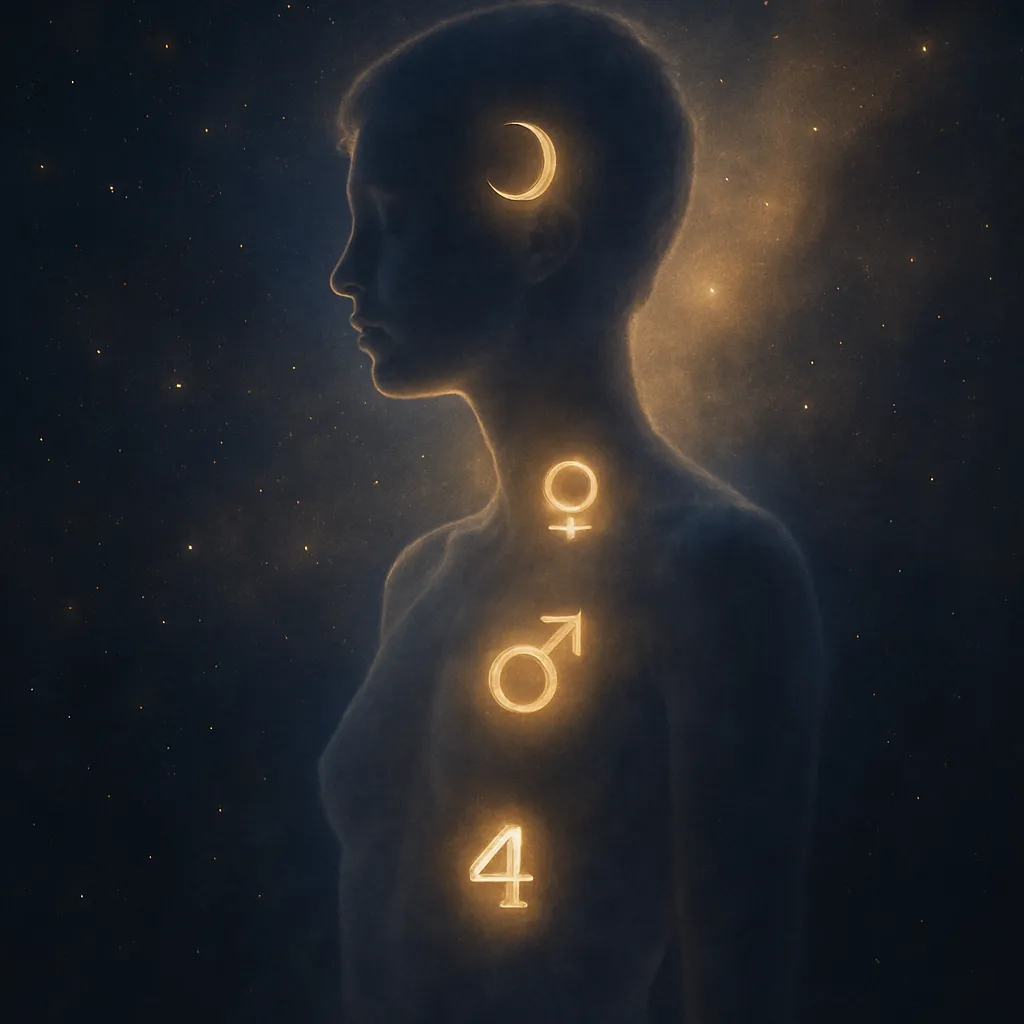
Ancient healers mapped the human body to the cosmos. Here's the precise planetary rulership of your organs and why it still matters for your health.
The Cosmic Map Inside Your Body
Your liver doesn't know it's ruled by Jupiter. Your bones have no idea Saturn is their planetary landlord. But for three thousand years, physicians from Babylon to medieval Europe treated patients by consulting the sky first and the symptoms second. Medical astrology wasn't fringe medicine — it was the medicine. Every doctor worth their salt could tell you which planet governed which organ, and when that planet went retrograde or received a harsh aspect, they knew trouble was brewing in the corresponding body part.
I'm not suggesting you skip your annual physical and just check your transits. But the correlations between planetary energies and physical systems are eerily consistent across cultures and centuries. The Sun rules the heart in Vedic astrology, Greek medicine, and Renaissance texts. Mars governs the blood and muscles everywhere you look. Coincidence? Maybe. Or maybe our ancestors observed patterns we've forgotten how to see.
Let's walk through the body from head to toe, planet by planet, and see which cosmic force runs which part of your physical machinery.
The Sun: Your Heart and Vital Force
The Sun rules the heart, and this makes perfect intuitive sense. The heart is the central pump, the life-giver, the organ that stops only when you do. The Sun sits at the center of the solar system; your heart sits slightly left of center in your chest, distributing oxygenated blood to every cell. Both are engines of vitality.
In traditional medical astrology (and I'm pulling here from both the Brihat Parashara Hora Shastra and later European texts like William Lilly's Christian Astrology), a weak or afflicted Sun in the natal chart often correlates with:
- Cardiovascular weakness, irregular heartbeat, or low stamina
- Issues with the right eye (the Sun rules the right eye; the Moon, the left)
- Problems with the spine, particularly the upper back
- General lack of vitality, chronic fatigue, or weak constitution
When the Sun is strong — placed in Leo, exalted in Aries, or well-aspected by benefics — people tend to have robust hearts, strong immunity, and what older doctors called "good vital heat." You'll often see athletes and people with exceptional stamina have a well-placed natal Sun.
Physically, the Sun also governs the stomach in some traditions (shared with the Moon), and the general distribution of prana or life force throughout the system. If you've ever noticed that people with prominent Suns seem to radiate warmth even when they're sitting still, that's the solar energy literally manifesting in their physiology.
The Moon: Fluids, Digestion, and the Mind-Body Link
The Moon controls everything that ebbs and flows. Blood circulation (the fluid movement, not the muscular pump), lymphatic drainage, all bodily fluids, the stomach, the breasts, the uterus, and the left eye. The menstrual cycle is the most obvious lunar rhythm in the body, and countless studies (plus a few thousand years of midwives' observations) confirm that the Moon's phases correlate with fertility, birth rates, and menstrual timing.
But here's where it gets more interesting. The Moon also rules the manas — the emotional mind — in Vedic astrology. And modern medicine is only now catching up to what medical astrologers knew: your gut and your brain are in constant conversation. The "gut-brain axis" is real. The stomach and intestines (lunar territory) produce about 95% of the body's serotonin. Anxiety lives in your belly as much as your head.
An afflicted Moon — say, debilitated in Scorpio or conjunct malefics like Saturn or Rahu — often shows up as:
- Digestive disorders, acid reflux, bloating, or food sensitivities
- Emotional volatility, anxiety, or depression
- Hormonal imbalances, especially in women
- Fluid retention, edema, or lymphatic sluggishness
- Sleep disturbances (the Moon governs the circadian rhythm too)
I've seen charts where the Moon sits beautifully in Cancer or Taurus, well-aspected, and the person has an ironclad stomach, sleeps like a baby, and stays emotionally steady under pressure. Correlation isn't causation, but the pattern repeats too often to ignore.
Mars: Blood, Muscles, and the Warrior Organs
Mars is heat. It's iron in the blood, the red blood cells carrying oxygen, the muscular system that lets you run or fight or lift. Mars also rules the genitals, the head and face (especially in Aries, its home sign), and anything sharp or cutting in the body: surgeries, infections, inflammations, fevers.
When Mars is strong and well-placed — in Aries, Scorpio, or Capricorn (where it's exalted) — you get:
- High energy, athletic ability, quick reflexes
- Strong immune response (Mars doesn't tolerate invaders)
- Healthy libido and reproductive function
- Good muscle tone and physical courage
But Mars afflicted or overstimulated? That's when things get hot in a bad way:
- Fevers, infections, acute inflammatory conditions
- Accidents, cuts, burns, surgeries (Mars rules the surgeon's knife)
- High blood pressure, nosebleeds, hemorrhages
- Anger issues that manifest as tension headaches or jaw clenching (TMJ)
- Overheating conditions: rashes, acne, excessive sweating
Mars transits often coincide with acute health events. I knew someone whose Mars return (around age 38) brought an emergency appendectomy. Mars rules sharp, sudden interventions — exactly what an inflamed appendix demands.
Mercury: The Nervous System and Communication Networks
Mercury governs the nervous system, the brain's processing speed, the lungs and respiratory system, the skin (as a sensory organ), the tongue, and the hands. Basically, Mercury rules everything that transmits information: nerves firing, breath moving, words forming, skin sensing temperature.
A strong Mercury (exalted in Virgo, happy in Gemini) gives:
- Sharp cognition, quick learning, good memory
- Healthy lungs, clear speech
- Dexterous hands, coordination
- Resilient nervous system under stress
Mercury afflicted (retrograde at birth, combust with the Sun, or aspected by malefics) can show as:
- Anxiety, racing thoughts, insomnia
- Respiratory issues: asthma, allergies, shortness of breath
- Skin conditions (eczema, psoriasis), especially stress-triggered
- Speech impediments, stutter, or communication disorders
- Nerve pain, tingling, numbness, or conditions like carpal tunnel
Modern life hammers Mercury. We're overstimulated, plugged in, scrolling constantly. No wonder anxiety and nervous exhaustion are epidemic. From an astrological health perspective, Mercury needs grounding — practices that slow the nervous system (breathwork, meditation, walking barefoot) are Mercury medicine.
Jupiter: The Liver, Fat Tissue, and Expansion Gone Right (or Wrong)
Jupiter is the great benefic, and it rules the largest internal organ: the liver. It also governs fat tissue, the hips and thighs, the pancreas, and growth processes in general. Jupiter expands whatever it touches, which is wonderful for wisdom, wealth, and optimism — but tricky for body weight and blood sugar.
When Jupiter is well-placed (in Sagittarius, Pisces, or Cancer, where it's exalted):
- Healthy liver function, good detoxification
- Balanced metabolism, appropriate growth
- Strong ethical compass (Jupiter rules morality, which affects stress and health)
- Optimism that supports immune function (yes, positive outlook correlates with better health outcomes)
Jupiter afflicted or overactive can mean:
- Liver issues: fatty liver, sluggish bile production, hepatitis susceptibility
- Weight gain, especially around the hips and abdomen
- Diabetes or blood sugar dysregulation (Jupiter + Venus combinations are classic for this)
- Tumors or benign growths (Jupiter expands; sometimes that's not helpful)
- Overindulgence in food, alcohol, or sweets (Jupiter loves pleasure)
I find Jupiter health issues frustrating because they often stem from too much of a good thing. Jupiter wants to enjoy life, and that's beautiful — until it tips into excess. Moderation is not Jupiter's natural mode, which is why Jupiterian types need structure around diet and lifestyle.
Venus: Kidneys, Reproductive System, and the Pleasure Organs
Venus rules the kidneys, the throat and neck, the venous blood return system, the reproductive organs (especially in women), and the sense of taste. Venus is balance, beauty, and sweetness — the kidneys literally balance your body's pH and electrolytes.
Strong Venus (in Taurus, Libra, or Pisces, where it's exalted):
- Healthy kidney function, good fluid balance
- Clear skin, graceful movement
- Hormonal harmony, especially estrogen and progesterone
- Resilient throat and voice
- Balanced appetite for sweets (enjoys but doesn't crave)
Venus afflicted can show as:
- Kidney stones, urinary tract infections, chronic kidney issues
- Hormonal imbalances, PCOS, or irregular cycles
- Sore throats, thyroid issues, neck tension
- Skin breakouts (Venus rules beauty; afflicted Venus disrupts it)
- Sugar addiction, diabetes (Venus loves sweetness; too much Venus energy craves it pathologically)
Interestingly, relationship stress (Venus territory) often manifests in kidney or throat issues. The kidneys are paired organs, symbolically linked to partnership. Throat issues emerge when you can't speak your truth in a relationship. The body keeps the score, and Venus writes the ledger.
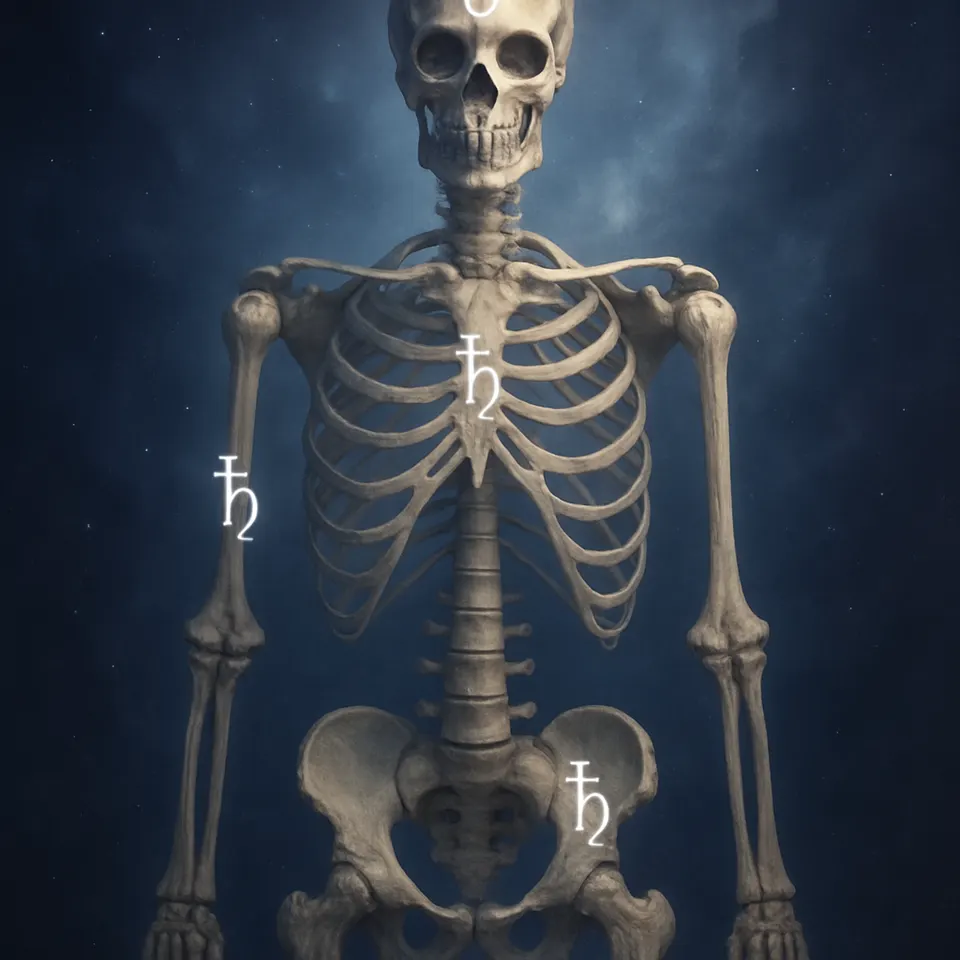
Saturn: Bones, Teeth, and the Architecture of Time
Saturn is the taskmaster, and it rules everything that gives your body structure and longevity: bones, teeth, joints, skin (as a protective barrier), knees, and the aging process itself. Saturn is slow, cold, dry, and contracting — the opposite of Jupiter's warm expansion.
A well-placed Saturn (in Capricorn, Aquarius, or Libra where it's exalted):
- Strong bones and teeth, good bone density into old age
- Resilient joints, disciplined approach to physical maintenance
- Graceful aging, longevity
- Ability to endure hardship without breaking (physically and mentally)
Saturn afflicted (debilitated in Aries, or harshly aspected):
- Weak bones, osteoporosis, fractures
- Dental problems, tooth loss, TMJ
- Arthritis, joint pain, stiffness
- Chronic conditions that develop slowly and last long
- Depression, isolation (Saturn rules melancholy in humoral medicine)
- Skin issues: dryness, eczema, psoriasis, premature aging
Saturn transits (especially the Saturn return at ages 28–30 and 58–60, and the Sade Sati in Vedic astrology) are notorious for bringing chronic health issues to the surface. These aren't random. Saturn tests the structure. If you've been neglecting your body's foundation — sleep, nutrition, bone health, stress management — Saturn will make you pay the bill with interest.
The good news? Saturn rewards discipline. People who treat their bodies with Saturnian respect (consistent exercise, good posture, bone-building nutrition, regular dental care) often age better than their genetics would predict.
Rahu and Ketu: The Shadow Nodes and Mystery Illnesses
In Vedic astrology, the lunar nodes Rahu (North Node) and Ketu (South Node) don't rule specific organs the way the visible planets do. Instead, they govern the unusual, mysterious, and hard-to-diagnose health issues.
Rahu is obsession, illusion, and foreign influence. Health-wise, it shows up as:
- Allergies and autoimmune conditions (the body attacks itself — very Rahu)
- Addictions, especially to substances or behaviors
- Phobias, psychosomatic illness
- Cancer (uncontrolled, abnormal growth)
- Diseases contracted from foreign travel or unusual sources
Ketu is detachment, spirituality, and past-life karma. It can indicate:
- Mystery illnesses doctors can't pin down
- Sudden acute events (accidents, surgeries)
- Neurological conditions, especially when combined with Mercury
- Infections, fevers, inflammation (Ketu has a Mars-like quality)
- Moksha diseases — illnesses that force spiritual awakening or withdrawal from the world
I've seen Rahu-Ketu involvement in charts of people with chronic Lyme, long COVID, fibromyalgia, and other conditions that baffle conventional medicine. The nodes don't play by the usual rules.
Putting It All Together: Reading Health in the Birth Chart
So how do you actually use this? Start with your natal chart. Look for:
- The Ascendant and its ruler — your overall vitality and physical constitution
- The sixth house — acute illness, daily health habits, and enemies (including pathogens)
- The eighth house — chronic illness, surgery, and transformative health crises
- The twelfth house — hospitalization, hidden illness, and loss of vitality
Then note which planets are weak, debilitated, combust, or heavily afflicted by malefics. Those are your vulnerability points. If your Saturn is debilitated and sits in the sixth house, you'll want to be proactive about bone health, joints, and teeth from a young age.
Check current transits and dashas (planetary periods in Vedic astrology). If you're running a Mars dasha and Mars is natally afflicted, this is not the time to ignore that nagging inflammation or skip the dentist appointment for that toothache (Mars rules acute pain).
Medical astrology isn't about fatalism. It's about awareness. You can't change your natal chart, but you can work with it. If you know your Moon is sensitive, you prioritize gut health and emotional regulation. If Mars is your weak point, you manage inflammation and avoid unnecessary risk. If Saturn is strong, you lean into discipline and structure — they're your medicine.
Your Next Step: See Your Full Cosmic Health Blueprint
We've covered the core planetary rulerships, but your unique chart is far more nuanced. The aspects between planets, the houses they occupy, the signs they're in, and the current transits all paint a detailed picture of your health vulnerabilities and strengths.
Want to see exactly where your chart shows potential weak spots — and, more importantly, where your natural resilience lives? Get your free personalized astrological reading at AstroClick. You'll receive a detailed analysis of your birth chart, including health indicators, current planetary influences, and practical guidance for working with your cosmic blueprint. Think of it as a user manual for the body you were born into. Your planets have been trying to tell you something — maybe it's time to listen.