Makar Sankranti: When the Sun Enters Capricorn and Why It Matters
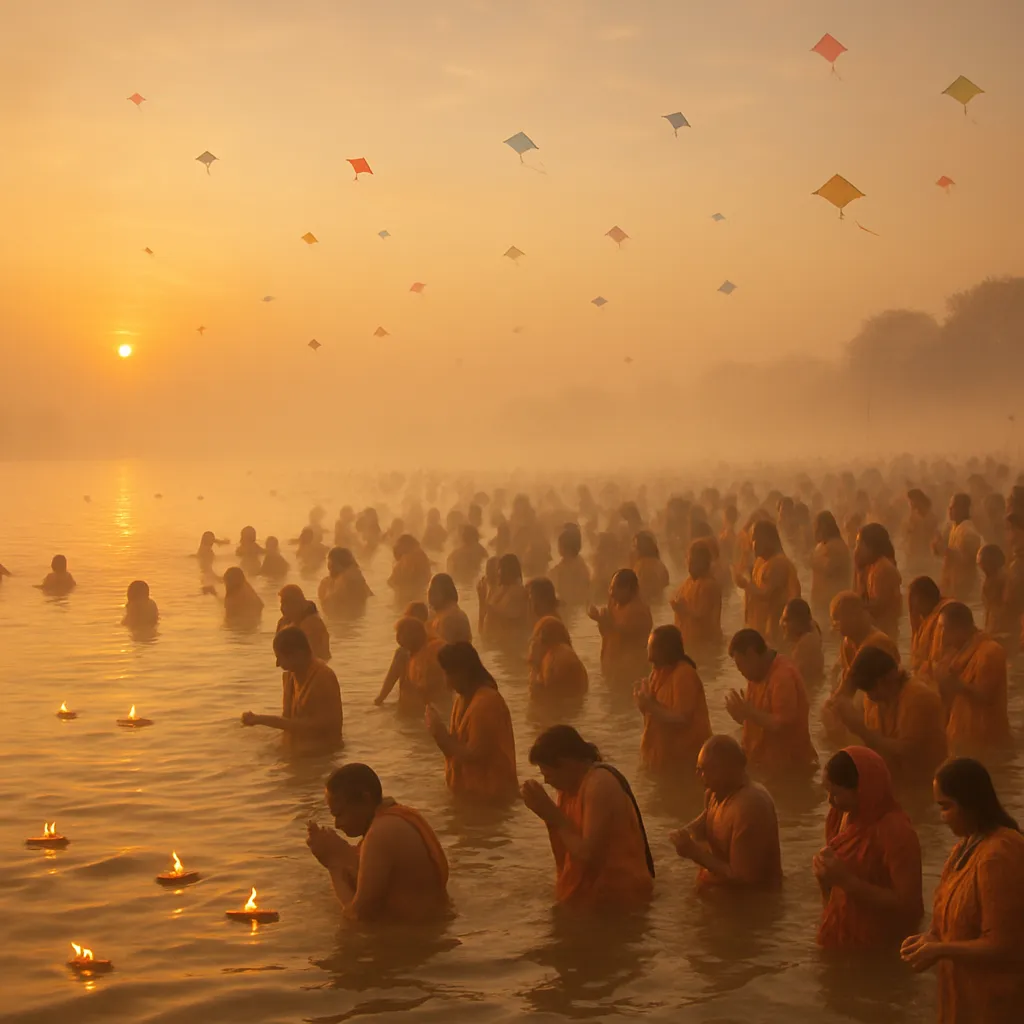
Every January, the Sun shifts into Capricorn, marking Makar Sankranti—a festival that celebrates more than harvest. It's about cosmic timing, spiritual gates, and the light returning.
Every year around January 14th, something shifts. The Sun glides into Capricorn—Makar Rashi in Vedic astrology—and millions across India wake up early, bathe in rivers, offer sesame sweets to ancestors, and fly kites until their fingers bleed from the string. You won't find Makar Sankranti on most Western astrology calendars, but ignore it and you're missing one of the most astronomically precise, spiritually dense festivals in the Hindu calendar.
What Actually Happens on Makar Sankranti
Let's start with the mechanics. Makar Sankranti marks the Sun's ingress into sidereal Capricorn. That's the key word: sidereal. While Western astrology uses the tropical zodiac (which is tied to the seasons and shifts over time due to precession), Vedic astrology sticks to the fixed star backdrop. So when the Sun enters Capricorn in the Vedic system, it's crossing a specific celestial longitude—roughly 270 degrees from the vernal equinox point as it was around 285 CE.
This usually happens on January 14th, though it can occasionally land on the 15th depending on the year. It's one of the few Hindu festivals calculated purely by solar movement, not the lunar calendar. That makes it predictable, stable, and tied directly to Earth's relationship with the Sun.
But here's what most people miss: Makar Sankranti also marks Uttarayana, the Sun's northward journey. For the six months prior, the Sun has been traveling south (Dakshinayana), and now it pivots. The days start getting longer in the Northern Hemisphere. Light returns.
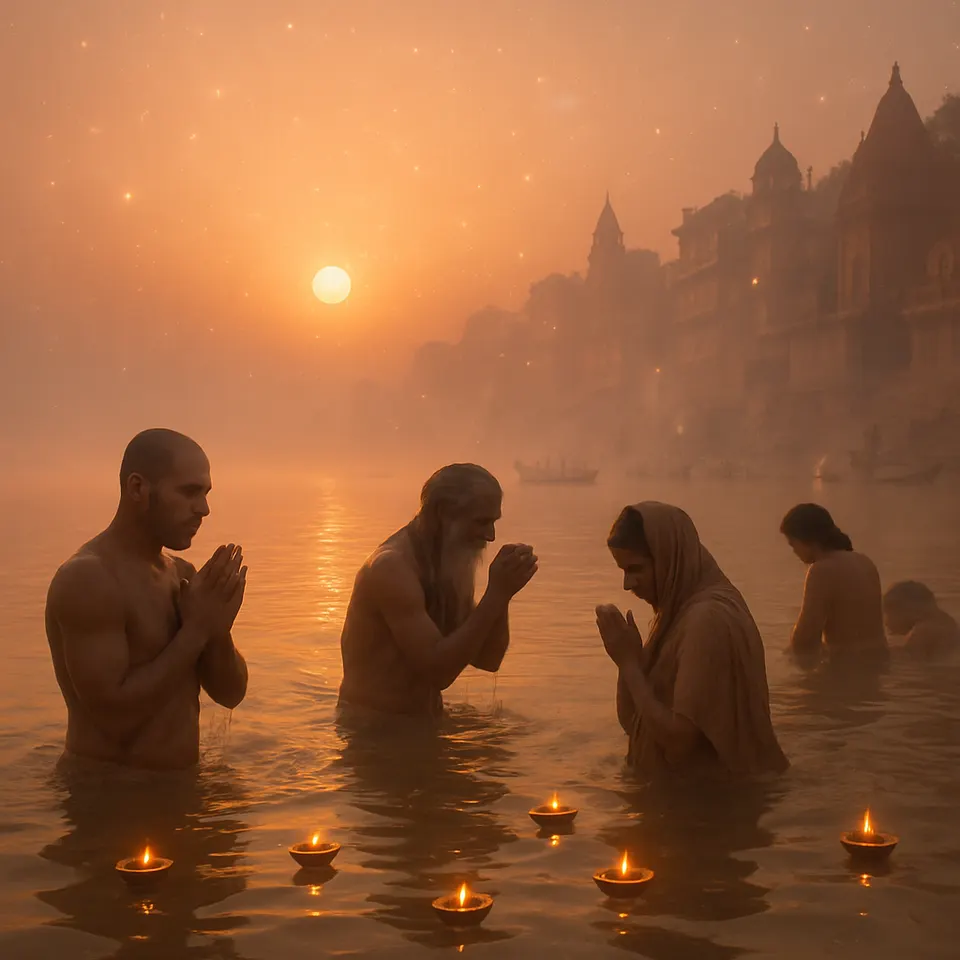
In the Mahabharata, Bhishma—the grandsire lying on a bed of arrows—waits for Uttarayana to die. He knows the timing matters. The Chandogya Upanishad calls this northern path the Devayana, the path of the gods. Souls departing during Uttarayana are said to move toward liberation, while those leaving during Dakshinayana may return to earthly cycles. Whether you take that literally or as metaphor, the symbolism is clear: this is a threshold moment.
Why Capricorn? The Sign That Makes You Work for It
Capricorn doesn't have the glamour of Leo or the mystique of Scorpio, but it's the sign that builds civilizations. Ruled by Saturn (Shani), Capricorn is about structure, discipline, endurance, and the long game. It's the elder in the room who's seen empires rise and fall and knows that shortcuts always cost you later.
When the Sun enters Capricorn, it's entering a sign of exaltation for Mars and a sign where it must temper its ego. The Sun is a king; Capricorn is a mountain. You don't conquer a mountain by declaring yourself important. You climb step by step, breathing hard, carrying your own pack.
This is why Makar Sankranti has always been linked to harvest. Farmers in North India are bringing in the winter crops—wheat, barley, mustard. The work is tangible, the results measurable. You reap what you sow, which is Saturn's favorite sentence.
The festival foods echo this practicality:
- Til (sesame) and jaggery laddoos—sesame is Saturn's grain, jaggery is unrefined sweetness earned from cane
- Khichdi in Uttar Pradesh—simple, nourishing, made from what the land gives you
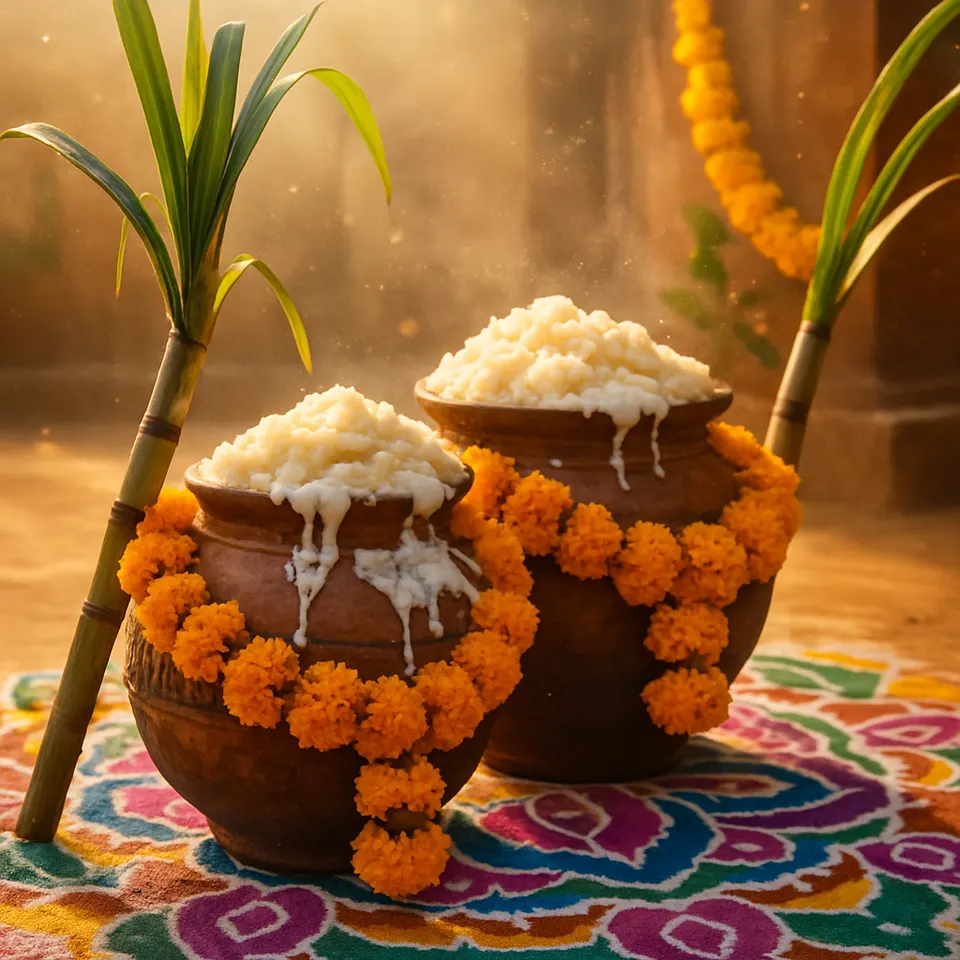
- Pongal in Tamil Nadu, cooked outdoors in clay pots until it overflows, a literal offering of abundance
There's no fasting here. No abstinence. Makar Sankranti says: work hard, eat well, share what you have.
The Spiritual Gate: Why Saints Say This Day Is Different
Here's where it gets interesting. According to several classical texts, including the Dharmasindhu and various Puranas, charitable acts performed during Makar Sankranti—and the month that follows—carry amplified merit. Giving on this day is like planting a seed in the best soil at the right season. The yield is exponential.
I've always found this idea fascinating because it flips our usual thinking. We tend to treat spiritual practice as something interior, private, divorced from the calendar. But Vedic tradition insists that time itself has texture. Some moments are more porous, more conducive to transformation.
The most common ritual? Til daan—donating sesame seeds, often mixed with jaggery or coins. Sesame is black, rough, humble. It's associated with Shani, the planet of karma and consequence. Giving it away is symbolic: you're offering up the hard, dark residue of past actions, clearing karmic debt.
Rivers become pilgrimage sites. The Ganges at Haridwar and Varanasi, the confluence at Prayagraj (Triveni Sangam), the Godavari, the Krishna—millions take a holy dip. The idea is that bathing during Uttarayana purifies not just the body but subtle karmic imprints. Whether the water itself is magic or whether the collective intention of millions creates a psychic field, I can't say. But people have been doing it for millennia, and they keep coming back.
Kite Flying and the Forgotten Solar Worship
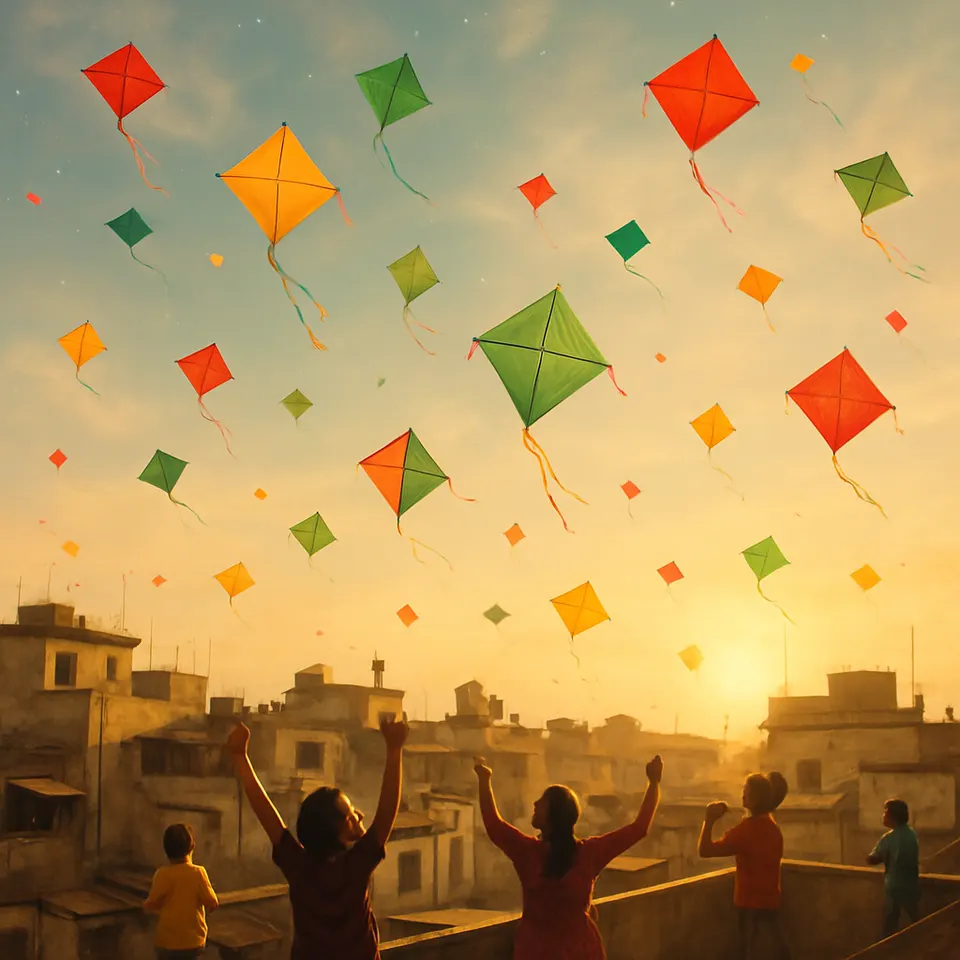
Walk onto any rooftop in Gujarat or Rajasthan on Makar Sankranti and you'll see the sky stitched with kites. Reds, yellows, greens—hundreds of them, their strings coated in powdered glass, engaged in aerial combat. It looks like a game, and it is, but it's also something older.
Kite flying on this day is about reaching toward the Sun. You're literally sending something up into the realm of Surya, the solar deity. In some villages, the first kite flown is an offering, and it's deliberately cut loose to drift away as a symbolic gift.
There's also a health angle. January is cold and damp in North India. People spend months indoors. Makar Sankranti forces you onto the roof, into the sunlight. You're absorbing Vitamin D, moving your body, competing, laughing. It's folk medicine disguised as festival.
But here's what I love: the festival doesn't ask you to be solemn. It doesn't demand renunciation. Makar Sankranti is exuberant. Loud. Communal. It says that devotion to the Sun can look like a kid tangling a neighbor's kite and shouting in triumph.
Astrology and Personal Practice: What to Do with This Transit
So how does this apply to you, personally, especially if you're not Hindu or Indian?
First, check your Vedic birth chart. Where is sidereal Capricorn in your chart? That house is getting activated by the Sun for the next thirty days. If Capricorn is your 10th house, expect career matters to heat up. If it's your 4th, home and inner foundation come into focus. The Sun illuminates, and Capricorn asks: what are you actually building here?
Second, this is an excellent month to:
- Set concrete, measurable goals (Capricorn loves a spreadsheet)
- Do something hard that you've been avoiding
- Audit your commitments—what are you doing out of obligation vs. genuine alignment?
- Make an offering to time itself: commit to a 30-day practice and actually finish it
If you follow transits, note that the Sun's journey through Capricorn each year is a reset point for collective solar energy. In Vedic astrology, the Sun represents the soul (Atman), government, father figures, authority, and vitality. Capricorn tempers the Sun's natural radiance, asking it to prove itself through work, not proclamation.
Third, if you want to honor the festival itself—even from a distance—try this:
- Wake up early on January 14th and watch the sunrise
- Prepare something with sesame seeds (tahini counts)
- Give something away that day: money, food, time
- Spend a few minutes in gratitude for the structures in your life that actually hold you up
You don't need a priest or a river. The core of Makar Sankranti is acknowledging the Sun's movement and aligning your own rhythm with it.
Regional Variations: One Sun, Many Celebrations
India is vast, and so are the ways people celebrate this solar shift.
In Punjab, it's Lohri the night before—bonfires, folk songs, popcorn and peanuts thrown into the flames. It's connected to the winter solstice traditions and the rabi crop.
In Tamil Nadu, it's Pongal, a four-day harvest festival. The second day, Thai Pongal, is when families cook the sweet rice dish outdoors, letting it boil over as a sign of prosperity. Cows are decorated, honored as partners in agriculture.
In Assam, it's Magh Bihu or Bhogali Bihu. People build makeshift huts (meji) and burn them at dawn, feasting on rice cakes and pithas through the week.
In Gujarat and Rajasthan, it's all about kites and sweets made from til and jaggery. Markets explode with undhiyu (a winter vegetable mix) and chikki (sesame brittle).
In West Bengal, the Ganga Sagar Mela draws hundreds of thousands to the point where the Ganges meets the Bay of Bengal. It's one of the largest pilgrimages in the country, though far less famous internationally than Kumbh Mela.
What strikes me is the common thread: every region is celebrating the return of light, the reward of patient work, and the Sun's benevolence. The rituals differ, but the gratitude is the same.
The Astrological Layer Most People Ignore
Most articles on Makar Sankranti treat it like folklore. I want to point out something deeper.
The Sun's ingress into each sign is called a Sankranti in Vedic astrology. There are twelve of them each year. But Makar Sankranti and Karka Sankranti (when the Sun enters Cancer, marking Dakshinayana) are considered the two most potent.
Why? Because they mark the solar solstices in the sidereal system. These are hinge points. The Sun is changing direction along the ecliptic relative to Earth's tilt. Energetically, these are transition moments when the veil between mundane time and sacred time thins.
Classical texts like the Brihat Samhita (chapters 2–3) emphasize the importance of Sankrantis for rituals, donations, and beginning new ventures. Varahamihira, the 6th-century astronomer-astrologer, noted that Sankrantis are sensitive periods where planetary energies shift in observable ways—weather patterns, human behavior, even political events.
If you track your own life against the twelve Sankrantis each year, you might notice a pattern. I know astrologers who swear that Sankranti days are when clients have breakthroughs, when stuck situations suddenly move, when the energy in a room changes even if no one says a word.
It's subtle. Not as dramatic as a Mercury retrograde or a solar eclipse. But it's there if you pay attention.
Bringing It Home: How to Work with Capricorn Season
You don't have to be in Varanasi to work with this energy. The Sun is the same Sun wherever you are, and Capricorn season (sidereal or tropical) is a gift if you use it right.
Here's what I do every year:
- Audit my foundations. What habits, routines, relationships, or projects are actually serving my long-term goals? What's just noise?
- Recommit to something hard. Capricorn doesn't reward dabbling. Pick one difficult thing and show up for it daily.
- Honor the elders. Capricorn is the sign of tradition, lineage, ancestors. I make it a point to reach out to older family members, ask them questions, listen to stories.
- Simplify my diet. Eat seasonal, local, simple. Capricorn is not the time for twelve-ingredient smoothies.
- Get outside in the early morning. Even five minutes of sunlight on your face recalibrates your circadian rhythm and grounds the nervous system.
And if you're feeling the weight of Saturn (which rules Capricorn), remember this: Saturn doesn't punish you. It just refuses to let you cut corners. The moment you stop resisting and start doing the work, Saturn becomes your greatest ally.
Why This Festival Still Matters
In an age where most of us live under artificial light, eat food grown a thousand miles away, and lose track of what season it even is, Makar Sankranti is a rare thing: a festival that insists you notice the Sun.
It doesn't ask you to transcend the body or escape the world. It asks you to be here, in the dirt and the daylight, grateful for the harvest, humble in the face of time, and generous because you've been given enough.
That's not mystical. It's just true.
If you want to go deeper into how the Sun's current position affects your personal chart, or if you're curious where Capricorn falls in your Vedic horoscope, try a free reading over at AstroClick. You'll get a breakdown of your chart, your current transits, and insights tailored to where you actually are in your life—not generic horoscopes, but the real architecture of your sky.
The Sun is moving. The question is: are you moving with it, or are you still standing in last year's shadow?