Makar Sankranti: Why the Sun's Shift into Capricorn Changes Everything
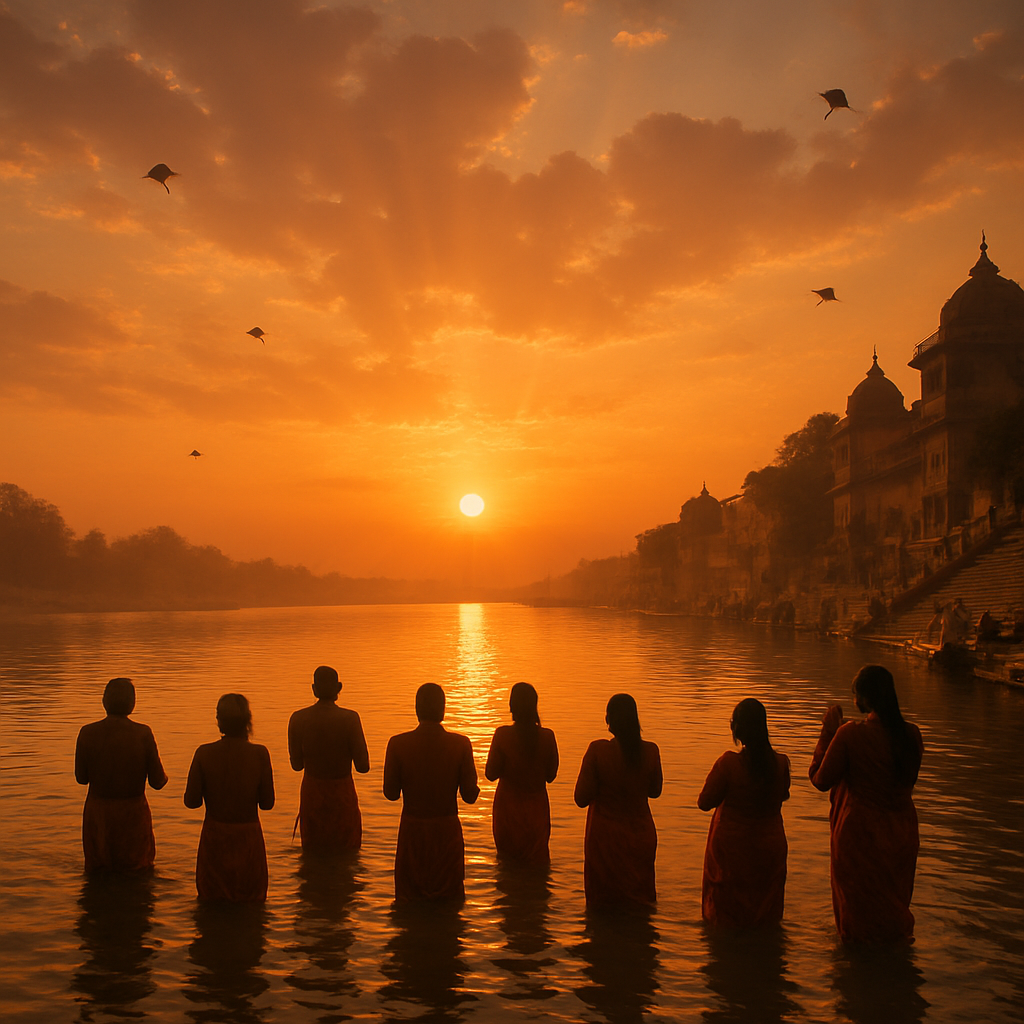
Makar Sankranti isn't just a harvest festival. It's a cosmic reset when the Sun moves into Capricorn—kicking off six months of focused, disciplined energy. Here's what it means for your charts and your life.
You've probably seen the Instagram posts: sesame sweets, kites dotting the sky, someone's grandmother insisting on a ritual bath. Makar Sankranti gets reduced to "the harvest festival" more often than not. But here's what most people miss—this is one of the few truly fixed astronomical events in the Hindu calendar, tied to the Sun's actual motion rather than the Moon's phases.
Around January 14th each year, the Sun enters Makara (Capricorn). In Vedic astrology, this marks the end of the winter solstice period. But it's more than just a date. It's the moment when the Sun, having reached its lowest point in the southern hemisphere, begins its northward journey. The days get longer. The energy shifts from the reflective, watery depth of Sagittarius to the grounded, ambitious realm of Capricorn. And if you're paying attention to your own birth chart, this transit can feel like someone turned the lights back on after a long, dreamy twilight.
So why does this matter? Because the Sun in Capricorn isn't subtle. It's the energy of a CEO who hasn't slept in two days but still shows up at 5 a.m. to check the quarterly reports. It's Saturn-ruled, structured, patient—and it asks you to trade wishful thinking for a real plan.
The Astrology Behind the Date
Here's something most online articles won't tell you: Makar Sankranti is one of the few pan-Indian festivals that doesn't wobble with the lunar calendar. It falls on the same solar date every year (give or take a day due to precession). The Sun in Vedic astrology is dignified in Capricorn—it's exalted here, reaching 10° of Capricorn at its peak strength. This means the Sun can work its best: giving clarity, authority, and a no-nonsense attitude.
In the Brihat Parashara Hora Shastra (Chapter 27, verses on planetary strengths), the Sun's exaltation point is spelled out clearly at 10° Aries and its fall at 10° Libra—but Capricorn is considered a friendly sign for the Sun because it's the sign of its own friend Saturn. The Sun gets along with Saturn in a way that's productive, not warm. Their relationship is like a strict teacher and a diligent student. It works.

What this means for you: If you've been feeling scattered since December, the Sun's shift into earthy Capricorn pulls you back into your body. It's excellent for starting something that requires endurance—a fitness routine, a savings plan, a long-term project. But don't expect emotional fireworks. Expect progress.
The Six Months Ahead: Uttarayana Begins
Makar Sankranti also marks the start of Uttarayana—the six-month period when the Sun travels northward. In Vedic tradition, this is considered the daytime of the Devas (celestial beings). It's an auspicious window for new beginnings, weddings, and major life changes. The Mahabharata tells us that Bhishma Pitamah chose to die during Uttarayana because it leads to liberation (moksha). That's how potent this period is considered.
From a practical standpoint, the Sun's northward journey means increasing light and wakefulness. You might find yourself sleeping less but feeling more alert. This is a great time to:
- Launch a business or a creative project you've been postponing
- Commit to a daily discipline—yoga, writing, meditation
- Have difficult conversations you've been avoiding (Saturn's influence makes them necessary)
- Clean out your physical and digital space
But here's the nuance: not everyone feels this as a clean, positive shift. If you have planets at 25°–30° of mutable signs (Gemini, Virgo, Sagittarius, Pisces), the Sun's ingress can actually feel like pressure, not liberation. This is the astrological version of cleaning your oven on a Sunday afternoon—necessary but not pleasant.
I remember talking to a client with Sun in Pisces at 28°. Every January she felt a wave of melancholy, even though everything in her life was fine. Once she understood that the Sun's ingress was activating her 12th house (the house of solitude and endings), it clicked. She started planning a quiet retreat around Makar Sankranti instead of forcing herself to socialise. Game changer.
Rituals That Aren't Just Rituals
Now, about the sesame sweets and the dips in cold rivers. These aren't arbitrary. In Vedic astrology, the Sun is the karaka (significator) of the soul, vitality, authority, and the father. During Makar Sankranti, when the Sun enters its friend Saturn's sign, we're encouraged to physically honour that shift.
Take the ritual bath in a river (especially the Ganga, Yamuna, or Godavari). Water is cooling, and the Sun in Capricorn can feel dry and overwhelming. The immersion is a way to harmonise the Sun's fire with the Moon's fluidity. In Phaladeepika (a classic text on predictive astrology), it's recommended to perform abhishekam (anointing) to the Sun with water, red flowers, and sandalwood paste during its exaltation periods. Makar Sankranti is the closest most of us get to a home version of that.
And the sesame (til) sweets—tilgul, gajak, and the like—are more than tasty. Sesame seeds are warming, oily, and grounding (kapha-pacifying in Ayurvedic terms). They counteract the vata (dry, windy) quality of both winter and Saturn. The exchange of tilgul with the phrase "Eat this sweet and speak sweetly" is essentially a social ritual to balance the harshness of Saturn with the softness of Jupiter's influence (since the festival often falls in Jupiter's year). Deeply practical.
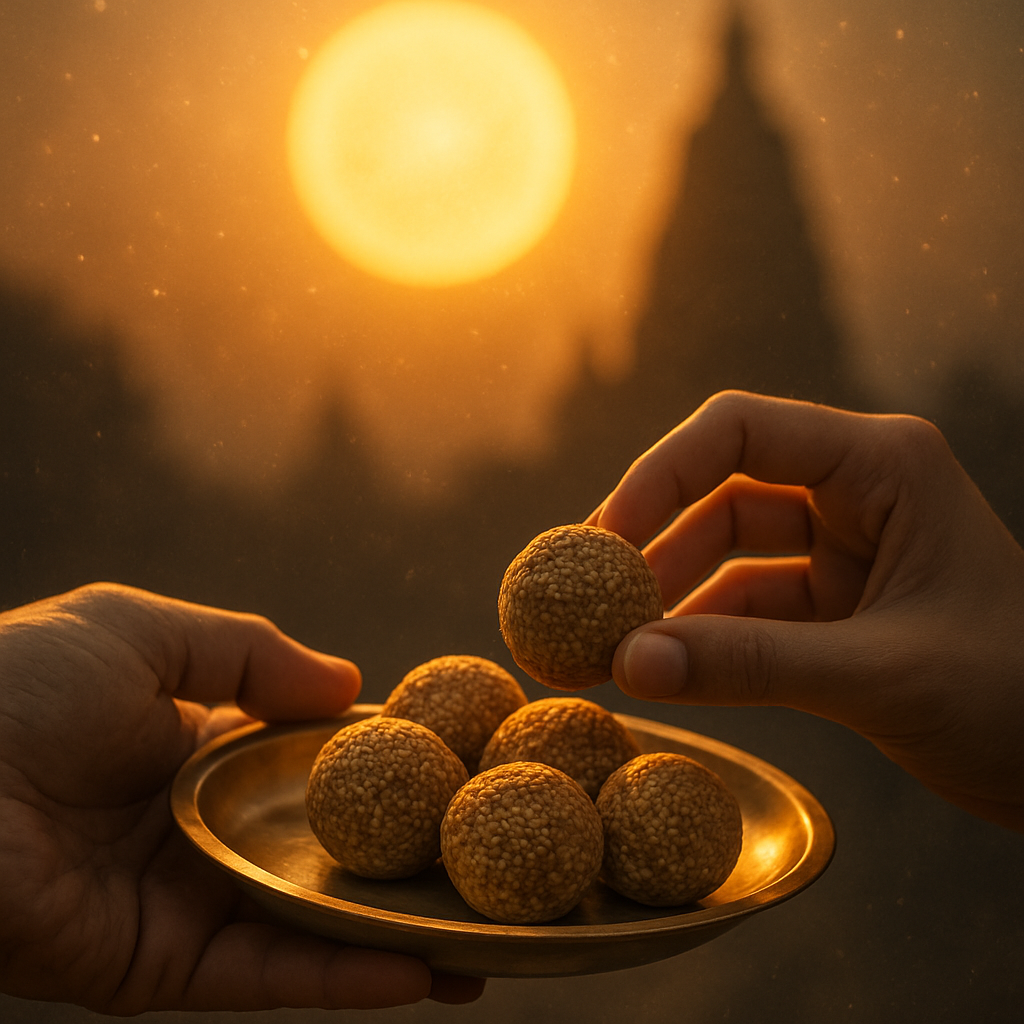
Chart Examples: Gandhi and Makar Sankranti
Let's make this concrete. Mahatma Gandhi's birth chart has Sun in Capricorn at 21°—right in the heart of Makar Sankranti season. He was assassinated on January 30, 1948, just two weeks after the Sun entered Capricorn that year. The Sun's transit that day was exactly opposing his natal Moon (a powerful and often fatal transit). But more telling: his Sun in Capricorn gave him the unwavering resolve, the Saturnine patience, and the moral authority that defined his work. He was literally born during Uttarayana, during the Sun's most disciplined season.
Another example: Steve Jobs had Moon in Capricorn (exalted) and his key product launches often happened in January or February. The iPhone was announced on January 9, 2007—right after Makar Sankranti. The Sun's energy in Capricorn aligns with innovation that's practical, design-driven, and built to last. Jobs himself was a Capricorn rising, which makes the connection even tighter.
(You can check your own chart to see if the Sun or Moon is in Capricorn. If so, Makar Sankranti is essentially your personal new year—a time when the cosmos amplifies your core qualities.)
How to Work With This Energy Without Realigning Your Entire Life
Not everyone wants to wake up at 4:30 a.m. and chant the Gayatri mantra 108 times. That's fine. The spirit of Makar Sankranti is about conscious alignment, not perfection.
Here are three simple things you can do:
- Pick one long-term goal and commit to it for 40 days. The Sun's transit through Capricorn lasts roughly 30 days, but the Uttarayana period continues until the summer solstice. Use the next 40 days as a trial run. If you can keep a promise to yourself for 40 days, you've proven you can trust yourself.
- Make a tilgul offering. Even if you're not near a temple, buy or make sesame sweets. Offer one to the Sun (a window facing south-east at sunrise works), then eat one yourself. It's a small act of acknowledging the Sun's shift.
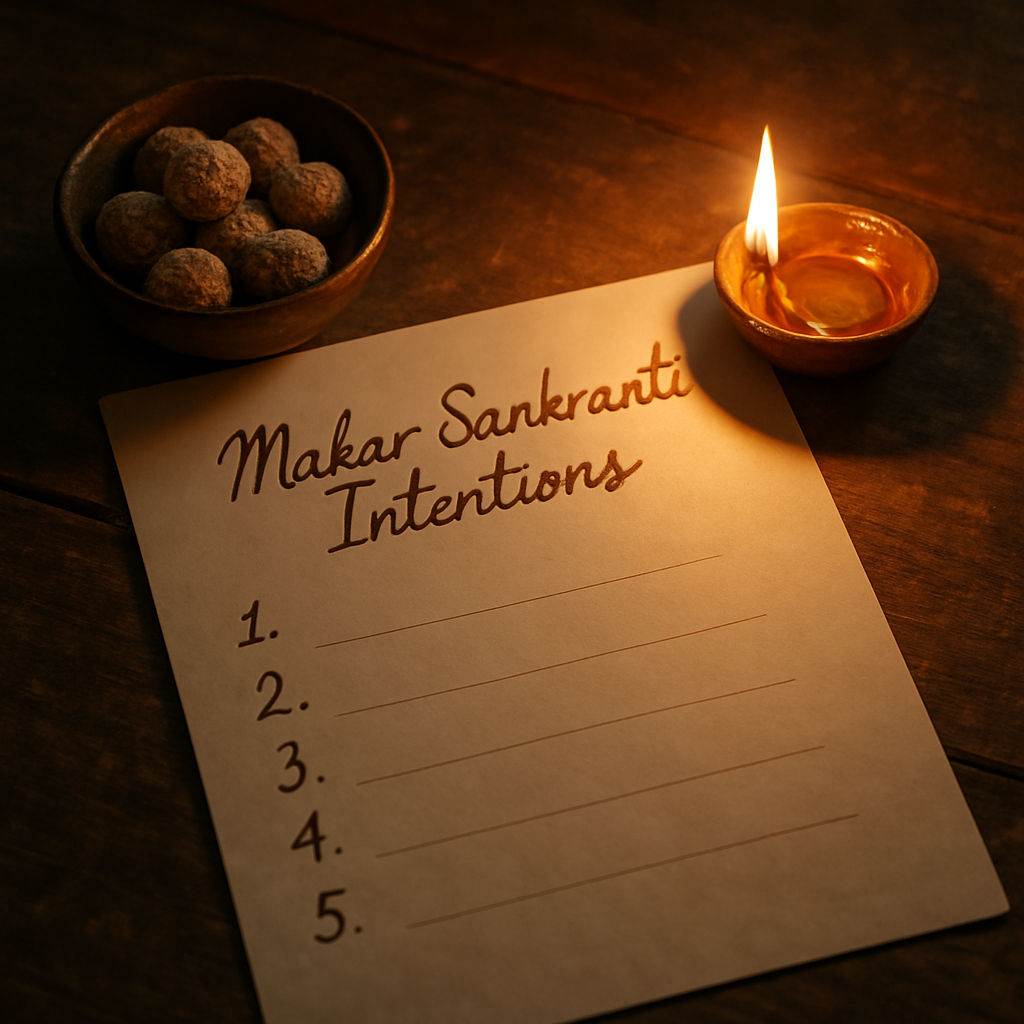
- Write down what you're releasing and what you're starting. Capricorn is about structure. A simple list on paper is enough. Get specific: "I'm releasing the idea that I need to be perfect; I'm starting a twice-weekly strength training routine." The act of writing binds the intention to the Earth.
The Bigger Picture (And Why It's Worth Paying Attention)
I've been tracking this transit for fifteen years now. Every year, without fail, January feels like a gear shift. Projects that were stalled start moving. People who were ambivalent start making decisions. And yes, sometimes it brings pressure—but it's the kind of pressure that shapes diamonds, not the kind that shatters glass.
In Vedic astrology, the Sun is the atma (soul). Capricorn is the sign of karma (action). So Makar Sankranti is essentially a soul-level check-in: are your actions aligned with your purpose? If not, the next six months will make it painfully obvious. If yes, you'll feel an accelerating momentum that's almost magical.
The classical texts like Saravali (Chapter 3, on the Sun) tell us that the Sun in Capricorn gives “a strong physique, a commanding voice, and success in political or administrative affairs.” But it also warns that an afflicted Sun can lead to “quarrels with authorities and a restless heart.” The difference comes down to how consciously you work with the transit.
So here's my invitation to you this Makar Sankranti: don't just eat the tilgul and fly a kite (though both are lovely). Take fifteen minutes to sit with the question: what does the Sun in Capricorn want me to build? Your answer might surprise you.
And if you want to know exactly how this transit hits your own birth chart—which houses are activated, which planets get triggered, what the next six months look like for you—I'd love to help. AstroClick's free birth chart calculator gives you a personalised report that factors in the Sun's transit to your specific placements. It's like having a roadmap for Uttarayana. You can grab yours in under two minutes.
Clear skies and steady hands—that's the Capricorn Sun's blessing. Let's make it count.