How to Read Your Vimshottari Dasha: The 120-Year Planetary Calendar
Vimshottari Dasha is Vedic astrology's most powerful timing tool. Learn how to decode the 120-year planetary calendar that reveals exactly when each planet governs your life.
Understanding the Vimshottari System
I've watched people learn about Vimshottari Dasha for the first time, and the reaction is always the same: disbelief, then a slow nod, then frantic scrolling through their own timeline trying to match the periods to their life events. It clicks in a way most astrological techniques don't.
Here's what makes Vimshottari different from Western progressions or transits. Instead of watching planets inch forward degree by degree, Vedic astrology assigns you a planetary "ruler" for entire blocks of time. You're born into one planet's period (called a Mahadasha), and you'll cycle through all nine in a predetermined order that spans 120 years. Each planet gets a fixed chunk: Sun gets 6 years, Moon gets 10, Mars gets 7, Rahu gets 18, Jupiter gets 16, Saturn gets 19, Mercury gets 17, Ketu gets 7, and Venus gets 20.
The math is ancient. Parashara laid it out in the Brihat Parashara Hora Shastra (Chapter 46) around 1,500 years ago, though some scholars trace the core idea back even further. What matters is this: the system works with a precision that still surprises me after fifteen years of practice.
Your birth Nakshatra determines where you enter the cycle. If you're born in Ashwini, you start with Ketu Mahadasha. Born in Rohini? You begin with Moon. The Moon's exact degree at your birth determines not only which Mahadasha you're in, but how much of it remains. Someone born at 3° Rohini has almost all of their 10-year Moon period ahead. Someone born at 12° Rohini might have only four years left before they shift into Mars.
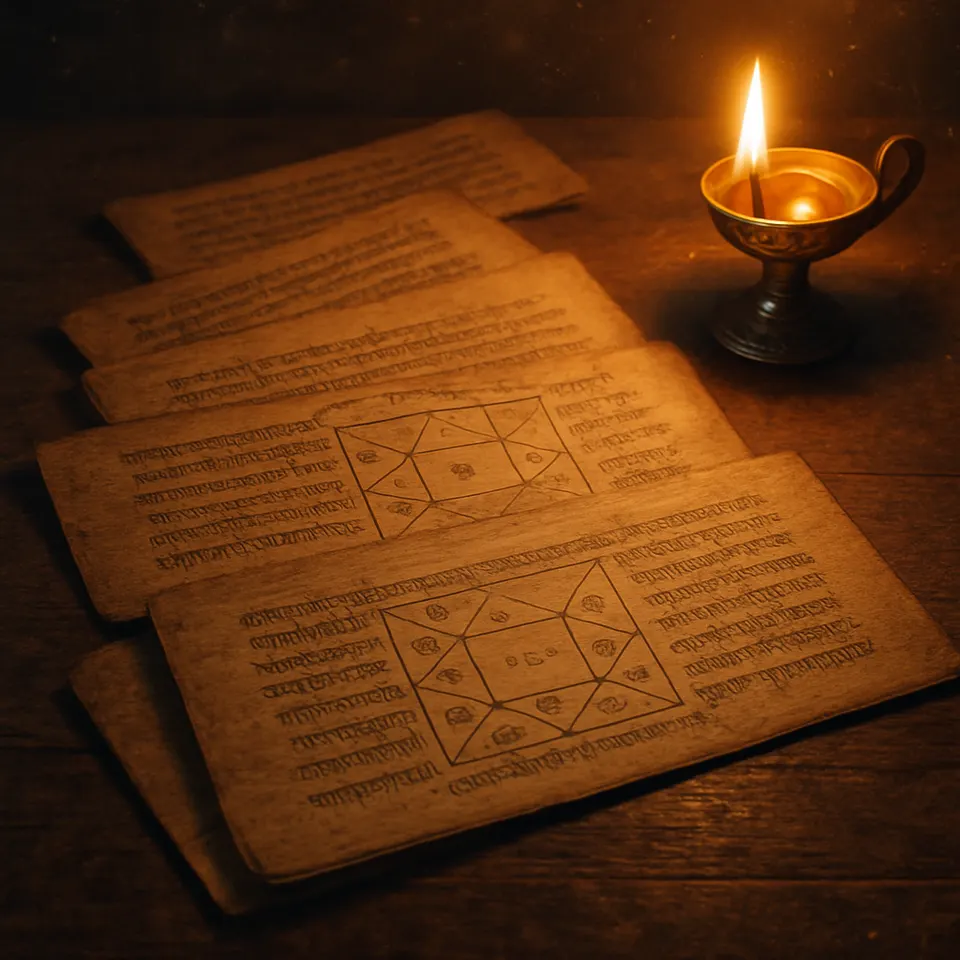
!Ancient palm-leaf manuscripts showing Vimshottari Dasha calculations with Sanskrit verses
How the Periods Nest Inside Each Other
This is where it gets beautiful and a little complicated. Each Mahadasha doesn't just run as a single note for its entire duration. It subdivides.
Inside every Mahadasha, you cycle through nine Antardashas (sub-periods), one for each planet, in the same fixed order. Inside each Antardasha, you get nine Pratyantardashas (sub-sub-periods). The fractal continues down to Sookshma and Prana levels, though most practicing astrologers stop at Pratyantar because life gets messy enough at that resolution.
Let me give you a concrete example. Say you're running Venus Mahadasha (20 years total). The first sub-period is Venus-Venus, which lasts 3 years and 4 months. Then Venus-Sun for 1 year. Then Venus-Moon for 1 year and 8 months. Then Venus-Mars for 1 year and 2 months. You cycle through all nine planets as Antardashas within that 20-year Venus umbrella.
What this means in practice: the flavor of your life shifts every few months to every few years, even within a single Mahadasha. Venus Mahadasha might sound lovely, but if you hit Venus-Saturn Antardasha and Venus is weak in your chart? You might face relationship restrictions, financial delays, creative blocks. Conversely, a tough Mars Mahadasha can have sweet pockets (like Mars-Jupiter or Mars-Venus) where things suddenly flow.
The proportions are precise. Each planet's Antardasha length is proportional to its Mahadasha length. Venus gets 20 years as a Mahadasha, so it also gets the longest slice as an Antardasha within any other planet's period. Sun gets only 6 years as a Mahadasha, so its Antardashas are the shortest.
Here's the full Mahadasha sequence, which never changes:
- Ketu: 7 years
- Venus: 20 years
- Sun: 6 years
- Moon: 10 years
- Mars: 7 years
- Rahu: 18 years
- Jupiter: 16 years
- Saturn: 19 years
- Mercury: 17 years
You can enter this cycle at any point depending on your birth Nakshatra, but once you're in, the order is fixed. After Mercury, you loop back to Ketu.
Reading Your Current Dasha
First, you need your exact birth time. Vimshottari is ruthlessly time-sensitive. A five-minute error can shift your Antardasha by weeks or even land you in a different Mahadasha entirely if you were born near a transition.
Pull up your Vedic chart (use Lahiri ayanamsa, the most widely accepted) and locate your Moon's Nakshatra. Most software will calculate your Dashas automatically, but understanding the mechanics helps you trust the output.
Let's say your Moon is at 17° Taurus. That puts you in Rohini Nakshatra (10°00' to 23°20' Taurus). Rohini is ruled by the Moon, so you were born into Moon Mahadasha. The Nakshatra spans 13°20'. Your Moon is 7° into it, which means you're about halfway through. Moon Mahadasha is 10 years, so you were born with roughly 5 years of it remaining.
Once you know your current Mahadasha and Antardasha, you can start correlating. Look at where that planet sits in your natal chart. What house does it rule? What house does it occupy? What aspects does it receive? A well-placed Jupiter Mahadasha can bring expansion, education, children, spiritual growth. A debilitated Jupiter Mahadasha might bring legal trouble, weight gain, overconfidence, philosophical confusion.
But here's the thing most beginners miss: Dasha results are modified by transits. Even a strong Jupiter Mahadasha won't save you if Saturn is transiting your 8th house and squaring your natal Moon. Conversely, a difficult Rahu period can be softened by a benefic Jupiter transit. Dasha sets the stage. Transits are the actors.
I also pay close attention to Antardasha transitions. The shift from one sub-period to another can feel like changing rooms in a house. You're still in the same building (Mahadasha), but the furniture, lighting, and mood are different. Mark these dates in your calendar. Notice what happens in the week before and after.
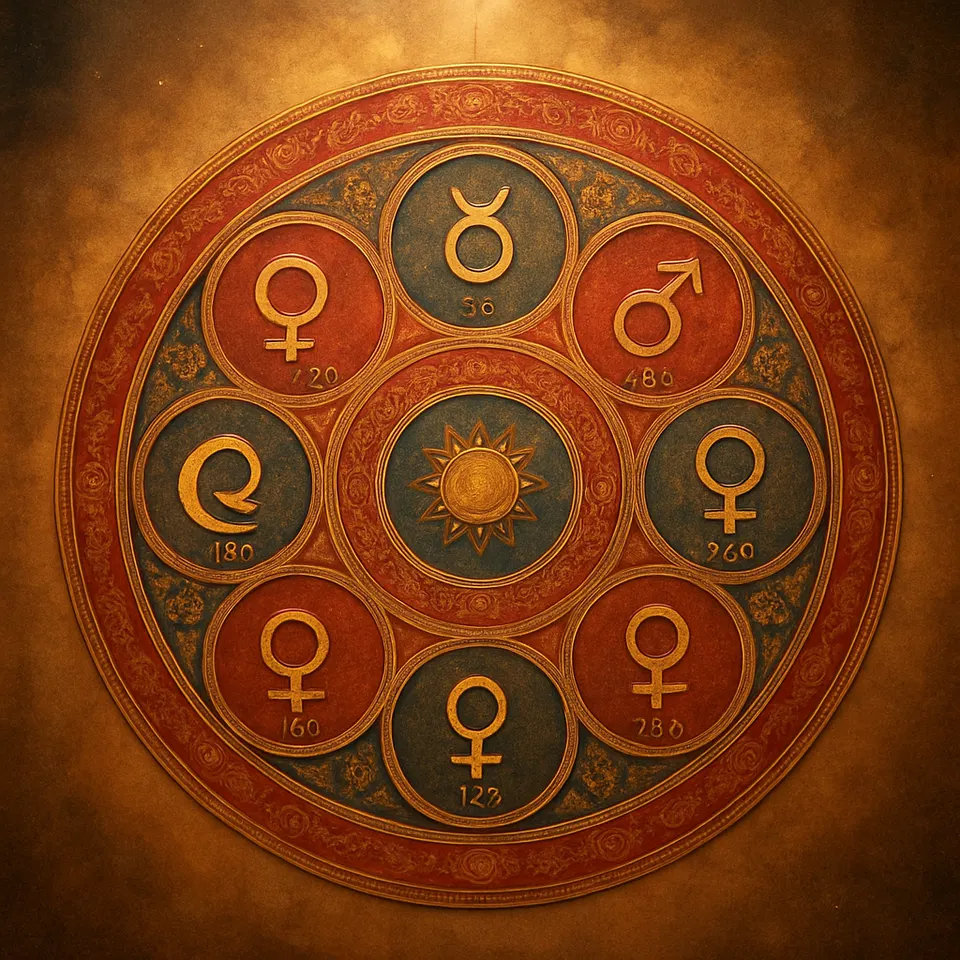
!A circular mandala diagram showing the nine planets and their Dasha durations in concentric rings
The Tricky Periods: Rahu, Ketu, and Saturn
Let's be honest. Some Dashas have a reputation, and it's not always unearned.
Rahu Mahadasha lasts 18 years, the second-longest period, and it tends to destabilize. Rahu is the North Node, a shadow planet that amplifies obsession, illusion, foreign influences, and sudden breaks from tradition. I've seen people move countries, change careers entirely, fall into addiction, or experience profound spiritual awakenings during Rahu periods. It depends entirely on Rahu's placement and condition in your chart.
If Rahu sits in your 10th house and aspects your Ascendant, Rahu Mahadasha might rocket your career forward through unconventional means (tech startups, social media fame, working abroad). If Rahu is in your 8th house conjunct Mars, you might face health scares, inheritance disputes, or psychological breakdowns.
Ketu Mahadasha is shorter (7 years) but equally intense. Ketu is the South Node: detachment, spirituality, past-life karma, losses that teach. Ketu doesn't care about your ambitions. It strips things away to reveal what's real. People often become monks, quit their jobs to meditate, or lose relationships that were karmically complete during Ketu periods. It can also bring health issues (Ketu rules the subtle body and can manifest as mysterious, hard-to-diagnose ailments).
Saturn Mahadasha runs 19 years, the longest single period, and it insists on maturity. Saturn is the strict teacher. If you've been cutting corners, Saturn Mahadasha will make you redo the work. If you've been responsible and patient, Saturn rewards with lasting success, property, authority. The first few years are usually the hardest (especially Saturn-Saturn Antardasha). The latter half often brings the harvest.
One pattern I've noticed: people who enter Saturn Mahadasha in their twenties often struggle more than those who hit it in their forties. Why? They haven't built the discipline Saturn demands yet. A 25-year-old in Saturn-Saturn is learning to delay gratification in a culture that worships instant results. A 50-year-old in Saturn-Saturn is reaping decades of steady effort.
Practical Steps to Track Your Dashas
You need a reliable calculation first. Use AstroClick, Jagannatha Hora, or any Vedic software that lets you specify Lahiri ayanamsa. Double-check your birth time against life events if possible (Vedic astrologers often use Dasha periods to rectify uncertain birth times).
Once you have your Dasha timeline, create a simple spreadsheet or document:
- List every Mahadasha and Antardasha for the next ten years
- Note the ruling planet's house position and lordship in your chart
- Mark major transits (Saturn return, Jupiter return, Rahu-Ketu axis shifts) that coincide with Dasha changes
- Track your experiences in a journal, even briefly
Here's what to journal: major events (job change, relationship shift, health issue, move), but also mood and focus. Did you suddenly become obsessed with learning a language (Mercury influence)? Did you crave solitude (Ketu)? Did relationships dominate your attention (Venus)? Patterns emerge faster than you'd think.
Pay special attention to the Mahadasha and Antardasha rulers' relationship. If you're in Sun Mahadasha and Sun-Venus Antardasha, check if Sun and Venus are friends or enemies in your chart. Natural friendships smooth things out. Natural enmities create tension. (Sun and Venus are enemies, by the way, which can make Sun-Venus Antardasha a time of ego clashes in relationships or creative frustration.)
Also watch for repeating themes. If your Venus is in the 7th house and you're running Venus Mahadasha, Venus Antardasha, you're getting a double dose of 7th house activation. Expect relationships to dominate. Marriage, business partnerships, or legal contracts could all come to the forefront.
Common Mistakes When Reading Dashas
I see beginners make the same errors over and over. Here are the big ones.
Ignoring the natal promise. Dasha timing doesn't create results out of nothing. It activates what's already in your chart. If marriage isn't promised in your 7th house or through Venus, no amount of Venus Mahadasha will bring it. Dasha is the when, not the what.
Overweighting Mahadasha, underweighting Antardasha. I'd argue Antardasha is more immediately felt. The Mahadasha sets the decade-long backdrop, but the Antardasha (and Pratyantar, if you track it) determines the month-to-month texture. Someone in Saturn Mahadasha, Venus Antardasha will have a very different year than someone in Saturn Mahadasha, Mars Antardasha, even though the Mahadasha is the same.
Forgetting divisional charts. In Vedic astrology, we don't just read Dashas from the birth chart (Rasi). We also check the Navamsa (D9) for marriage timing, Dasamsa (D10) for career, Saptamsa (D7) for children. A planet might look weak in the Rasi but strong in the relevant divisional chart, and Dasha results will reflect that nuance.
Treating all Dashas as fate. Dashas show probability windows, high-tide moments when certain themes are available. Free will still operates. You can waste a Jupiter Mahadasha by staying small and fearful. You can navigate a Rahu Mahadasha with awareness and come out transformed instead of destroyed.
Not integrating transits. Dasha without transits is like reading the script without watching the actors. Both matter. A weak Mars Mahadasha can still produce a career breakthrough if Jupiter transits your 10th house at the same time. Conversely, a strong Venus period can disappoint if Saturn is transiting your 7th.
Why This System Still Matters
Vimshottari Dasha isn't just a theoretical model. It's a lived calendar, tested across centuries and millions of charts. When I sit with clients and walk through their timeline, I can usually pinpoint relationship changes, career shifts, health events, and spiritual openings within six-month windows, sometimes tighter.
There's something grounding about seeing your life as a series of planetary seasons. You stop resisting the rhythm. You stop wondering why relationships aren't happening during your Saturn-Ketu period (they're probably not supposed to). You start preparing for opportunities during your Jupiter-Venus phase instead of being caught off guard.
And honestly? It takes the personal sting out of hard times. When you're in the thick of Rahu-Saturn Antardasha and everything feels unstable, knowing it's a phase with an end date helps. You're not broken. You're not being punished. You're in a specific planetary weather system, and it will pass.
The 120-year cycle is bigger than any single human lifespan, which means most of us will only experience six or seven of the nine Mahadashas. That limitation is part of the teaching. You don't get to sample every planetary energy in its fullest expression. You get the ones your soul (or karma, or the universe, depending on your framework) assigned you. Learning to work with them instead of against them is half the work of astrology.
If you've never tracked your Dashas before, start now. Pull your chart, find your current period, and look back at the last Antardasha transition. Did anything shift? Did a door open or close? You'll probably find the correlation is stronger than you expected. And once you see it work a few times, you won't look at time the same way again.
Ready to see your own Vimshottari Dasha timeline? Get your free personalized Vedic astrology reading on AstroClick and discover exactly which planetary period you're in right now, how long it'll last, and what themes to watch for. It's like having a roadmap for the next decade — and who couldn't use one of those?