Diwali and the 5 Days of Lakshmi: Astrological Significance of Each Day
From Dhanteras to Bhai Dooj, each day of Diwali carries a unique planetary energy. Learn how Lakshmi's blessings align with the stars and how you can tune in.
You know that feeling when the air suddenly gets crisp, and the scent of marigolds and ghee starts drifting from every corner? That's Diwali calling. But here's what most people miss: Diwali isn't just one night of fireworks. It's a five-day festival, each day tuned to a different planetary frequency. And if you've been treating them all the same, you're leaving astrological gold on the table.
Let's break down each day through the lens of Vedic astrology—what the planets are doing, what Lakshmi is offering, and how you can work with that energy instead of just lighting a diya and hoping for the best.
Dhanteras: Venus and the Seed of Prosperity
The first day, Dhanteras, falls on the 13th lunar day of Krishna Paksha (the waning fortnight). In Vedic astrology, this day is ruled by the planet Venus (Shukra), the natural significator of wealth, luxury, and relationships. But here's the thing—Venus isn't just about money. It's about what you value. Dhanteras is the day you plant the seed. You buy gold, yes, but also utensils or something that will hold your future nourishment. That's Venus in its earthy, practical form.
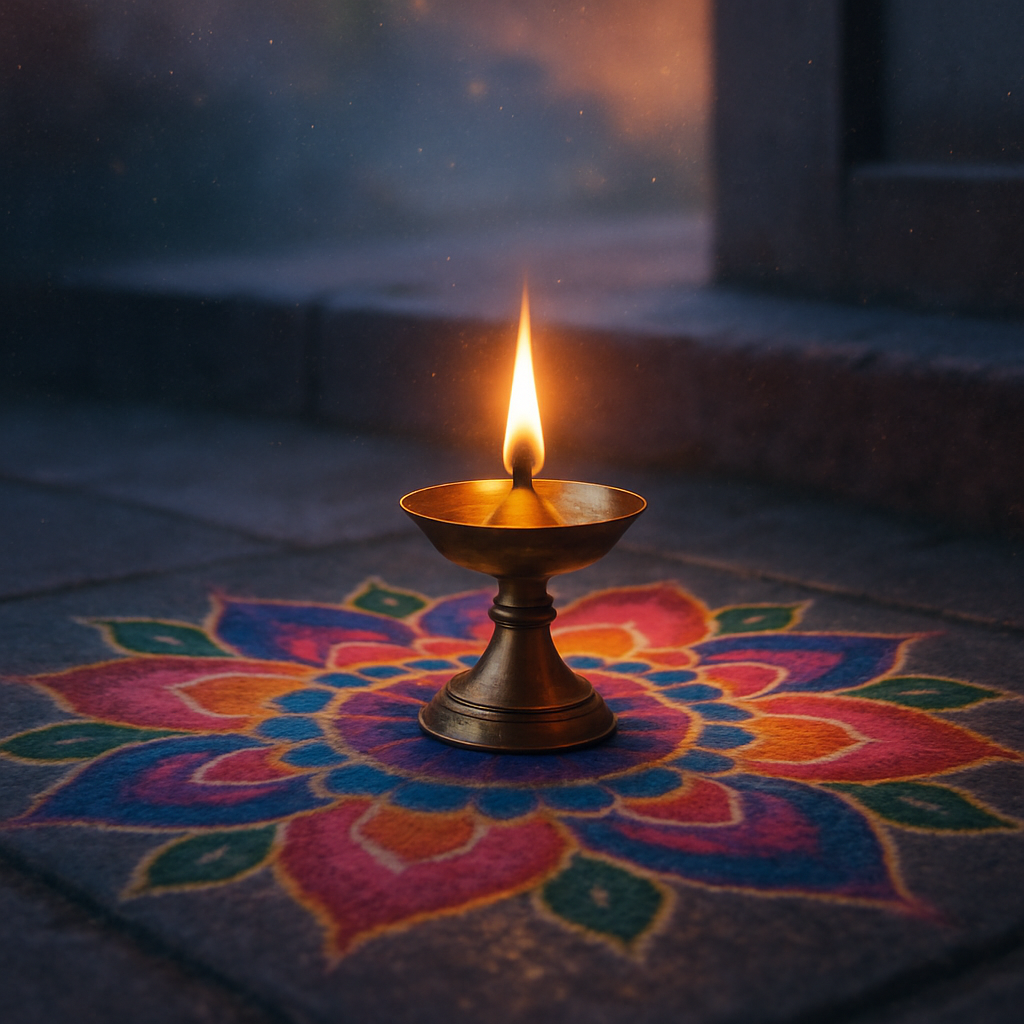
!A brass lamp with a single flame placed on a rangoli pattern at a doorstep during dusk
The nakshatra (lunar mansion) often associated with Dhanteras is Swati or Vishakha, depending on the year. Swati is the star of independence and self-sustenance—the wind that can bend but not break. This is why buying metal (especially iron or gold) is recommended: you're literally grounding the airy quality of Swati into something tangible.
Astrologically, if your birth chart has Venus in a challenging position, this is the best day to make offerings for Venus: donate white things (rice, milk) or wear a small diamond (if Venus is well-placed) to invite its grace. The planetary hour of Venus on Dhanteras is especially potent for wealth rituals.
Naraka Chaturdashi: Mars and the Burn of Purging
Day two is Naraka Chaturdashi (also called Choti Diwali). This day falls on the 14th lunar day, ruled by Mars (Mangal). Mars is fire, aggression, and surgical precision. The myth says Lord Krishna killed the demon Narakasura on this day—metaphorically, you're cutting away your own inner demons.
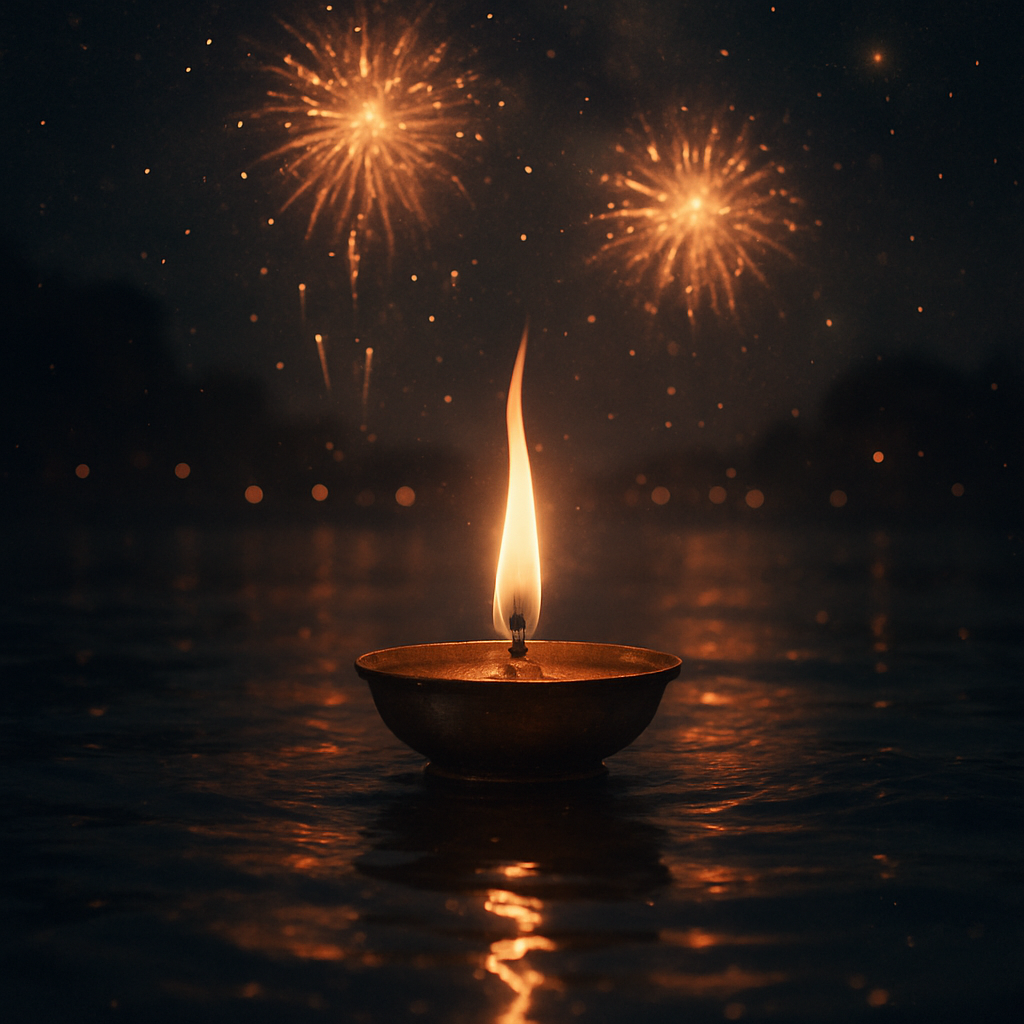
!An oil lamp floating on a river at night with firecrackers in the background
This is the day for an oil massage (abhyanga) and a bath before sunrise. Why? Because Mars governs the blood and muscles. The scrub and oil wake up your circulation, literally detoxifying your physical and energetic body. In Vedic texts like the Brihat Parashara Hora Shastra, Mars is also the karaka (significator) of courage. By facing the cold water and the early hour, you're building Mars strength.
If you have a weak Mars (look for debilitated Mars or afflictions in your chart), this day is critical. Donate red lentils, red flowers, or simply do something that requires physical effort. Mars wants movement. Sitting still on Naraka Chaturdashi is like being invited to a bonfire and staying inside. You're missing the point.
Lakshmi Puja on Amavasya: The New Moon and Infinite Potential
The main event. Amavasya (new moon) is when the sun and moon meet in the same sign. Light is at its minimum—but that's exactly when Lakshmi can enter. Why? Because darkness is the womb of creation. The new moon is about rebirth, not emptiness.
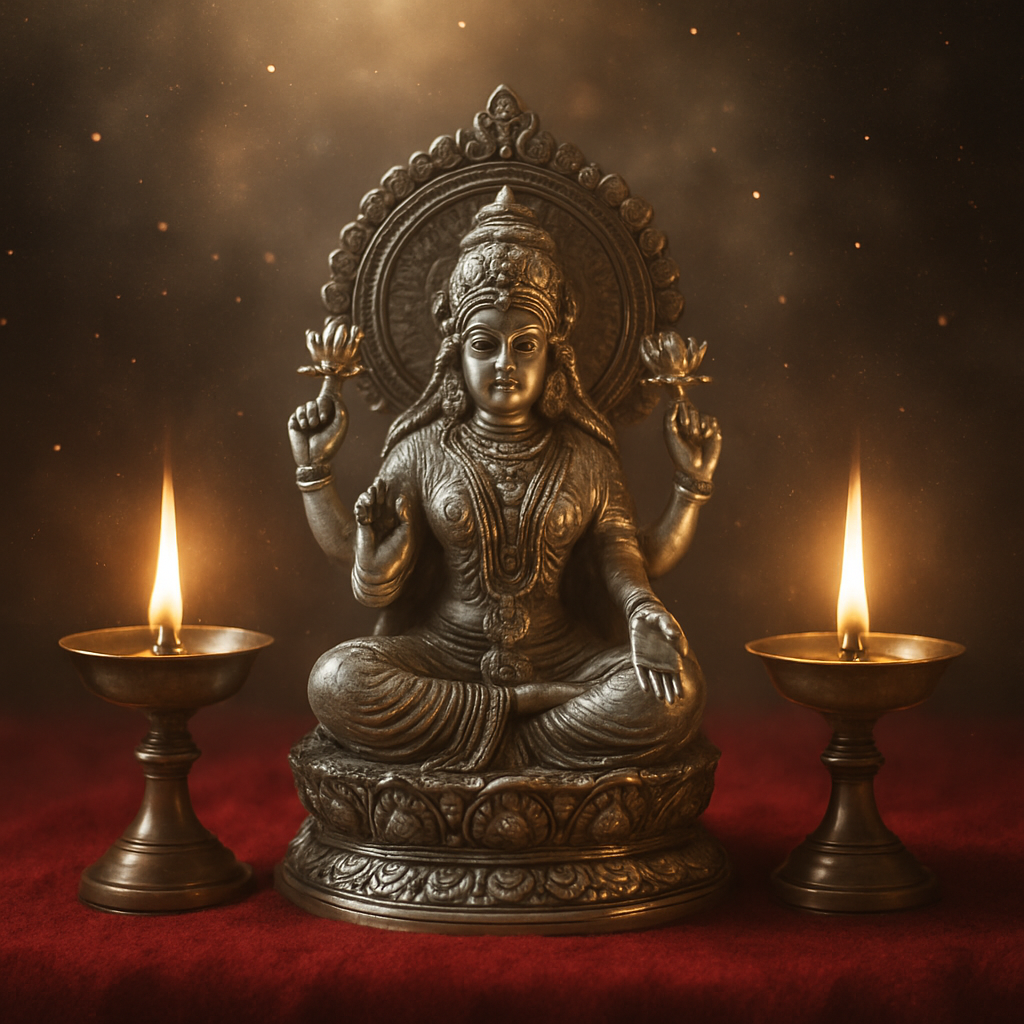
!An ornate silver idol of Goddess Lakshmi flanked by two oil lamps on a red cloth
In Vedic astrology, the new moon is a time when the Moon is combust (near the Sun) and invisible. This is paradoxically the best time for material manifestation. The Phaladeepika says that a well-placed Moon in the chart brings abundance, but on Amavasya, the Moon's receptive power is amplified. You're not asking for something new—you're making space for it.
Lakshmi Puja is traditionally done in the evening during the Pradosh Kaal (the hour after sunset). That's ruled by Saturn—yes, Saturn, the planet of structure and karma. So here's the hidden truth: Lakshmi doesn't come to those who just wish. She comes to those who have put in the work (Saturn's discipline) and now have the receptivity (Moon's openness) to receive. Think of it as a cosmic partnership.
If you're serious about astrology, note the Nakshatra of that Amavasya. In 2025, it will be in Vishakha or Anuradha depending on location. Those born under those nakshatras often have a special connection to Lakshmi.
Pro tip: light exactly four lamps—one for each direction. Not three, not five. Four represents stability and the four aims of life (Dharma, Artha, Kama, Moksha). That's a classical reference from the Saravali.
Govardhan Puja: Jupiter and the Feast of Gratitude
Day four is Govardhan Puja, also called Annakut. This is ruled by Jupiter (Guru). Jupiter is expansion, wisdom, and grace. The story goes that Krishna lifted Govardhan hill to protect the villagers from Indra's wrath. So this day is about protection through faith and collective gratitude.
You make a mountain of food (literally, a hill of rice and sweets) and offer it to the deities. Jupiter's energy is inflationary in the best way—it multiplies whatever you give. So if you offer modestly, you get modest returns. But if you offer with abundance (even if symbolic), Jupiter blesses you with excess.
In your chart, look to the house Jupiter occupies. That area of life gets a boost on this day. If Jupiter is in your 2nd house (wealth), make food donations. In the 5th house (children, creativity), do something creative with your offering.
Bhai Dooj: Mercury and the Bond of Protection
The final day is Bhai Dooj. This is ruled by Mercury (Budha), the planet of communication, siblings, and logic. Sisters apply a tilak on their brothers' foreheads, and brothers give gifts. Mercury governs the nervous system and the hands—the tilak is applied with the thumb, a Mercury-ruled digit.
This day is about strengthening your network of mutual support. In Vedic tradition, Yama (the god of death) visited his sister Yami on this day, and she applied a protective mark on him. So it's about warding off negative energies through loving ritual.
If Mercury is weak in your chart (look for Mercury in fall or in the 6th/8th/12th house), this is a good day to start a communication practice: write a letter, start a journal, or simply speak kindly to a sibling. The astrological seed you plant here will grow.
Wrapping It All Up
The five days of Diwali aren't just a cultural checklist. They're a complete astrological toolkit: Venus for values, Mars for courage, the New Moon for receptivity, Jupiter for expansion, and Mercury for connection. Each planet gets its moment.
If you want to know which day is most powerful for you personally, check your birth chart. Look at which planet is strongest or weakest—that day will resonate extra. But honestly? Just participating with awareness shifts everything.
And if you're looking to go deeper—to see exactly where Lakshmi's light is waiting in your own chart—I'd love to help. At AstroClick, you can get a free reading that maps your planetary placements to the exact energies of this festival. It's like having a Diwali guide tailored just for you. Light the lamps, but don't stop there. Know the stars.