Choosing the Right Mukhi Rudraksha for Your Life Goals
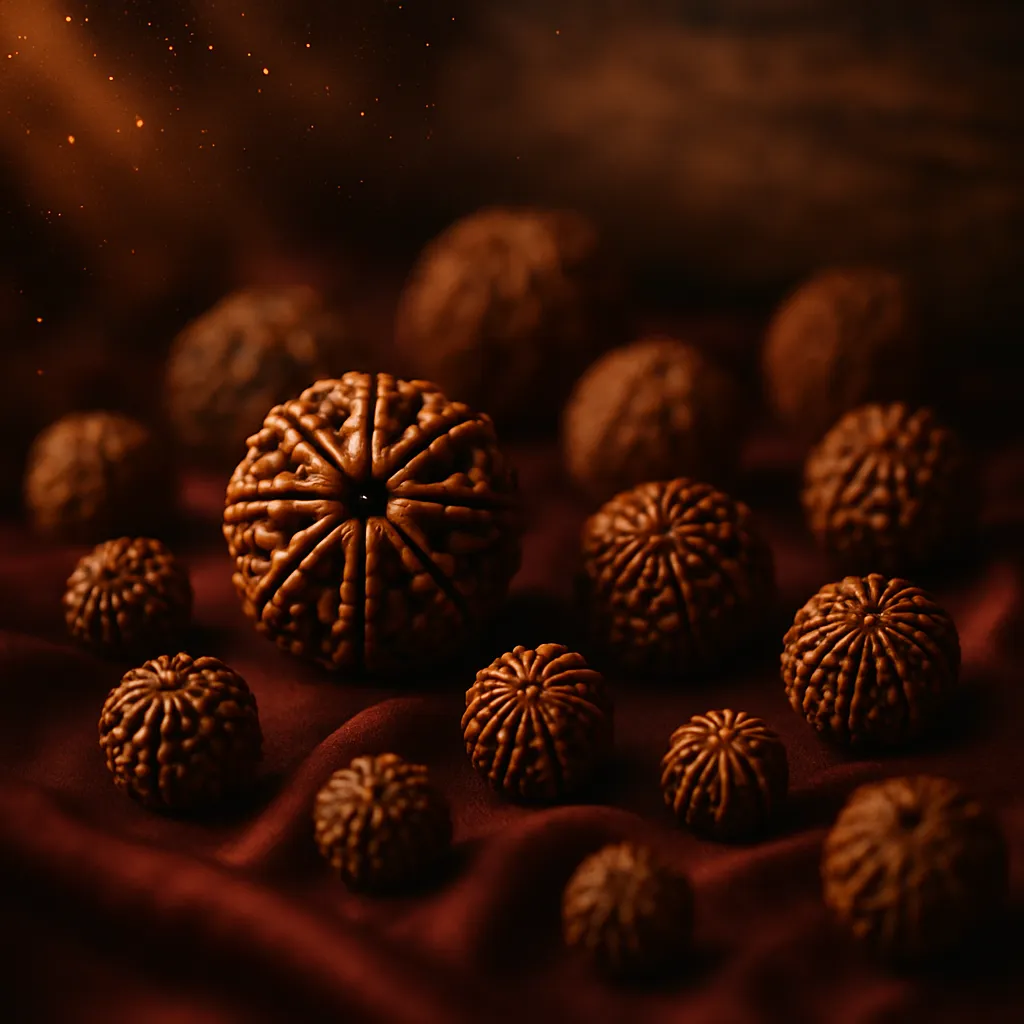
Not all Rudraksha beads are created equal. Here's how to match the right mukhi to your actual life goals, not just what the shopkeeper says.
I once watched a friend spend ₹12,000 on a fourteen mukhi Rudraksha because the seller insisted it would make him rich. Six months later, the bead sat in a drawer while he complained his business hadn't changed. The problem wasn't the Rudraksha. It was the mismatch between what he needed (discipline, focus, a better relationship with Saturn) and what he bought (a bead that governs the Ajna chakra and suits people seeking intuitive wisdom).
Here's the thing about Rudraksha: the number of faces (mukhi) isn't arbitrary. Each mukhi corresponds to a planetary ruler, a specific deity, and a set of qualities that either amplify what you're building or quietly sabotage it. You wouldn't wear reading glasses to fix a broken ankle. Same logic applies here.
Understanding Mukhi: The Basics You Actually Need
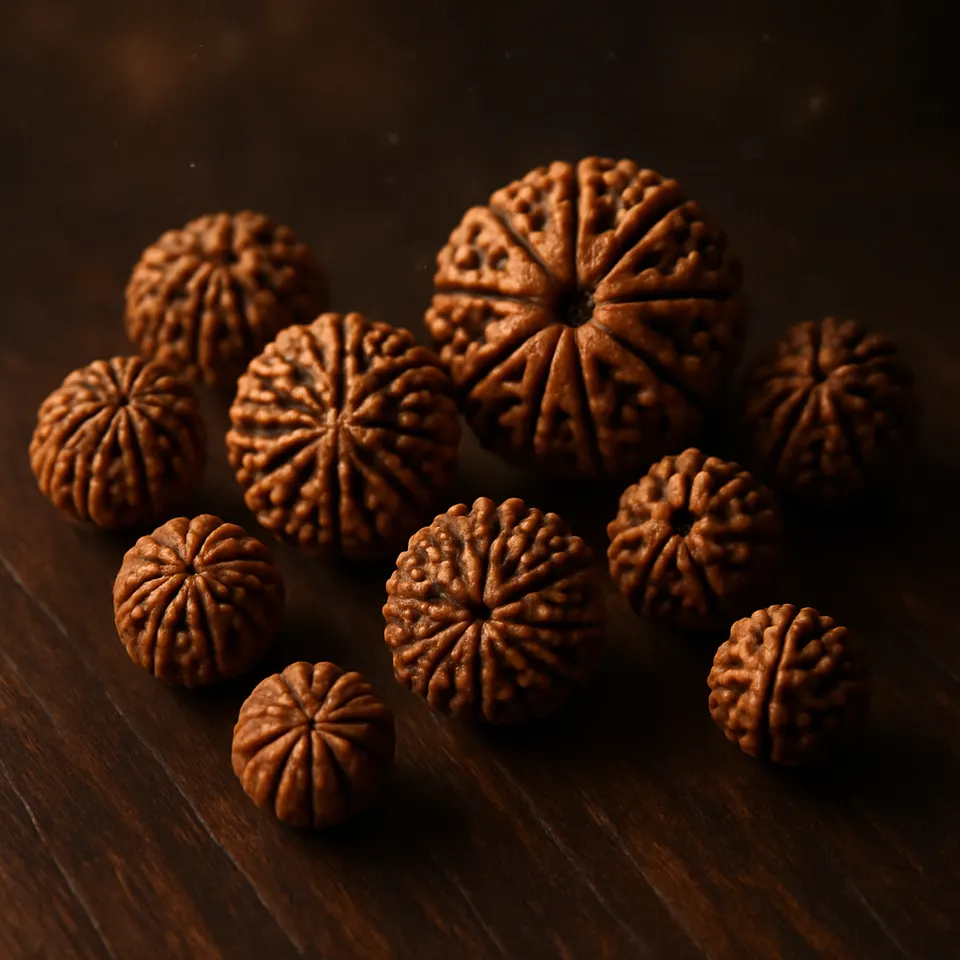
The mukhi count refers to the number of natural clefts or lines running from the top to the bottom of the bead. One mukhi has a single unbroken line. Five mukhi (the most common) has five clearly defined grooves. The number determines which planet governs the bead and, by extension, which areas of your life it influences.
Most people skip straight to benefits lists without understanding the mechanism. So let me explain it plainly. Rudraksha beads work on two levels: the bioelectric (they have measurable capacitance and inductance, studied extensively by Dr. Subas Rai at the Nepal Academy of Science and Technology) and the symbolic-energetic (the Shiva Purana dedicates entire chapters to their origin from Shiva's tears). Whether you care more about peer-reviewed studies or Puranic testimony, the takeaway is the same: different mukhis create different effects because they interact with your energy field in distinct ways.
Here's what determines the right mukhi for you:
- Your current planetary period (dasha) in Vedic astrology
- The life domain you're actively trying to shift (career, health, relationships, spiritual practice)
- Your temperament and mental wiring (some beads are grounding, others are activating)
- Whether you need to balance an excess or fill a deficiency
A common mistake: picking based on what sounds good rather than what you need. The nineteen mukhi sounds rare and powerful, sure. But if you're a scatterbrained Gemini rising struggling to finish projects, you need the focus of a three mukhi (Mars), not the cosmic consciousness of a nineteen mukhi (Narayana).
Matching Mukhi to Tangible Life Goals
Let's break this down by actual goals, not abstract "blessings." I'll walk through the most commonly worn mukhis and who they genuinely serve.
One Mukhi: For the Committed Seeker (Not the Dabbler)
Ruled by Shiva himself (or the Sun, depending on tradition), the one mukhi is the rarest and most misunderstood. It's not for general prosperity. It's for people who've decided spiritual liberation is the primary goal and are willing to let everything else reorganize around that. I've seen one mukhi wearers report sudden disinterest in office politics, relationship drama cooling, ambition for conventional success just evaporating. That's the point. It cuts attachments.
If your goal is a promotion or a marriage, do not wear one mukhi. If your goal is unshakeable inner silence and you're okay with your external life simplifying radically, then consider it.
Two Mukhi: Repairing Fractured Relationships
Governed by Ardhanarishvara (the half-Shiva, half-Parvati form), the two mukhi is about union. I recommend it for people navigating business partnerships, marriage repair, or even internal fragmentation (feeling split between two desires, two identities).
One client wore a two mukhi during a brutal divorce mediation. She reported feeling less reactive, more able to see her ex-husband as a flawed human rather than a villain. They settled amicably in three months after eighteen months of stalemate. Coincidence? Maybe. But the two mukhi's entire job is to soften dualistic thinking.
Three Mukhi: When You Need to Actually Finish Things
Ruled by Agni (fire), this bead is for people who start strong and fizzle. Mars energy. If you've got six half-written manuscripts, three abandoned businesses, or chronic procrastination around the gym, three mukhi gives you heat and follow-through.
It also clears past-life karmic debts according to the Shiva Purana (chapter 25, verses 15-18), which in practical terms means it helps you stop repeating the same self-sabotaging patterns. I wore one during a Saturn return and finally quit a relationship I'd been leaving and returning to for four years. The clarity wasn't gentle. But it was permanent.
Four Mukhi: The Underrated Learning Accelerator
Ruled by Brihaspati (Jupiter), this is the bead for students, teachers, writers, and anyone in a phase of serious knowledge acquisition. It doesn't make you smarter. It makes you more receptive, more able to synthesize, better at holding complex ideas without anxiety.
I've recommended four mukhi to PhD candidates, people learning new languages after age fifty, and anyone whose goal involves teaching or communicating at a higher level. It's also excellent for people whose charts show a weak or afflicted Jupiter (check your fourth and ninth house placements).
Five Mukhi: The Steady Workhorse
Ruled by Kalagni Rudra (a form of Shiva), five mukhi is the most common because it's the safest. It governs general health, mental peace, and protection from accidents. If you don't have a sharp, specific goal and just want to feel more stable, five mukhi is your friend.
But here's the catch: it won't accelerate anything. It's neutral. Grounding. If you're already lethargic or stuck, five mukhi might just make you more comfortably stuck. Pair it with something activating (three or six mukhi) if you need movement.

Six Mukhi: For People Building Something (Business, Body, Brand)
Ruled by Kartikeya (the warrior god), six mukhi is Mars and Venus together. It's for builders. Entrepreneurs, athletes, artists who want to monetize, anyone whose goal involves material manifestation paired with beauty or strategy.
I wear a six mukhi when I'm in a writing sprint or launching a new course. It's got urgency without the recklessness of pure Mars. It helps you balance discipline with creativity, which is exactly what you need when building something sustainable.
Seven Mukhi: Financial Stability (Not Windfalls)
Ruled by Lakshmi, the seven mukhi is constantly marketed as a "wealth bead." True, but it's about removing financial anxiety and creating steady flow, not lottery wins. If you're rebuilding after bankruptcy, trying to get out of debt, or wanting to stop the feast-famine cycle, seven mukhi helps.
One thing I've noticed: it works best for people who pair it with practical action. Wearing seven mukhi while ignoring your budget won't do much. Wearing it while you're actively course-correcting financially? Different story.
Eight Mukhi: Obstacle Removal (Especially Ganesha-Related Blocks)
Ruled by Ganesha, the eight mukhi is for people who feel stuck despite doing everything right. Applications that go unanswered. Projects that stall at the last stage. Health issues that doctors can't diagnose.
It's particularly good for people running a Ketu dasha or dealing with ancestral/karmic blocks. The eight mukhi doesn't bulldoze obstacles; it reveals hidden paths around them. Subtle, indirect solutions appear.
How to Actually Choose (The Decision Framework)
Here's the process I walk clients through. You can do this yourself.
Step one: Identify your primary life goal right now. Not five goals. One. Be specific. "I want to feel less anxious" is vague. "I want to stop panic attacks before client presentations" is specific.
Step two: Check your current Vedic dasha. If you're in a Saturn period, you probably need something grounding and structure-building (four, five, or seven mukhi). If you're in a Rahu or Ketu period, go for eight, nine, or twelve mukhi to navigate the chaos.
Step three: Look at your chart's weak points. Afflicted Mercury? Four mukhi. Weak Mars? Three or six mukhi. Struggling Venus? Six or thirteen mukhi.
Step four: Consider your temperament honestly. Are you already fiery and impulsive? Don't add three mukhi. Are you overly cerebral and ungrounded? Don't add twelve or fourteen mukhi. You want balance, not amplification of your extreme.
Step five: Start with one bead. Wear it for at least forty days before adding another. Rudraksha works cumulatively, but you need to observe effects individually.
I can't stress this enough: more mukhis or a full mala isn't automatically better. I've seen people wear elaborate combinations and feel jittery, ungrounded, or overwhelmed. One correctly chosen mukhi beats a random mala every time.
The Mukhis Most People Overlook (But Shouldn't)
There are a few mukhis that get ignored because they're not flashy, but they're incredibly effective for specific goals.
Nine Mukhi (Durga): If you're a woman in a leadership role, dealing with hostile environments, or needing fierce protective energy, nine mukhi is unmatched. It's also excellent for people whose goal involves courage in the face of real danger (activists, journalists, whistleblowers).
Twelve Mukhi (Surya): For people whose goal is visibility. Actors, politicians, influencers, anyone building a personal brand. It gives you solar radiance, the kind that makes people remember you. But it only works if you're actually doing the thing (creating content, showing up, taking the stage). It won't make a hermit famous.
Thirteen Mukhi (Kamadeva or Venus): For people whose goal involves charisma, attraction, or creative magnetism. Musicians, designers, people re-entering the dating world after a long absence. It's Venus turned up. Use carefully if you're already prone to indulgence.
Fourteen Mukhi (Hanuman or Shiva): For people whose goal is intuitive knowing or third-eye activation. Therapists, astrologers, anyone whose work depends on reading energy or symbolism. It's intense. Don't start here.
Combining Mukhis: When and How
You can wear multiple mukhis together, but there's an art to it. Some combinations amplify. Others conflict.
Good combinations for common goals:
- Career growth in a competitive field: Six mukhi (Mars-Venus, strategy and drive) plus seven mukhi (Lakshmi, steady resources)
- Healing chronic illness: Five mukhi (general health) plus eight mukhi (removing hidden obstacles) plus three mukhi (energetic fire to burn through stagnation)
- Spiritual deepening without renunciation: Four mukhi (Jupiter wisdom) plus nine mukhi (Durga protection) plus five mukhi (grounding)
- Relationship repair and self-love: Two mukhi (union) plus thirteen mukhi (Venus, self-worth)
Combinations to avoid:
- One mukhi with anything else (it dilutes the one mukhi's singular focus)
- Too many fire-element beads if you're already Pitta-dominant or have high blood pressure (three, six, nine together can overheat)
- More than five beads total unless you're experienced and have consulted your chart carefully
The Shiva Purana (Part 1, Section 25) does outline traditional mala combinations, but remember those were written for renunciate sadhus with very different nervous systems and life contexts than modern householders. Adapt intelligently.
Getting Your Free Astrological Reading for Personalized Guidance
Look, I can give you all the frameworks, but your chart is your chart. Your dasha is your dasha. What works for your best friend might be wrong for you, even if you have the same goal.
That's where a real astrological reading comes in. AstroClick offers a free personalized reading that looks at your planetary periods, your strengths and vulnerabilities, and can help you narrow down which mukhi (or combination) actually fits your unique blueprint. It takes about three minutes to generate, and it's based on actual Vedic calculation, not algorithm-generated fluff.
You can wear Rudraksha without a reading, sure. But if you want precision instead of guesswork, get your free reading on AstroClick here. Think of it as the difference between buying reading glasses at a drugstore versus getting your eyes actually measured. Both work. One works better.
Rudraksha isn't magic. But it's not placebo either. It's a tool that works best when matched intelligently to who you are and what you're genuinely building. Choose accordingly.