Choosing the Right Mukhi Rudraksha for Your Life Goals
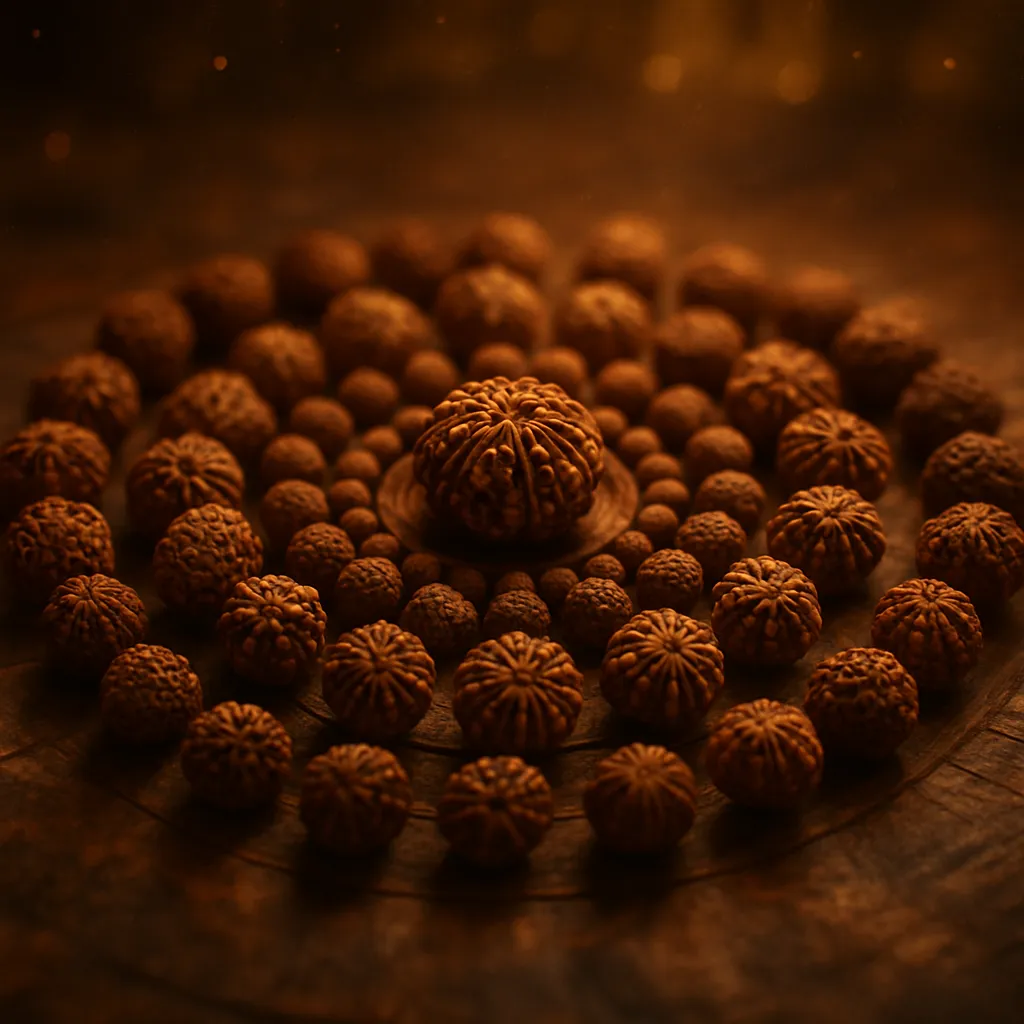
Not all Rudraksha beads work the same way. Learn how to match the right mukhi count to your actual life goals, using both traditional wisdom and practical observation.
What "Mukhi" Actually Means (And Why It's Not Just Marketing)
Your friend hands you a Rudraksha bead and says it'll help with "focus and career." You nod politely, but honestly? You're wondering if this is just spiritual window dressing or if there's actual logic behind which bead does what.
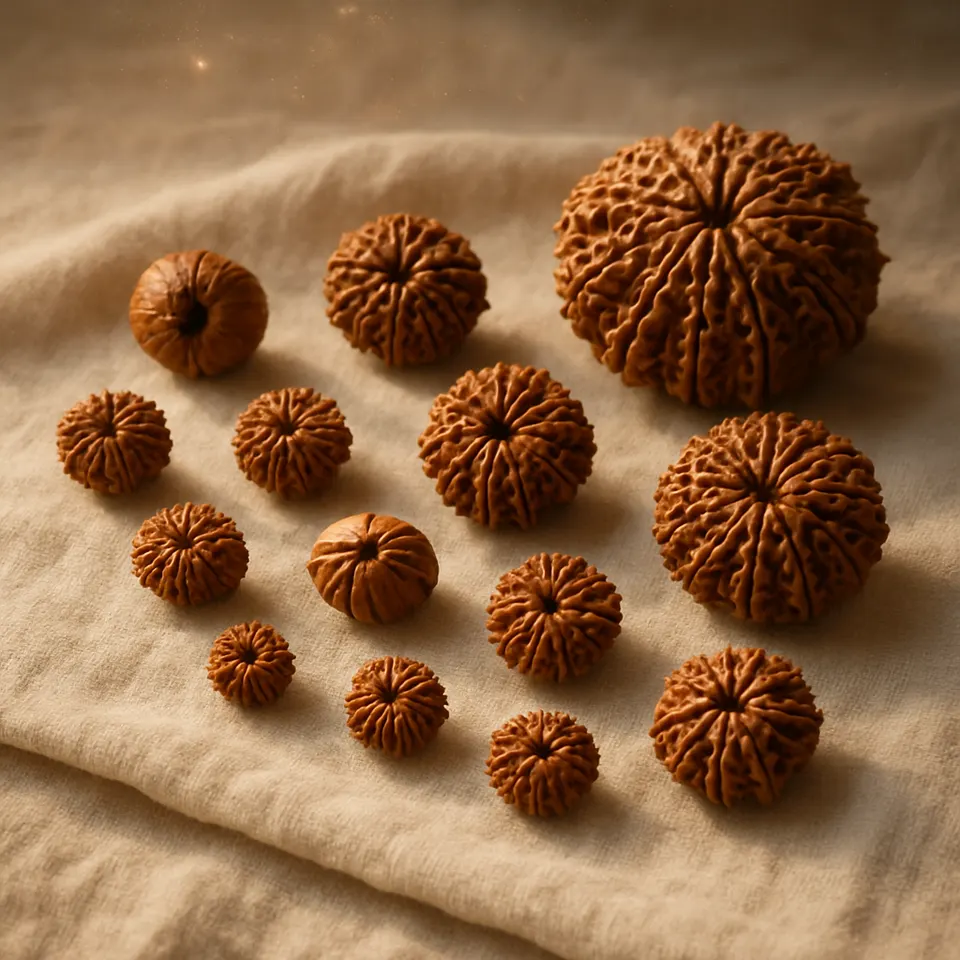
Here's the thing: the number of "mukhis" (the natural clefts or facets running from top to bottom of the bead) isn't arbitrary. Different mukhi counts have been observed and catalogued for literally centuries in texts like the Shiva Purana and Padma Purana, and they correspond to different planetary energies and life domains. A five-mukhi won't do the same work as a nine-mukhi, just like Saturn won't behave like Venus in your chart.
Think of mukhi selection like choosing the right lens for a camera. You wouldn't use a macro lens to photograph a landscape. Same principle here: you need to match the tool to the task. And yes, you can wear multiple beads at once (people string them into malas all the time), but if you're starting out or looking for targeted support in one area, picking the right single bead matters.
The Core Beads Most People Actually Need
Let's cut through the noise. There are technically Rudraksha beads up to twenty-one mukhis (and beyond, though those are museum pieces), but most of us will only ever need a handful. Here's the practical shortlist based on what I see working in real life, not just what's written in dusty manuscripts.
Five Mukhi (Pancha Mukhi) — Ruled by Jupiter. This is the most common Rudraksha, and for good reason: it's the generalist. Supports health, mental clarity, stress reduction, learning. If you don't know where to start, start here. It's like the multivitamin of Rudraksha beads. Kalagni Rudra governs this one, and traditionally it's said to balance all five elements in the body. I've seen teachers recommend this to students before exams, parents dealing with toddler chaos, and honestly anyone who feels scattered.
Six Mukhi (Shanmukhi) — Ruled by Mars (or Kartikeya, depending on the text). Focus, willpower, grounding. If you're an entrepreneur, athlete, or anyone who needs sustained drive without burning out, this is your bead. Mars energy can be aggressive, but the six-mukhi seems to channel it constructively. I find it especially helpful for people who start projects but never finish them.
Seven Mukhi (Saptamukhi) — Ruled by Saturn or sometimes attributed to Lakshmi (texts vary). This one is about wealth, yes, but more importantly about discipline around resources. Saturn's not here to make you rich overnight; it's here to teach you how to save, plan, and build something that lasts. Good for anyone working through financial instability or trying to break a cycle of impulsive spending.
Four Mukhi (Chatur Mukhi) — Ruled by Mercury. Communication, intellect, creativity, memory. Writers, speakers, salespeople, anyone working in media or education. If words are your currency, wear this. Mercury also governs the nervous system, so it can help with scattered thinking or anxiety tied to overthinking.
Nine Mukhi (Navmukhi) — Ruled by Ketu. This is the bead for spiritual seekers, people dealing with past-life patterns (if you believe in that), or anyone going through a major identity shift. Ketu detaches, sometimes brutally. The nine-mukhi won't make your life easier; it'll make you care less about the parts that don't matter. I recommend this one cautiously, because it can feel destabilizing if you're not ready for introspection.
Matching Mukhi to Planetary Weaknesses in Your Chart
Here's where astrology and Rudraksha practice overlap beautifully. If you have your birth chart (Vedic or Western, though Vedic is more traditionally aligned with Rudraksha use), you can identify which planets are weak, debilitated, or badly placed and choose a bead to support them.
Let's say your Saturn is in Aries (debilitated in Vedic astrology). Saturn struggles here because Aries wants speed and Saturn wants slow, methodical progress. You might feel like you can never quite get your life structured, or that authority figures constantly block you. A seven-mukhi or fourteen-mukhi (both Saturn-ruled, though fourteen is rarer and pricier) can act as a stabilizer.
Or maybe your Mercury is combust (too close to the Sun) and you struggle with clear communication or contracts always go sideways. Four-mukhi becomes a practical remedy.
A few planetary–mukhi matches based on traditional correspondences:
- Sun — One-mukhi (extremely rare, expensive, but potent for leadership and self-confidence; usually people use twelve-mukhi as a more accessible substitute)
- Moon — Two-mukhi (emotional balance, relationships, harmony; ruled by Shiva-Shakti duality)
- Mars — Three-mukhi or six-mukhi (courage, energy, cutting through obstacles)
- Mercury — Four-mukhi (intellect, wit, nervous system health)
- Jupiter — Five-mukhi (wisdom, expansion, health)
- Venus — Thirteen-mukhi (charisma, attraction, artistic ability; associated with Kamadeva or Indra)
- Saturn — Seven-mukhi or fourteen-mukhi (discipline, longevity, karmic balance)
- Rahu — Eight-mukhi (removes obstacles, protects from hidden enemies, Ganesha energy)
- Ketu — Nine-mukhi (detachment, spiritual insight, liberation)
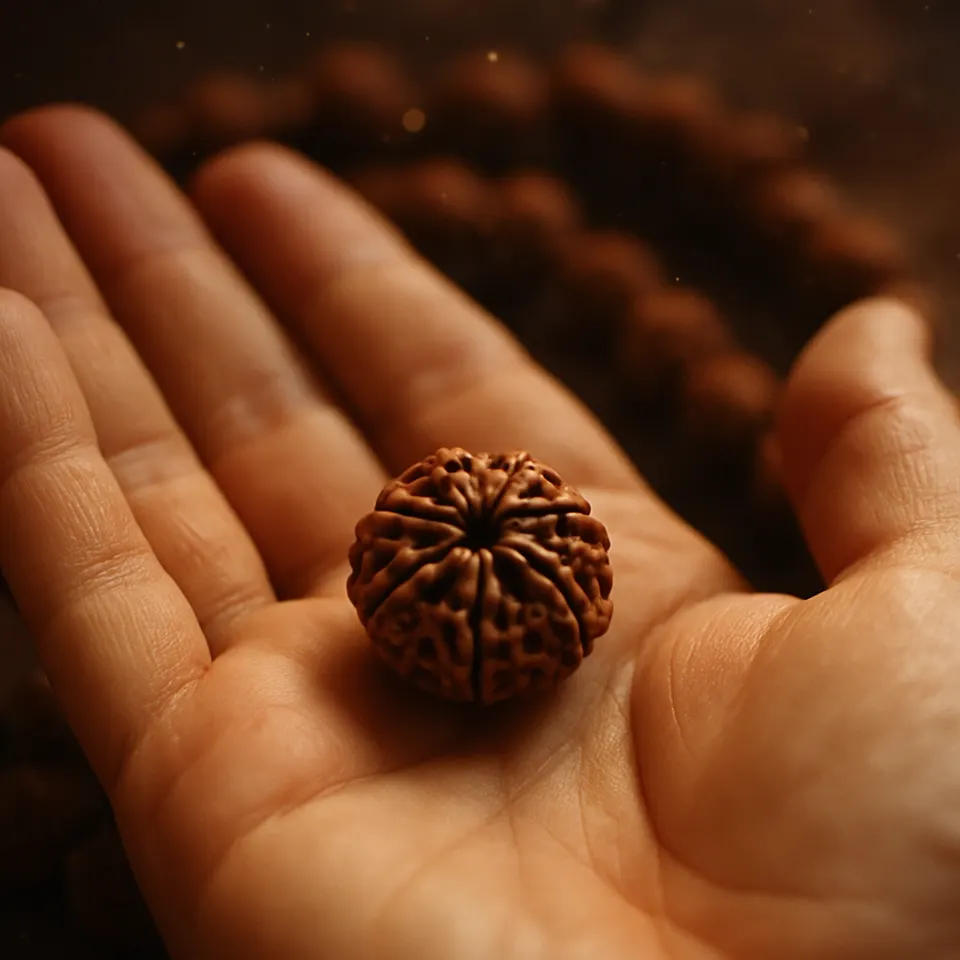
You don't need to run out and collect nine different beads. But if you've had a Vedic astrologer point to a specific planetary weakness and you've already tried mantras or gemstones, Rudraksha offers a more accessible (and frankly, cheaper) alternative. A good five-mukhi costs $10–$30. A blue sapphire for Saturn? Try $500 minimum for something decent.
Life Goals, Not Just Chart Placements
Sometimes you don't care about your debilitated Venus. You just want to land a job, heal a relationship, or get through a rough health patch. Here's how to think about mukhi selection based on goals, not just astrology:
Goal: Career growth, promotions, leadership roles Try: One-mukhi (if budget allows), five-mukhi (for Jupiter's expansiveness), or six-mukhi (Mars will give you the guts to ask for that raise).
Goal: Improve focus and finish projects Try: Six-mukhi (Mars discipline) or four-mukhi (Mercury sharpens the mind). I've also seen people combine five-mukhi and six-mukhi on the same mala.
Goal: Better relationships, ease conflicts at home Try: Two-mukhi (brings harmony, balances duality, connected to Ardhanarishvara) or thirteen-mukhi (Venus energy, makes you more likable and magnetic).
Goal: Financial stability or attracting wealth Try: Seven-mukhi (Saturn's long game), eight-mukhi (Ganesha clears blocks), or Lakshmi-specific beads like Gauri Shankar (a naturally joined pair, rare but powerful for household prosperity).
Goal: Spiritual growth, meditation, letting go of ego Try: Nine-mukhi (Ketu detaches you from material obsession) or ten-mukhi (Vishnu energy, protection, peace).
Goal: Health recovery, especially chronic issues Try: Five-mukhi (balances elements), or for specific issues, consult the correspondence — three-mukhi is traditionally said to help with digestive fire, two-mukhi for heart/circulation.
One thing to remember: Rudraksha isn't a magic pill. If you're dealing with serious health issues, see a doctor. If your career is stuck because you haven't updated your resume in five years, the bead won't do that for you. Think of it as a supportive background hum, not a loudspeaker.
Authenticity, Sizing, and How to Actually Wear Them
You can have the "right" mukhi and still get zero benefit if the bead is fake. The market is flooded with carved wooden beads passed off as Rudraksha, or beads from trees that aren't Elaeocarpus ganitrus (the actual Rudraksha tree, native to the Himalayas and Indonesia).
Quick authenticity checks:
- The float test: Real Rudraksha sometimes sinks (especially larger, denser beads), so this test is unreliable. Skip it.
- The groove test: Mukhis should run naturally from top to bottom, not in a spiral or shallow scratch. Use a magnifying glass.
- The cut test: If you're buying in bulk or can sacrifice one, cut it open. Real Rudraksha has distinct internal chambers corresponding to the mukhis.
- Texture and weight: Real beads are woody, slightly rough, and have weight. Fakes feel too light or plasticky.
Buy from reputable sellers. If the price seems too good (a one-mukhi for $20, for instance), it's fake. Expect to pay anywhere from $8 for a common five-mukhi to several hundred dollars for rare mukhis like one, thirteen, or Gauri Shankar.

Sizing matters less than you think. Smaller beads (5–8mm) are fine for children or people who prefer subtlety. Larger beads (12–20mm) have more surface area and some traditions say they're more potent, but I haven't found size to be a dealbreaker. Wear what feels comfortable.
How to wear it:
- Traditionally on a Monday, after a bath, with a simple prayer or intention.
- You can wear it as a mala (108 beads plus one guru bead), a bracelet, or a single bead on a thread around your neck.
- Touch it to a photo or murti of Shiva if that resonates, or simply hold it and set your intention.
- Red or black thread is traditional, though some people use silk or cotton. Avoid synthetic thread if possible.
- Don't wear it during sleep if it feels too activating (some people find six-mukhi or three-mukhi gives them intense dreams). Remove it during sex, menstruation, or funerals if you follow orthodox guidelines, though many modern practitioners don't worry about this.
When One Bead Isn't Enough (Or Is Too Much)
Some people wear a full mala of one type (say, 108 five-mukhi beads). Others string together a combination: five-mukhi as the base, with a few six-mukhi, a seven-mukhi, maybe an eight-mukhi for obstacle removal. There's no rigid rule here, though traditional malas do follow patterns.
If you're feeling too much energy from a bead (restlessness, irritability, vivid dreams), take it off for a few days. Not every bead works for every person at every time. I once wore a nine-mukhi during a stressful work period and felt like I was emotionally flatlined. Took it off, switched back to five-mukhi, felt normal again. Ketu wasn't what I needed right then.
On the flip side, some people feel nothing at first. Give it at least 40 days (one lunar cycle plus) before deciding it's not working. Rudraksha can be subtle. The shifts might show up as better sleep, fewer arguments, a sudden clarity about a decision. Not fireworks.
The Unromantic Truth About Results
I'm going to be honest. Some people put on a Rudraksha and feel an immediate shift. Others wear it for years and aren't sure it's doing anything but also don't want to stop. There's no controlled clinical trial here, and that's fine. We're working in the realm of vibrational support, not pharmacology.
What I have observed: people who pair Rudraksha with consistent practice (meditation, mantra, therapy, exercise, whatever their "work" is) report better outcomes than people who just wear the bead and expect it to do all the lifting. The bead supports your effort. It doesn't replace it.
Also, if your chart is going through a brutal Saturn return or a Rahu-Ketu transit, no bead will make that painless. It might make it bearable. That's worth something.
So choose your mukhi based on where you actually are and what you actually need. Not what sounds mystical or impressive. Not the rarest bead. The one that matches your life right now. If that's a humble five-mukhi, great. If it's a power-combo mala with eight different mukhis, also great. Just make it intentional.
If you want to go deeper and see how your specific birth chart aligns with Rudraksha remedies (or any other Vedic tools), grab your free astrological reading over at AstroClick. You'll get a personalized breakdown of your planetary placements and practical suggestions that actually fit your life. No fluff, just clarity.