Bharani Nakshatra: The Bearer of Transformation
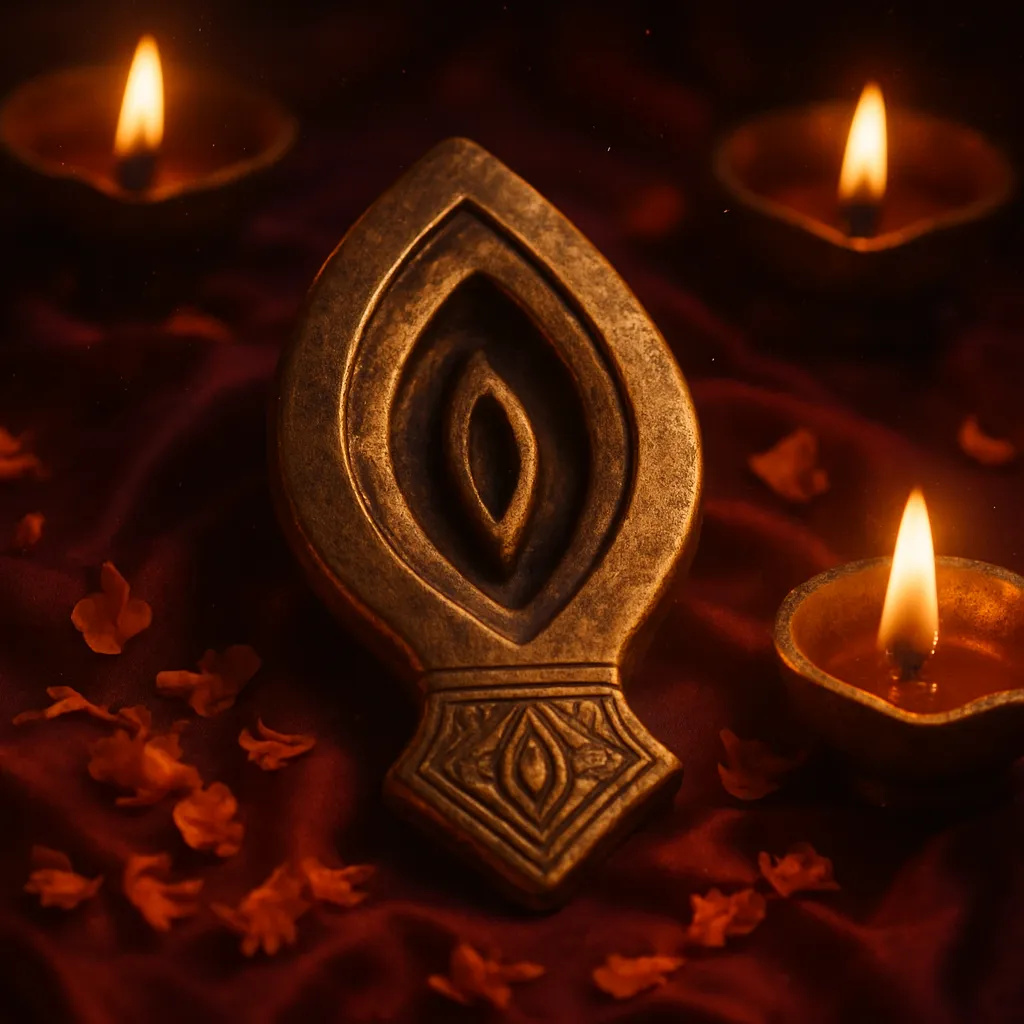
Bharani nakshatra teaches the hardest lesson in Vedic astrology: that real growth demands death, rebirth, and the courage to hold life's extremes without flinching.
The Womb and the Tomb
Bharani sits at 13°20'–26°40' Aries, second in the circle of twenty-seven nakshatras, and it's ruled by Yama, the god of death. Which sounds dramatic until you realize that in the Vedic worldview, Yama doesn't just collect souls. He's the dharmic judge, the keeper of cosmic law, the one who ensures that every action ripples forward into consequence. Bharani carries that weight. If you know someone born under this star, you've probably noticed they seem older than their years, like they walked into the room already knowing how the story ends.
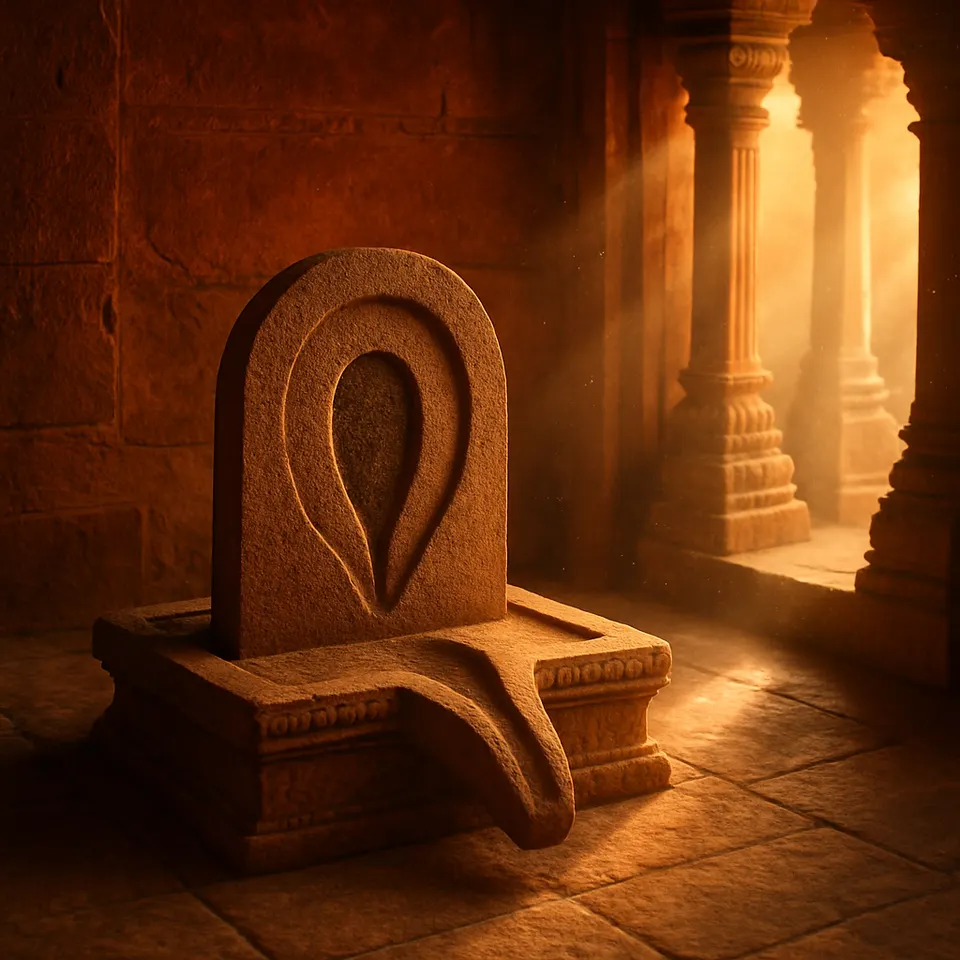
The symbol is a yoni, the creative vessel, the place where life begins. So here's the paradox baked right into the nakshatra: Bharani is both womb and tomb, the place where things are born and where they die so that something new can emerge. It's not gentle. This isn't the soft nurturing of Cancer or the philosophical detachment of Sagittarius. Bharani holds the raw, biological fact that transformation is messy, painful, and absolutely necessary.
!Ancient carved stone yoni symbol illuminated by warm golden temple light against red sandstone
Yama's Courtroom: Restraint Under Pressure
Let's talk about the deity. Yama is the first mortal, the first being to die and therefore the first to discover what comes after. In the Rig Veda he's described as the "gatherer of people," and later texts like the Garuda Purana paint him as the ultimate accountant of karma. He doesn't forgive or condemn arbitrarily. He simply reflects back what you've done.
Bharani natives inherit that role on a human scale. They often become the ones who tell the hard truth, who cut off what's rotting, who refuse to enable dysfunction even when it would be easier to stay quiet. I've seen this again and again in charts: Bharani Moon or Ascendant people are the ones who end toxic relationships, who leave secure jobs because the work felt dead, who choose the difficult right over the comfortable wrong.
But here's what most cursory astrology posts miss. Restraint is Bharani's secret superpower. Yes, it's intense. Yes, it has access to extremes (more on that in a moment). But the highest expression of this nakshatra is knowing when not to act, when to hold the boundary, when to let the consequences unfold without intervening. Yama doesn't chase you down. He waits. Bharani learns to do the same.
The shadow side? Control that curdles into cruelty. Judging others with the same merciless standard you apply to yourself. Scorekeeping that never forgives. Bharani at its worst becomes the hanging judge, the one who can't let anyone off the hook.
The Venus Paradox
Bharani is owned by Venus (Shukra), which baffles people at first. Venus, the planet of beauty, pleasure, art, diplomacy. How does that square with a nakshatra ruled by the god of death?
Simple. Venus knows that beauty and decay are married. Think about it: a rose is most gorgeous the day before it wilts. Great art is saturated with loss. The best songs are about heartbreak or longing. Venus in Bharani understands this in its bones. It doesn't shy away from the darker textures of life. It leans in.
I've noticed Bharani Venus placements produce some of the most compelling artists, the kind who make you uncomfortable and captivated at the same time. Frida Kahlo had her Moon here. Her work is visceral, bloody, unflinching, and hauntingly beautiful. That's Bharani. It won't give you prettiness for its own sake. It gives you truth dressed in color and form.
Romantically, Bharani can be all-consuming. The yoni symbol isn't just about birth; it's about desire, merging, the pull toward union. But because this nakshatra lives at the edge of extremes, relationships can swing between devotion and destruction. Boundaries get porous. The question Bharani Venus or Moon must answer: can you love someone without losing yourself in the process?
Here's a short list of Bharani themes in the realm of Venus:
- Attraction to taboo or "forbidden" subjects
- Creative work that processes grief, trauma, or transformation
- Relationships that serve as initiations, not just companionship
- A pull toward tantra, depth psychology, or shadow work
- Difficulty with surface-level socializing (it feels like a waste of time)
!Close-up of a crimson rose in full bloom with drops of morning dew, dark moody background

Extremes and Containment
Bharani falls entirely within Aries, the sign of raw initiation, speed, and individuality. Mars, Aries' ruler, is a planet of action and aggression. Venus owns Bharani, but Mars runs the neighborhood. You get someone who feels intensely but is pushed to do something with that intensity.
This is where the extremes come in. Bharani doesn't do moderation well, especially early in life. It's feast or famine. Work sixteen hours a day or do nothing for a week. Fall wildly in love or shut down entirely. The middle path feels fake, like you're pretending to be someone you're not.
The Brihat Parashara Hora Shastra (Chapter 3, verses covering nakshatra qualities) classifies Bharani under the Manushya (human) gana, but with Ugra (fierce) nature. Ugra nakshatras are good for acts requiring force: confrontation, demolition, surgery, ending contracts, exorcisms. The tradition knew what it was encoding. Bharani carries a blade, and it's meant to be used.
But the blade cuts both ways. Bharani can wound itself as easily as it wounds the world. Self-destruction, addiction, pushing past healthy limits because pain has become familiar. The lesson here is containment without repression. Can you hold the fire without letting it burn the house down?
Psychologically, Bharani tends to attract crisis or chaos, not because it's unlucky, but because crisis is the fastest route to transformation. And transformation, whether Bharani admits it or not, is the point. Stagnation is unbearable. Even a bad change feels better than no change at all.
The Three Padas: Shades of Intensity
Each nakshatra divides into four padas (quarters), each spanning 3°20' and falling into a different navamsha sign. For Bharani, the four padas land in Leo, Virgo, Libra, and Scorpio, all within the navamsha cycle.
First Pada (13°20'–16°40' Aries, Leo Navamsha): Ruled by the Sun. This is Bharani with charisma and creative fire. Leadership comes naturally, but so does arrogance. The person wants to be seen, to shine, to leave a mark. The shadow: ego inflation, needing to be the tragic hero of every story.
Second Pada (16°40'–20°00' Aries, Virgo Navamsha): Ruled by Mercury. Here the intensity turns inward, becomes self-critical and precise. This Bharani notices every flaw and tries to fix it, in themselves and everyone else. It's the editor, the craftsperson, the one who rewrites the same paragraph until it's perfect. The shadow: perfectionism that paralyzes.
Third Pada (20°00'–23°20' Aries, Libra Navamsha): Ruled by Venus, which also owns the nakshatra. Double Venus influence softens things slightly. More relational, more willing to compromise, though the core intensity doesn't vanish. Artistic expression becomes a lifeline. Relationships matter deeply, sometimes too deeply.
Fourth Pada (23°20'–26°40' Aries, Scorpio Navamsha): Ruled by Mars and touching Scorpio energy. This is Bharani at its most raw. Occult interests, psychological depth, sexual magnetism, and the constant undercurrent of death and rebirth. The most transformative pada, and often the hardest to live. The invitation: become the alchemist, not the victim of your own intensity.
If you're working with your own chart, check which pada your planet falls in. The nakshatra lord (Venus) and the pada lord together paint a richer picture.

Bharani in the Modern World
How does a nakshatra about death, restraint, and cosmic justice function in a culture that worships positivity, avoids discomfort, and outsources consequences?
Honestly? Bharani struggles. The modern world doesn't reward people who say no, who draw hard lines, who insist that some things actually matter more than convenience. Bharani types often feel alienated, like they're playing by a set of rules nobody else remembers.
But here's the gift. We need Bharani now more than ever. We need people who can look at what's rotting (in relationships, institutions, ecosystems) and say, "This has to end." We need the capacity to grieve, to mark transitions, to hold space for the fact that not everything gets a happy ending. Bharani offers that.
In practical terms, Bharani placements often show up in:
- Therapists, hospice workers, death doulas, midwives (the literal birth-death axis)
- Activists and whistleblowers who won't stay silent
- Artists who work with difficult material
- People in transformational industries: surgery, demolition, bankruptcy law, rehab counseling
- Spiritual practitioners focused on shadow integration, tantra, or ancestor work
If you have Bharani prominent (Sun, Moon, Ascendant, or multiple planets), you're not here for a quiet life. You're here to metabolize what others can't stomach, to turn poison into medicine, to be the ending that makes space for a beginning.
Working with Bharani Energy
So what do you do if Bharani is loud in your chart, or if you're in a Bharani planetary period (Venus dasha, or a transit activating this span of Aries)?
First, respect the cycle. Bharani teaches that there's a time to push and a time to let go. Forcing something past its expiration date only makes the eventual collapse messier. Practice discernment: is this resistance I need to work through, or a clear signal that it's time to walk away?
Second, find containers for intensity. Therapy, somatic work, intense physical exercise, creative projects that let you go deep. Bharani energy doesn't evaporate if you ignore it. It leaks out sideways, often as passive aggression, chronic illness, or relational blowups.
Third, honor Yama. In Vedic practice, you can work with Yama directly through meditation on dharma, through ancestor reverence (since Yama is also lord of the ancestors, the Pitrs), or simply by asking yourself, "If I died tomorrow, would I be proud of how I spent today?" Bharani demands alignment between belief and action.
Fourth, let yourself grieve. Bharani holds so much unspoken sorrow, the kind that comes from seeing clearly, from knowing how things could be and watching them fall short. Grief isn't weakness here. It's metabolization. Cry. Rage. Write the unsent letter. Let the old skin crack so the new one has room.
And finally, remember the yoni. Bharani isn't just about death. It's about what gets born from the ashes. Creativity. New life. Second chances that you earned by doing the hard work of letting go. You're not cursed. You're the bearer of transformation, and that's a sacred, difficult, necessary role.
Closing Thoughts: The Work of Depth
Bharani doesn't promise ease. It doesn't offer shortcuts or spiritual bypassing. What it does offer is realness, the kind of bone-deep integrity that only comes from walking through fire and choosing, again and again, not to let it turn you bitter.
If you've made it this far in the article, you probably have Bharani somewhere that matters, or you love someone who does. The path isn't always clear, and there will be moments when the weight feels unbearable. But here's what I know after years of watching this nakshatra in action: Bharani people are the ones still standing when the dust settles. They know how to endure. They know how to begin again.
Want to understand how Bharani (or any nakshatra) shows up in your unique chart? We'd love to help you map it. Head over to AstroClick for your free personalized astrological reading. We'll walk you through your nakshatra placements, current transits, and what it all means for the road ahead. Sometimes just seeing it on paper, seeing that your intensity has a name and a shape, changes everything.